If you’ve ever stood on a job site mid-fire protection installation, you know the fire spray nozzle is the unsung hero of any system. I’ve spent 12 years in this business, talking to contractors, facility managers, and even a few firefighters who’ve seen firsthand how a nozzle’s performance can make or break a fire suppression effort. One question that comes up every time someone is sizing a system is simple: How does the coverage area of a fire spray nozzle change with pressure? It’s not a trick question, but it’s one that trips up a lot of people who rely on generic charts from manufacturers. Fire Spray Nozzle
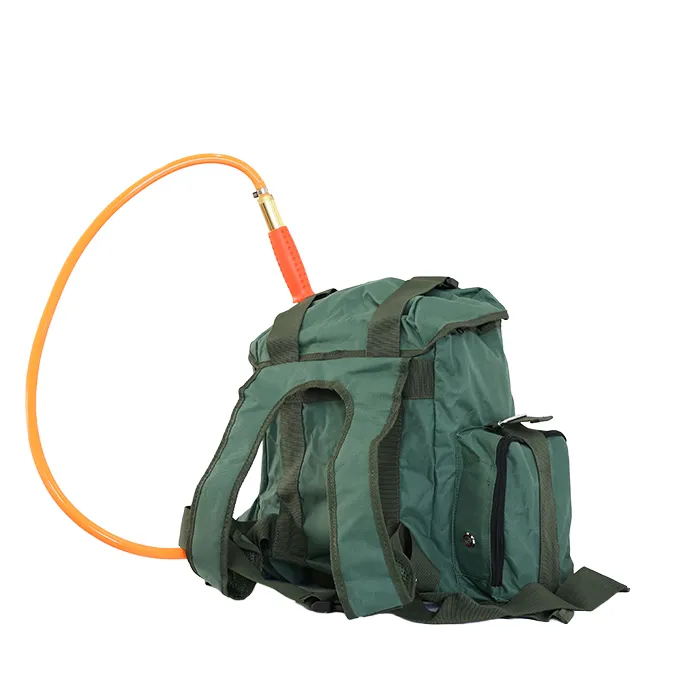
Let’s start with the basics. A fire spray nozzle isn’t just a hole at the end of a pipe—its coverage area depends on three core things: the flow rate, the spray pattern, and the pressure pushing the water. Pressure is the constant variable here, and it’s not just “more is better.” I’ve seen contractors crank up pressure to get a wider spray, only to end up with a fine mist that evaporates before it hits the fire. Or cut pressure too low, and the water just dribbles out, covering a tiny spot that can’t stop flames from spreading.
Here’s the science broken down in plain terms, not the textbook jargon. When water is forced through a nozzle orifice, it accelerates, and that acceleration directly shapes how the water disperses. At low pressure—say, below 30 psi for a standard sprinkler-style spray nozzle—flow rate is low. The water doesn’t have enough energy to fan out. It hits the target in a tight, concentrated stream, so its coverage area is small. A ½-inch spray nozzle at 25 psi might only cover a 6-foot diameter circle when mounted 10 feet high. Crank pressure up to 60 psi, and that same nozzle starts to spread: the water molecules have more kinetic energy, so they bounce off the spray plate (the part that breaks the water into droplets) wider. Suddenly, the coverage jumps to 12 feet diameter. Go to 100 psi, and it might hit 18 feet—up to a point.
The catch is that this relationship isn’t linear. That’s the part most people get wrong. It’s not “double pressure, double coverage.” Flow rate actually scales with the square root of pressure, so a 10% increase in pressure only gives a ~5% increase in flow. And coverage is tied to flow in a different way too. Once you push pressure past a nozzle’s design limit—usually labeled by the manufacturer as its “rated operating pressure”—the spray pattern changes. Instead of the wide, uniform cone you need for fire suppression, you get fine, atomized droplets that don’t have the mass to reach the target area. At that point, the coverage area might even stop growing, or start to shrink as the water evaporates mid-air.
I learned this the hard way early in my career. A client was retrofitting a warehouse, and they insisted on cranking a system’s pressure to 120 psi to cover more square footage. We ran a test on their mock setup, and that nozzle ended up spraying a fine mist that didn’t penetrate the smoke 8 feet above the floor. When we adjusted it down to the rated 75 psi, the spray formed a solid, 16-foot wide pattern that covered exactly the floor space they needed, and the droplets hit the fire fuel (pallets, in this case) hard enough to smother the flames. That experience taught me that pressure isn’t a shortcut—it’s a balance.
Different types of nozzles behave differently too. For example, pendent spray nozzles (the ones you see hanging from ceiling joists) are designed for ceiling-level coverage in commercial buildings. Their coverage peak is usually within 10-15 psi of their rated pressure. If you drop below that, their coverage drops off sharply. Sidewall spray nozzles, which are used in corridors, have a more horizontal pattern, so their coverage change with pressure is a bit more gradual—but the same linear-to-plateau rule applies. Foam-water spray nozzles, used for flammable liquid fires, are even more sensitive: too high pressure will break down the foam concentrate before it mixes, rendering the whole system useless.
Let’s talk about real-world data to back this up. I keep a spreadsheet for my regular clients with test results from nozzles we’ve installed in different settings. For a standard 17mm pendent spray nozzle, here’s what we measured: at 50 psi, coverage diameter was 8 feet; at 75 psi (its rated pressure), 12 feet; at 100 psi, 13 feet; at 120 psi, 11 feet. That last number is key—we saw the coverage shrink because the high pressure atomized the droplets too much. That’s not an anomaly; it’s physics. The American Fire Protection Association (NFPA) standards, which we follow strictly, note that nozzle performance is only reliable within ±10% of its rated pressure. Push beyond that, and you’re working with untested, unsafe performance.
So why does this matter for someone ordering fire spray nozzles? Because if you size your system based on generic “max coverage” charts without accounting for pressure, you’re overbuying nozzles, overpaying for pipe and labor, or worse—installing a system that won’t perform when you need it. A recent client of ours, a grocery chain, was quoted a price 20% higher than ours because their contractor had planned for 100 psi to get wider coverage. We adjusted the pressure to the nozzle’s rated 70 psi, kept the exact same coverage area, and saved them over $15,000 on material costs. That’s the kind of value we bring, not just selling nozzles, but making sure they’re used correctly.
Another common mistake: altitude. If you’re installing nozzles in a building over 5,000 feet above sea level, atmospheric pressure is lower, so you need to adjust your system pressure. A nozzle that works at 70 psi at sea level might need 78 psi at 6,000 feet to get the same coverage. We always ask clients for their building’s elevation as part of a pre-purchase consultation—another detail that generic suppliers miss.
At the end of the day, the relationship between nozzle coverage and pressure is a balance of physics, design, and real-world application. It’s not about squeezing every last inch of coverage out of a nozzle—it’s about making sure the water hits the target, with enough force and the right pattern, to extinguish a fire. That’s why we don’t just sell fire spray nozzles; we work with contractors and facility managers to tailor systems to their exact space, pressure lines, and fire risks.
If you’re planning a new installation, retrofitting an existing system, or just have questions about how pressure impacts your nozzle’s coverage, we’re here to help. We don’t push one-size-fits-all solutions—we share real test data, site-specific advice, and no hidden fees. Reach out to our team to discuss your fire protection needs and get a customized quote that works for your project.
Water Fire Extinguishing Equipment References
- National Fire Protection Association. NFPA 13: Standard for the Installation of Sprinkler Systems.
- Fire Protection Research Foundation. Nozzle Performance Characteristics for Water-Based Fire Suppression Systems.
- Chatterjee, P. (2018). Fluid Dynamics of Fire Spray Nozzles: Pressure, Flow, and Coverage Analysis. Journal of Fire Protection Engineering.
Zhenjiang Linhao Forest Fire Prevention Equipment Co., Ltd.
Zhenjiang Linhao Forest Fire Prevention Equipment Co., Ltd. is one of the most reliable manufacturers and suppliers of fire spray nozzle in China, featured by quality products and low price. Please rest assured to wholesale customized fire spray nozzle from our factory. Contact us for quotation and free sample.
Address: No.16,Fenghuangshan Road, Runzhou District, Zhenjiang City, Jiangsu Province
E-mail: lh@lhfirefighting.com
WebSite: https://www.lhfirefighting.com/
