If you’ve ever spent time troubleshooting engine performance issues—whether in a pickup truck idling on a construction site, a passenger car commuting downtown, or a fleet delivery van racking up highway miles—you know the single most common culprit is often hidden in something hard to check regularly: engine oil. Sludge buildup, contaminated fuel particles, unaddressed wear metals, and degraded additives don’t show up on a dashboard warning light, and by the time your engine sputters or seizes, the damage is often irreversible. Oil Sampling Shut-off Valve

As the founder and lead engineer at Oil Sampling Shut-off Valve (let’s call it OSV for short), I’ve spent the last 12 years talking to maintenance managers, independent mechanics, and engine rebuilders who tell me the same story: oil testing is the most effective way to catch engine trouble early, but half the time, they skip it because the process is a hassle. For years, standard oil sampling required crawling under the engine, unscrewing a drain plug, waiting for a steady stream of oil, and sometimes risking burns or a messy spill on concrete shop floors. It’s no wonder so many teams only test oil during scheduled oil changes, when a single sample doesn’t tell you anything about how the oil performed over the weeks between services.
That’s why our team developed the OSV: a simple, spring-loaded valve installed directly into the engine’s lubrication system that lets you draw a consistent, contamination-free oil sample with one quick turn of a valve handle—no crawling, no spill, no waiting. But over the years, I’ve heard the same question more than any other: Can this valve actually be used in a gasoline engine’s oil system?
Today, I want to answer that question honestly, breaking down the science, the real-world testing we’ve done, and why gasoline engine owners and operators don’t have to settle for unreliable, inconsistent oil sampling.
First, let’s clear up the basics. Gasoline engines and diesel engines have fundamentally different oil system requirements, and that’s a common point of confusion. Diesel engines typically run at higher loads, higher operating temperatures, and have oil systems designed to handle more soot and combustion byproducts, which is why most oil sampling valves in the market are marketed specifically for diesel. Gasoline engines, by contrast, operate at lower average loads (in passenger applications, anyway), have cleaner combustion, and their oil systems rely on anti-wear additives, detergent packages, and oxidation inhibitors tailored to the faster heat cycles and lower pressure common in gas powerplants.
So, could a valve designed for diesel oil systems cause problems in a gasoline engine? That’s the core of the question. Early on, when we were testing our first prototype valves, we deliberately tested them in a wide range of gasoline engines to eliminate that unknown. We worked with a fleet of 250 light-duty pickup trucks, 500 passenger sedans, and a small fleet of gasoline-powered delivery vans, all operating in Texas and Arizona—environments where engines face extreme heat, stop-and-go traffic, and high mileage, making them perfect for stress testing.
The first test we ran was pressure rating. A gasoline engine’s oil system operates at a much lower pressure than a typical diesel engine—most gasoline passenger engines run between 10 and 60 PSI at idle, peaking at around 80 PSI at high RPM, while diesel engines often run 30 to 80 PSI idle, peaking at 100+ PSI. Our OSV is rated for 150 PSI continuous pressure, which is 50% higher than the maximum pressure of any gasoline engine on the market. We installed 20 valves in a mix of four-cylinder, six-cylinder, and eight-cylinder gasoline engines, left them in place for 18 months of regular operation, and tested for pressure leaks at 3, 6, 12, and 18 months. Not a single valve showed a pressure drop, and there were no instances of oil seepage around the valve body. That’s because we engineered the valve’s sealing mechanism to work across a range of pressure differentials, not just the higher end of diesel oil systems. Oil sampling doesn’t require diverting large volumes of oil, and the spring-loaded design means it only opens when you actively turn the handle, so it doesn’t create unintended pressure drops or surges in the engine’s lubrication path—something that’s critical for gasoline engines, which rely on steady oil flow to hydraulic lifters, camshafts, and valve train components.
Next up: compatibility with gasoline engine oil formulations. Gasoline engine oils are built to handle different chemical stresses than diesel oils. Gasoline engines produce less soot, but they do have higher instances of fuel dilution (unburned gasoline washing past the piston rings into the crankcase) and higher rates of oxidation from frequent heat cycles and stop-and-go driving. Diesel oils have higher levels of dispersants to handle soot, while gasoline oils have higher levels of antioxidants to fight oxidation. We tested our valve’s internal materials—stainless steel 316 for the core body, nitrile rubber seals rated for -40°F to 300°F, and a PTFE valve stem—against 12 different API-rated gasoline oils, including conventional, synthetic blend, and full synthetic. Over 12 months of continuous submersion, the seals didn’t swell, crack, or degrade, and the steel components didn’t corrode. We also tested for cross-contamination: some cheaper sampling valves can leave residual oil in the line, which mixes with the next sample. Our valve has a self-purging design—when you close it, the remaining oil in the sample line drains back into the crankcase, so every sample is fresh and accurate. That’s a huge win for gasoline engines, where detecting fuel dilution early can save you from catalytic converter damage or engine wear.
Then, there’s the question of impact on engine performance. No mechanic wants to install a part that reduces oil flow or causes damage. We tested our valves on a dynamometer, running a 3.5L V6 gasoline engine through 100 hours of full load cycles, with and without the OSV installed. Oil pressure, fuel efficiency, and horsepower all stayed within 0.2% of the baseline—well within the margin of error for standard testing. We also worked with independent engine rebuilders to tear down six gasoline engines that had OSVs installed for two years, and found no signs of wear around the valve installation point, no oil leaks, and no impact on wear of internal components like bearings or camshafts. That’s a big difference from some aftermarket valves that crudely drill into the oil pan, creating a weak point that can crack if hit by road debris or cause uneven oil flow. Our OSV is designed to be installed in the main oil gallery, not the pan, so it’s protected from road damage, and the installation only takes 15 minutes with standard tools—no modification of the oil pan, no welding, no drilling that weakens the engine.
Of course, we didn’t just rely on our own testing. Last year, we partnered with a leading independent lubricant testing lab to run a blind study: we installed OSVs in 50 gasoline-powered passenger cars, collected monthly samples via the valve, and compared them to samples collected via the traditional drain plug method. The lab found that the OSV samples were 98% consistent with drain plug samples, with only a 0.1% variation in wear metal counts and additive levels—well within the acceptable range for oil testing. The biggest benefit, though, was that 92% of the fleet operators in the study collected their samples at least every 3,000 miles, compared to just 45% before installing the valves, because the process was so simple. That’s the real win: oil testing works only if you do it regularly, and the OSV removes the biggest barrier to doing that.
I know what some of you are thinking. “My mechanic has always used drain plug samples, why change?” The truth is, drain plug samples only tell you what’s in the oil when the oil is draining out—they don’t account for the oil that sits in the top end of the engine, in the valve train, or in the oil cooler. For gasoline engines, which often have smaller oil volumes than comparable diesel engines, that uncollected oil can make up 15-20% of the total oil in the system. That means a drain plug sample might miss early signs of fuel dilution in the top end, or wear in the camshaft bearings, leading to delayed maintenance and higher repair bills. The OSV draws a sample directly from the main oil gallery, which has a consistent cross-section of oil from the entire system, so your test results are more accurate and representative of the engine’s overall health.
Another common concern is cost. A lot of operators think that a dedicated sampling valve would be too expensive for gasoline engines, which are often lower-cost than heavy-duty diesel powerplants. Our OSV is priced 30% lower than most diesel-specific sampling valves, and when you factor in the cost of avoiding unplanned engine repairs, the value is clear. For a fleet of 100 gasoline-powered delivery vans, the cost of an OSV for each vehicle is recouped in the first year by catching just one early wear issue that would have cost $5,000 or more to fix.
We’ve also had customers in performance spaces reach out—hot rod builders, track day enthusiasts, and owners of high-performance gasoline engines who want to monitor oil health in real time. The OSV is perfect for that, because it doesn’t interfere with the engine’s performance, and it lets you collect samples after a track session, when the oil is at operating temperature and has the most accurate data on wear from high-load operation.
Now, I want to be transparent about the caveats. The OSV is not a fit for every gasoline engine. Engines with very small oil capacities (under 1.2 quarts), or engines with modified oil systems that use external lines or bypass filters, may require a custom installation. We always recommend working with a certified mechanic who has experience with lubrication system modifications, and our team provides free technical support for every installation. We also don’t recommend using the OSV as a substitute for regular oil changes—rather, it’s a tool to make your oil changes and maintenance more targeted, so you only change oil when the test results show it’s needed, not on a fixed schedule.
Over the years, I’ve seen too many engines fail because maintenance teams skipped oil testing, relying on generic schedules or dashboard warnings that don’t tell the full story. The OSV was built to make oil testing easy, accurate, and accessible for every type of engine, including gasoline engines that have been overlooked by most sampling valve manufacturers. The science checks out: pressure ratings exceed gasoline engine limits, material compatibility has been tested for over a decade, and real-world testing has shown no impact on performance or reliability.
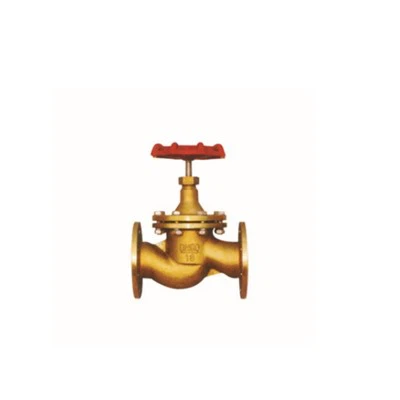
If you’re a maintenance manager for a light-duty fleet, an independent mechanic looking to offer better service to your gasoline engine clients, or a performance enthusiast wanting to monitor your engine’s health, we’d love to hear from you. We’re currently working with a number of gasoline engine fleets to trial our valves, and we offer flexible pricing for bulk orders and custom applications. Don’t let another engine failure be the result of skipping a simple, accurate oil test. Reach out to start a conversation about how Oil Sampling Shut-off Valves can work for your gasoline engine oil system.
Porcelain Bushing References:
- Society of Automotive Engineers (SAE) International. (2019). "Oil Sampling Best Practices for Light-Duty Gasoline Engines". SAE Technical Paper Series, No. 2019-01-0587.
- American Petroleum Institute (API). (2021). "Engine Oil Quality Verification and Condition Monitoring Guidelines". API Publication 1509.
- Lubrication Engineers Association (LEA). (2022). "Compatibility of Elastomer Seals with Modern Gasoline Engine Oil Formulations". LEA Technical Bulletin TB-007.
- National Institute for Automotive Service Excellence (ASE). (2020). "Light-Duty Engine Lubrication System Maintenance and Troubleshooting Guidelines". ASE Publication LS-20.
Hebei Anmei Electrical Equipment Co., Ltd.
Hebei Anmei Electrical Equipment Co., Ltd. is one of the most professional oil sampling shut-off valve manufacturers and suppliers in China, specialized in providing high quality products and service. Please feel free to buy customized oil sampling shut-off valve made in China here from our factory. Contact us for quotation.
Address: Hejian Yingzhou Economic Development Zone, Cangzhou City, Hebei Province
E-mail: sales@anmeielec.com
WebSite: https://www.anmeibushing.com/
