If you’ve ever walked through a commercial pipe manufacturing floor, you’ll notice something almost counterintuitive: the machines that spit out rigid PVC pipes, flexible HDPE tubing, or even specialty PEX lines look deceptively simple from the outside. Big, metal, rolling chunks of equipment that turn raw plastic pellets into meters of consistent, functional pipe. But anyone who’s ever stood by one for a full shift will tell you: operating a plastic pipe machine isn’t just flipping switches and monitoring a screen. It’s a skill that blends mechanical know-how, material science literacy, and hands-on problem-solving, and the right training makes the difference between a plant that hits production targets week after week and one that’s slowed by jams, defects, and unexpected downtime. As a supplier who’s worked with pipe plants of all sizes—from small fabricators serving local plumbing crews to large manufacturers supplying infrastructure projects across the country—I’ve seen firsthand how many new operators cut corners on training, only to run into avoidable issues. This post breaks down exactly what training a plastic pipe machine operator actually needs, why it matters, and how to make sure your team has the skills to keep your equipment running reliably. Plastic Pipe Machine

First, let’s start with the basics, because even the most advanced modern plastic pipe machines rely on core mechanical and electrical knowledge that you can’t skip. I’ve had customers come to me with brand new machines, but they didn’t train their operators on basic machine alignment, so they’d have a run of 10-foot pipes with lopsided walls before anyone noticed. That’s not a machine flaw—that’s a training gap. A foundational training module for any pipe machine operator needs to cover not just how the machine works, but how to troubleshoot its moving parts. That includes learning how to adjust the extruder’s screw speed, a component that’s the heart of the machine: the screw melts plastic pellets and pushes them through the die, and even a 10 RPM misadjustment can throw off pipe diameter or wall thickness. Operators also need to learn how to inspect and maintain critical parts like the cooling system, which uses water to set the pipe’s shape as it exits the die; if cooling lines get clogged with mineral buildup, the pipe will warp or develop cracks over time. Electrical training is another big piece. Modern pipe machines are controlled by PLCs (Programmable Logic Controllers) that run the entire production line, from pellet feeding to cut-off. A good training program should teach operators how to read basic PLC error codes—no need for advanced coding, but enough to know that a code for “die pressure too low” means they need to check the extruder’s temperature, not call a technician immediately. I’ve had small plants where operators taught themselves to clear common PLC errors without a technician, cutting downtime by 40% in their first year.
Next, material science isn’t just for chemists—it’s non-negotiable for pipe machine operators. Here’s what I mean: not all plastic pellets are the same. A HDPE pellet for residential water pipe has a different melt temperature than the same material used for gas line pipe, and mixing even a small batch of the wrong pellets can cause the pipe to fail pressure tests later. In my experience, new operators often treat all plastic pellets as interchangeable, which leads to costly reworks. A proper training module needs to break down common pipe materials: PVC, HDPE, PEX, CPVC, and specialty blends like barrier pipe for underground oil and gas lines. For each material, operators should learn its specific requirements: melt temperature range, extrusion speed limits, and how it behaves when cooled. For example, PEX pipe is cross-linked, and operators need to know how to adjust the curing process after extrusion to make sure the pipe stays flexible but doesn’t stretch too much when it’s laid. They also need to learn how to spot pellet contaminants: small bits of metal, moisture, or even degraded plastic left in the hopper from a previous run. Moisture, for instance, causes bubbles in the pipe wall, which are a major quality defect. I always tell customers: if your operator can’t tell the difference between a good PVC pellet and one that’s too wet to use, you’re setting yourself up for rejects.
Then there’s quality control, which is where a lot of new operators fall short. Running a pipe machine isn’t just about turning out length—every foot has to meet industry standards for diameter, wall thickness, pressure resistance, and tensile strength. Training here isn’t just reading a manual; it’s hands-on practice. Operators need to learn how to run basic quality tests: measuring wall thickness with a caliper, checking diameter with a ring gauge, and performing a hydrostatic pressure test on a sample pipe. I’ve seen operators who ran machines for months without doing these checks every shift, only to have a customer reject a 10,000-foot batch of pipe because the wall thickness was 10% too thin. That’s a loss of tens of thousands of dollars, all because no one was trained to do a 5-minute test at the end of each run. Training should also cover how to adjust the machine in real time when defects pop up. If a pipe has a small diameter variation, what do they adjust first? The extruder speed? The die gap? The cooling water temperature? Experienced operators learn to triage small issues before they become big ones, and that comes from supervised hands-on practice, not just online videos.
Safety is another non-negotiable training piece that can’t be overlooked. Plastic pipe manufacturing involves high temperatures (extruder heads can reach 400 degrees Fahrenheit), pressurized lines, and moving parts that can cause serious injury if not handled correctly. I’ve visited plants where new operators didn’t learn how to lock out/tag out (LOTO) the machine before clearing a jam, which is a major OSHA violation and a huge safety risk. A good training program for pipe machine operators must include OSHA-compliant safety training: how to properly operate emergency stops, how to avoid reaching into moving extruders, how to handle hot pipe, and how to respond to small fires that can happen when plastic overheats. It’s not just about avoiding accidents—it’s about complying with regulations. Many municipalities require pipe manufacturers to show proof of operator safety training to win infrastructure contracts, so skipping this training can cost you big opportunities.
Beyond these core modules, there are two more training areas that set top operators apart: changeover and continuous improvement. Pipe plants often run multiple product sizes or materials in one day, which means shutting down the machine to change the die (the part that shapes the pipe) and adjust settings. A bad changeover can take hours, while a skilled operator can do it in 15 minutes or less. Training should include hands-on changeover practice: how to remove and install dies correctly, calibrate new settings, and test a small sample of pipe after changeover to make sure it meets standards. Continuous improvement is another piece. The best operators don’t just run the machine—they track production rates, defect rates, and downtime, and suggest small tweaks. For example, an operator might notice that adjusting the cooling fan speed during summer months reduces warp in the pipe, which cuts defects by 15%. Training here can include basic data tracking: how to log machine performance, share observations with supervisors, and contribute to small process changes.
Now, I know what some small plant owners might be thinking: “I can’t afford to send my operator to a week-long training program.” But I’ve seen that you don’t need a fancy off-site program. The best training is a mix of on-site mentorship and structured modules, tailored to your specific machine and products. Many suppliers, myself included, offer on-site training for new machines, or access to training manuals and video modules that you can pair with hands-on practice with an experienced operator already on your team. The key is consistency: don’t just train an operator once when they’re hired. Pipe technology changes, materials evolve, and new safety rules come up, so annual refreshers keep operators sharp.
At the end of the day, a plastic pipe machine is only as good as the person running it. Skimp on training, and you’ll deal with more downtime, higher reject rates, and safety risks that can hurt your bottom line. Invest in proper training, and you’ll have operators who can keep your machine running at peak efficiency, meet quality standards, and adapt to new products as your business grows.
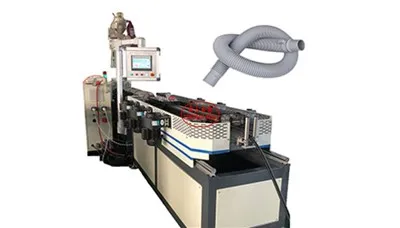
If you’re looking to upskill your team on operating your plastic pipe machine, or you’re in the market for new equipment paired with tailored training, reach out to discuss your specific needs. We work with operations of all sizes to create training programs that fit your production goals, so your team has the skills to keep your line running smoothly.
Corrugated Pipe Machine References
- Occupational Safety and Health Administration (OSHA). "Machine Guarding Requirements for Plastics Processing Equipment." OSHA Publication 3172, 2021.
- Plastics Industry Association. "Training Guidelines for Extrusion Line Operators." PIA Report 12-2020, 2020.
- American Society for Testing and Materials (ASTM). "Standard Practice for Training Extrusion Operators for Plastic Pipe Products." ASTM D6180-19, 2019.
- Manufacturing Extension Partnership (MEP). "Optimizing Training for Plastic Extrusion Equipment." National Institute of Standards and Technology, 2022.
Qingdao Tongsanhegu Plastic Machinery Manufacturing Co., Ltd.
With abundant experience, we are one of the most reliable plastic pipe machine manufacturers and suppliers in China. We warmly welcome you to buy durable plastic pipe machine for sale here from our factory. Quality products and reasonable price are available.
Address: West of Xixinzhi Village, Sanlihe District Jiaozhou, Qingdao City, Shandong Province, China
E-mail: info@tongsanhegu.com
WebSite: https://www.tongsanhegumachine.com/
