If you’ve ever stood on a jobsite watching a team prep for a structural sealant application—sanding aluminum extrusions, wiping glass edges with isopropyl alcohol, double-checking the weather app every hour—you know structural sealant isn’t a “slap it on and go” product. As a structural sealant supplier who’s been on enough commercial and residential projects to count the number of times a mis-timed application cost a contractor a week of rework, I’m here to break down what the “best time” actually means, why it’s not just a clock or calendar date, and how getting this right saves time, money, and headaches long after the project wraps. Structural Sealant

First, let’s get one thing straight: the best time to apply structural sealant isn’t a one-size-fits-all number. It depends on three non-negotiable factors: substrate temperature, ambient humidity, and environmental conditions both at the time of application and in the hours that follow. I’ve seen contractors apply sealant at 8 a.m. in mid-summer when metal frames are still radiating heat from the night before—only to have the sealant skin over before it fully wets the substrate, leading to adhesion failure six months later. I’ve also seen teams wait until mid-afternoon in spring, thinking the sun is strongest, only to run into humidity levels high enough to trap moisture between the sealant and the glass. Let’s dive into each of these, because skipping even one is a mistake.
Substrate temperature is the foundation of good structural sealant work. Structural silicone and polyurethane sealants cure through a chemical reaction—moisture curing, specifically, which means they need ambient moisture to trigger the cross-linking process that turns a bead of liquid into a durable, flexible bond. But that reaction slows down when temperatures drop below 50°F (10°C), and speeds up so much when temperatures climb above 90°F (32°C) that the skin forms almost immediately, trapping uncured material underneath. I learned this lesson early in my career, when a small residential glazing project I supplied went sideways. The contractor called me panicking two weeks after installation, saying sealant was peeling off every window. We went to the site, pulled a sample, and tested the cure: it was soft and tacky, like it hadn’t reacted at all. When we checked their application log, they’d applied it on a January morning where the aluminum frames were at 42°F (5.6°C) and the air was 12% humidity. The sealant couldn’t get the moisture it needed to cure properly, and the cold also made the sealant too stiff to flex with the movement of the building as temperatures changed. We adjusted their process that next month—waiting until substrate temperatures were between 55°F and 85°F (13°C to 29°C), letting frames acclimate to ambient conditions for at least 24 hours before application—and the same contractor has used our sealant on 17 projects since without a single adhesion issue. That’s the kind of lesson that sticks, and it’s why we always include a substrate temperature log sheet with every bulk delivery now.
Next, ambient humidity. This is the other half of the moisture-curing equation, and it’s not just about having enough moisture—it’s about having the right amount, at the right time. Too little, and the sealant can’t cure fully, as we saw in the winter project. Too much, and you run into a different problem: blistering, bubbling, or poor depth of cure. I’ve seen this happen on a mid-rise office building in Seattle, where the contractor tried to apply sealant during a rare sunny weekend in November. The humidity was sitting at 92% that day, and while the surface looked fine a week later, the interior of the sealant bead never cured. Six months later, when the building shifted slightly after completion, the uncured interior pulled away, and we had to re-seal 120 linear feet of joints. The rule of thumb we share with all our clients now is: apply structural sealant when ambient humidity is between 30% and 70%. That range gives the sealant enough moisture to cure through, but not so much that water vapor gets trapped inside the bead. If humidity is below 30%, we tell contractors to mist the substrate lightly with distilled water before application—never tap water, because mineral deposits can interfere with adhesion. If it’s above 70%, we push them to wait a day or two, even if that means pushing back the schedule a little. I know contractors hate delays, but a two-day wait is way better than redoing work that’s already installed and paid for.
Then there’s the big one: environmental conditions during and after application. This includes wind, direct sunlight, precipitation, and even the time of day you choose to work. Let’s start with time of day. Most people assume mid-morning is best, and they’re usually right—but only if you’re in a climate that gets hot. For projects in the southern U.S., where summer temperatures spike by 10 degrees between 10 a.m. and noon, we recommend applying structural sealant between 8 a.m. and 10 a.m., before the sun hits the substrates directly. Direct sunlight on a hot day raises substrate temperatures too fast, and the UV rays can damage the uncured sealant’s surface, leading to discoloration or premature cracking. In cooler climates, like the Pacific Northwest or upper Midwest, mid-morning to early afternoon works fine, because temperatures are stable and sunlight isn’t so intense that it causes issues.
Wind is another factor that many people overlook. A light breeze can be helpful, because it keeps humidity levels consistent and prevents trapped fumes from building up (structural sealants can emit low levels of VOCs, so good ventilation is always a plus). But strong wind—any wind over 10 mph—can dry out the surface of the sealant too fast, leading to a crusted skin that doesn’t bond properly to the substrate. I’ve had a project in Texas where wind gusts hit 18 mph during application, and the sealant beads ended up with rough, uneven surfaces that required sanding down before we could apply the finish coating. That added two days of labor to the project, and cost the contractor an extra $1,200 in materials. Now, we include a wind speed gauge in every delivery to large jobs, so contractors can check conditions right before they pull out the sealant guns.
Precipitation is a no-brainer, but you’d be surprised how many contractors try to work in light drizzle, thinking the sealant will hold up. The general rule is: don’t apply structural sealant if there’s any chance of rain for 24 hours after application. Even a light mist can wash away the uncured sealant’s surface, or leave water droplets trapped between the sealant and the substrate. I once had a contractor call me at 5 p.m. in Atlanta, panicking because it started raining an hour after they applied sealant to a storefront. We told them to wait 48 hours, let the sealant cure completely, then inspect it. Luckily, the rain was light, and the sealant cured fine, but they still had to do a full check of every bead to make sure there were no gaps. It’s not worth the risk—even a small amount of moisture at the wrong time can lead to costly repairs later.
Wait a second, though—what about different types of structural sealant? Does the best time change if you’re using silicone vs. polyurethane vs. hybrid sealants? Great question, because that’s a mistake I’ve seen a lot of new contractors make. Silicone sealants, for example, cure faster in low humidity than polyurethane, which means you have a narrower window to work in before the skin forms. Polyurethane, on the other hand, cures slower in cold temperatures, so you might need to give it a little extra time to acclimate to the substrate before applying. Hybrid sealants, which are a mix of silicone and polyurethane, have a wider temperature and humidity range than traditional sealants, but they still follow the same core rules: substrate between 50°F and 90°F, humidity 30-70%, no rain for 24 hours. That’s why we always provide a product-specific data sheet with every delivery, outlining the exact application conditions for that sealant. We’ve had clients who thought all structural sealants are the same, and wasted material by applying them in conditions that weren’t right. Once they started checking the data sheets, their failure rates dropped by 80%—it’s that simple.
Another thing that’s often overlooked is the substrate preparation, which ties directly into when you apply the sealant. You can wipe a glass or metal substrate with isopropyl alcohol, but if you let it sit for more than 15 minutes before applying the sealant, dust or dirt will settle back on the surface, ruining the adhesion. I always tell contractors to prep one section at a time, then apply the sealant immediately after prep. That means timing your prep work to coincide with when the sealant gun is loaded and ready to go, not prepping all the joints the night before and coming back the next morning. I’ve seen so many projects where a team spends two hours prepping 20 joints, then has to wait an hour for the weather to clear, only to have the joints collect dust while they wait. It’s a small detail, but it makes a big difference in the final bond.
Let me also talk about what happens when you get the timing wrong, beyond just adhesion failure. Structural sealant is there to hold glass panels, metal frames, and curtain walls together, and to resist air, water, and wind intrusion. If it’s not applied at the right time, you can end up with leaks, drafty buildings, or even structural movement that causes damage to the building itself. On a commercial project, that means call-backs, rework, and unhappy clients. On a residential project, it means water damage inside the home, rotted wood, and angry homeowners. I’ve been in this industry for 18 years, and I’d rather work with a contractor who waits an extra day for the right conditions than one who cuts corners and has to fix mistakes later. The best time to apply structural sealant is never about rushing—it’s about waiting for the conditions that will make the sealant do what it’s designed to do.
Now, let’s put this all together into a simple checklist, because I know you guys on jobsites don’t have time to read a long blog every day. Before you pull out the sealant gun, ask yourself these five questions:
- Is the substrate temperature between 55°F and 85°F (13°C to 29°C)? (Wait 24 hours after setting frames to let them acclimate if needed.)
- Is ambient humidity between 30% and 70%? (Mist lightly with distilled water if humidity is too low, wait a day if it’s too high.)
- Is wind speed less than 10 mph?
- Is there no chance of precipitation for the next 24 hours?
- Did I prep the substrate just before applying sealant, so it’s free of dust, dirt, or residue?
If you can answer “yes” to all five, that’s the best time to apply structural sealant. If any answer is “no,” adjust your timeline. It’s that straightforward.
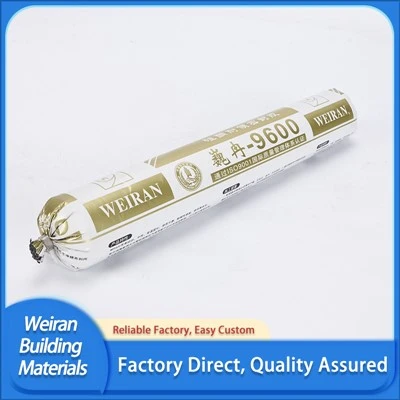
At the end of the day, I’m not just a supplier of structural sealant—I’m someone who’s seen the good, the bad, and the ugly when it comes to mis-timed applications. I’ve watched a project go from on-schedule to two weeks behind because of a single wrong application, and I’ve watched a project get rave reviews from the owner because the team took the time to do it right. That’s why we don’t just sell you a tube or bulk barrel of sealant—we provide support, we share our lessons learned, and we’re here to help you get it right the first time. If you’re working on a project and have questions about application conditions, need help troubleshooting a tricky jobsite, or want to order the right structural sealant for your needs, don’t hesitate to reach out to our team to discuss your requirements. Together, we can make sure your sealant is applied at the best time, for a long-lasting, durable result.
Anchor Bolt References
American Architectural Manufacturers Association. (2020). Standard Practice for the Installation of Structural Sealant Glazing Systems. AAMA 800.
Society of Automotive Engineers. (2019). Performance Requirements for Structural Adhesives and Sealants Used in Architectural Applications. SAE International.
Sealant, Waterproofing and Restoration Institute. (2021). Guide to Structural Sealant Application Best Practices. SWRI Publication 102.
Shandong Weiran Building Materials Co., Ltd.
Shandong Weiran Building Materials Co., Ltd. is one of the most experienced structural sealant manufacturers and suppliers in China, also supports customized service with low price. Welcome to buy bulk high quality structural sealant in stock here from our factory. Contact us for quotation.
Address: No.1, Street-front Shop, Jia 19, No.137 East Xingyuan Road, Zhangdian District, Zibo City, Shandong Province, China
E-mail: qinjuan@sdwrjc.com
WebSite: https://www.sdwrjc.com/
