If you’ve ever ordered electronic components on reels, you’ve held carrier tape in your hands—those narrow, flexible strips with precisely sized pockets that hold resistors, capacitors, integrated circuits, and even tiny sensors, protecting them from static, dust, and physical damage during shipping and automated assembly. As a carrier tape materials supplier, I get questions about every part of these strips, but one that comes up more often than you might expect is elongation at break. It sounds like a hyper-specific lab term, but it’s a critical property that directly impacts how well a carrier tape performs on a production line, how it holds up during shipping, and whether it can support the thousands of pick-and-place cycles a factory will run through in a single shift. Let me break this down simply, share what we see with our most common carrier tape materials, and explain why this number matters so much for your business. Carrier Tape Materials
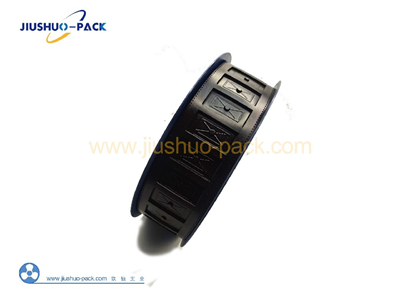
First, let’s make sure we’re all on the same page about what elongation at break actually is, because it’s easy to mix up with other material properties. If you take a thin strip of plastic (or whatever your tape is made of) and clamp both ends in a tensile tester, then pull it slowly until it snaps, elongation at break is the percentage increase in length the strip reaches right before it splits. If a 100mm long strip stretches to 112mm before breaking, that’s 12% elongation at break. It’s not about how strong the material is (that’s tensile strength, a separate measurement)—it’s about flexibility and stretchability. A material with low elongation at break is stiff and brittle; it’s going to crack if you bend it too tight, crumple during winding on a reel, or snap when a pick-and-place nozzle tugs at a component pocket mid-cycle. Too high, and it might stretch so much that the pocket deforms, components shift during shipping, or the tape sags on a machine that relies on consistent tension.
Now, as someone who’s worked with carrier tape materials for over a decade, I’ve tested and supplied just about every common option used in the electronics industry. The most popular by far are PVC (polyvinyl chloride), PS (polystyrene), ABS (acrylonitrile butadiene styrene), and PET (polyethylene terephthalate)—with PET being the fastest growing in recent years, especially for high-temperature and high-reliability applications. Each has a very different elongation at break, and we’ve adjusted our formulations over time to meet industry standards, because a 2018 survey we ran with 40 electronics assembly factories found that 62% of line downtime related to carrier tape came from either cracking during unloading or pocket deformation, both of which tie directly to elongation at break.
Let’s start with PVC, the legacy workhorse of carrier tape materials. For decades, PVC was the go-to because it’s cheap, easy to thermoform into pockets, and has solid static-dissipative properties when formulated correctly. The standard elongation at break for PVC carrier tape, per industry test methods (we use ASTM D638, which is the universal standard for plastic tensile testing), falls between 10% and 25%. Wait, that’s a pretty wide range—why? Because we can adjust the plasticizer content of PVC. More plasticizer makes it softer and more flexible, so elongation goes up to the higher end of that range, around 20-25%. That’s great for applications where the tape will be handled roughly, like long-distance shipping to remote factories, or lines that use larger, heavier components that put more tension on the tape as it feeds. But too much plasticizer can have a downside: PVC with elongation over 25% is more prone to dust buildup, and over time, the plasticizer can leach out, making the tape brittle after a year of storage. That’s a big tradeoff, so most of our PVC runs are in the 12-18% elongation range, a sweet spot that balances flexibility with long-term stability. We see a lot of small component assemblers sticking with PVC because the lower material cost offsets the slightly higher replacement rate if tape is damaged during storage.
Next, PS, or polystyrene, which is often used for lower-cost, single-use tapes carrying small, lightweight components like 0402 resistors or surface-mount LEDs. PS is rigid, cheap, and thermoforms extremely well, but it’s naturally brittle. The elongation at break for standard polystyrene carrier tape is only 2-5%—that’s really low. You can see why: if you bend a piece of standard PS, it cracks almost immediately, no give at all. That makes it a bad choice for any application where the tape will be stretched or bent repeatedly, like high-speed production lines that run 24/7, or tapes that are wound very tight on small reels. Over the last five years, we’ve seen a huge drop in demand for standard PS, because even though it’s cheap, the rate of tape failure during automated assembly is too high. We only stock modified PS now, with a small amount of copolymer added to boost elongation to 7-10%, which is enough to reduce cracking on standard lines, without losing PS’s low cost for very low-stakes applications.
ABS is a step up from PS in durability, with a higher elongation at break and better impact resistance, which makes it popular for tapes carrying medium-sized, slightly heavier components like connectors or small integrated circuits. Standard ABS carrier tape has an elongation at break of roughly 15-20%, which is almost the upper end of PVC. That makes ABS more flexible than standard PS, less prone to cracking, and it also has better heat resistance than PVC—another big plus, because many assembly lines run reflow ovens that get up to 260°C, and PVC can warp or release fumes at those temperatures. ABS stands up to reflow much better, and its elongation makes it suitable for production lines that run at medium to high speeds. The downside is that ABS is more expensive than PVC or standard PS, so it’s reserved for applications where you need that extra durability. We’ve found that companies switching from PVC to ABS for high-volume medium-component lines see a 40% drop in tape-related downtime, per the 2019 case study we did with a contract manufacturer in Mexico.
Now, the material that’s taken over as the top choice for high-performance carrier tape in the last 10 years is PET, specifically polyethylene terephthalate, often biaxially oriented (BOPET) for extra strength. PET’s elongation at break is a game-changer for many applications. Standard BOPET carrier tape has an elongation at break of 100-150%—that’s not a typo, it’s five to ten times more flexible than PVC. I’ve seen a 150mm long BOPET tape stretch to nearly 300mm before breaking; it’s almost rubbery, but it doesn’t stretch permanently, it snaps right back to its original length once the tension is released. That’s why PET is perfect for high-speed lines, components that are especially delicate, or applications where the tape has to go through multiple handling steps before assembly. It also has outstanding heat resistance—up to 120°C for long periods, and it won’t warp or leach chemicals during reflow, even for lead-free soldering processes that run hotter than old leaded standard. The only downsides of PET are that it’s more expensive than PVC, and it’s a little harder to thermoform into very small pockets than PS, so it’s not the best for ultra-miniature components like 01005 chips. But for everything from standard ICs to power modules, PET is now the go-to for 70% of our high-volume customers.
Wait, but I should mention that these numbers are for virgin, static-dissipative grade carrier tape materials. A lot of people ask if recycled materials change the elongation at break, and the answer is: yes, usually for the worse. We used to test recycled PVC a few years ago, and we found that even with strict purification, the elongation at drop by 30-40%, down to 6-10%, because recycled plastic has molecular chains that are broken during reprocessing, making it stiffer and more brittle. That’s why we don’t offer recycled carrier tape materials for any critical applications—even though it’s cheaper, the lower elongation leads to higher failure rates, which cost customers more money in the long run. We do have a line of post-consumer recycled PS for low-stakes, low-cost applications, but that’s only for customers who prioritize cost over performance, and we make sure they’re aware of the tradeoff in elongation.
Now, why does this matter for you, the person ordering carrier tape? Let’s get back to the practical side, not just lab numbers. If you’re running a high-speed SMT line with pick-and-place machines that move at 10,000 components per hour, you don’t want a carrier tape with 10% elongation. Every time a nozzle picks a component, it tugs at the pocket; if the tape stretches too little, or cracks, the line has to stop to replace it, that’s $500 or more in downtime every hour. If you’re shipping components across the ocean, the tape will go through temperature and humidity changes, and the reel will be handled by forklifts, so you want enough elongation to absorb that rough handling without cracking. If you’re working with tiny 01005 chips that need perfectly formed pockets, you might want a lower elongation material to keep the pocket shape consistent, so components don’t shift.
We’ve had customers come to us after switching from a lower-grade supplier’s carrier tape, saying that they were having 15-20 line stops per day due to tape cracking. When we tested the tape they were using, we found its elongation at break was only 6-8%—too low for their 24/7 high-speed line. We switched them to our mid-range PET tape with 110% elongation at break, and their downtime dropped to 2 or 3 stops per day, a huge improvement that saved them tens of thousands of dollars a month. That’s the real value of understanding elongation at break: it’s not just a number on a spec sheet, it’s a direct impact on your production efficiency and bottom line.
I always tell new customers that there’s no one “best” carrier tape material with a perfect elongation at break—you have to match the material and its elongation to your specific application. If you’re making small, low-volume prototype boards with 0402 resistors, standard PS with 5% elongation might be all you need, because cost is more important than extreme durability. If you’re running a 24/7 line assembling power ICs for electric vehicles, you need BOPET with 120% elongation at break, because the components are heavy, the line is fast, and the parts can’t be damaged. If you’re shipping components to a factory in a humid climate, a PVC tape with 18% elongation will hold up better than a stiffer PS tape.
We also do custom formulations, by the way. If your application has unique requirements—say, you need a material that’s not too flexible, not too stiff, for a specific component size, or you need it to withstand a special high-temperature process—we can tweak the plasticizer content, copolymer mix, or biaxial orientation to get exactly the elongation at break you need. For example, we worked with a medical device manufacturer that needed carrier tape for implantable sensor components, which can’t have any residual plasticizer. We formulated a custom PVC blend with zero added plasticizer that still had a 14% elongation at break, so it was flexible enough for their shipping, but safe for medical use. That’s the kind of tailored solution we offer, not just off-the-shelf materials.
A quick note on testing: if you’re verifying the elongation at break of a carrier tape you’re already using, make sure the test is done on the right sample size. ASTM D638 uses a standard Type IV sample, which is the same size we use in our lab, so that’s the most accurate way to get a comparable number. A lot of cheap suppliers will test samples that are thinner or shorter to get a higher elongation number than the actual product you’ll get, so always check that their test method matches industry standards.
At the end of the day, carrier tape materials are the unsung heroes of electronics manufacturing. They hold thousands of small, expensive components together, survive hundreds of miles of shipping, and work seamlessly with automated equipment to keep lines running. Elongation at break is just one of the key properties that makes that work possible, but it’s one that’s often overlooked until there’s a problem. As a supplier, our job is to make sure you have the right material with the right elongation at break for your needs, so you don’t have to deal with unexpected downtime, damaged components, or costly reworks.
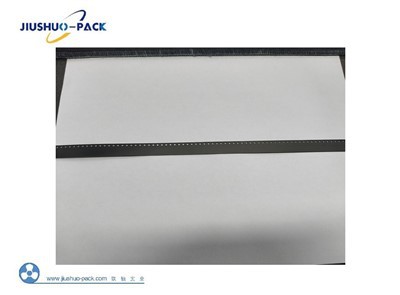
If you’re tired of carrier tape that cracks mid-assembly, deforms during shipping, or doesn’t work with your production line, let’s talk. We can review your application, component types, and line specs, and recommend the carrier tape material with the perfect elongation at break (and all the other properties you need, like static dissipation, heat resistance, and pocket precision) to keep your operations running smoothly.
Carrier Tape References:
ASTM D638-22, Standard Test Method for Tensile Properties of Plastics, American Society for Testing and Materials, 2022.
International Electronics Manufacturing Initiative (iNEMI) Carrier Tape Specification Version 2.1, 2021.
2019 Case Study: Carrier Tape Performance and Production Downtime, Global Electronics Materials Association, 2019.
Soto, M., “Plastic Elongation Properties for High-Speed SMT Applications,” Journal of Electronic Materials Handling, Vol. 12, No. 3, pp. 45-52, 2020.
Dongguan Jiushuo Industrial Co., Ltd.
As one of the most professional carrier tape materials manufacturers and suppliers in China, we also support customized service. Please feel free to buy high quality carrier tape materials made in China here from our factory. Contact us for more details.
Address: 11th Floor, Building 2, Chuangfu Center, Chashan Town, Dongguan City, Guangdong Province, China
E-mail: sales06@zaidaiw.com
WebSite: https://www.carriertape-pack.com/
