If you’ve ever walked through a metal fabrication shop, you’ve probably seen aluminum parts with that smooth, uniform, corrosion-resistant finish we call anodizing. But what you might not have noticed is the equipment that makes that finish possible. As someone who’s spent 18 years in the anodizing equipment supply business, I’ve talked to hundreds of operators, plant managers, and new startup founders who all ask the same basic question: batch vs. continuous anodizing equipment—what’s the real difference, and which one is right for my operation? Anodizing Equipment
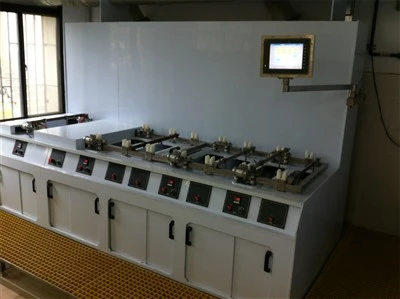
Let me start with the basics, because too many people jump straight to specs without understanding the core purpose of both systems. Anodizing is an electrochemical process that converts the metal surface into a durable, anodic oxide layer. That layer isn’t just for looks—it protects against rust, wear, and UV damage. But how you load parts into the process, move them through the chemical tanks, and unload them is where batch and continuous systems split, hard.
What Exactly Is Batch Anodizing Equipment?
Batch anodizing is the old workhorse of the industry, and for good reason. At its core, it’s simple: you load a specific set of parts (a “batch”) into a rack, submerge that rack into a series of tanks, leave it for a set amount of time, pull it out, and move to the next batch. For smaller shops or operations with varied part sizes and finishes, this is the system that’s been used for decades.
Let me walk through a typical batch set-up. You have a loading station where workers hang parts on titanium or aluminum racks—we recommend titanium, by the way, because it resists the caustic and acidic solutions used in the tanks. Next come the tanks: degreasing to remove oil and contaminants, acid etching to smooth surface imperfections, desmutting to clean up residual etch residue, anodizing (usually in sulfuric acid for most commercial finishes), then sealing for durability. Each tank is long enough to hold the entire rack length, and a overhead crane or monorail system moves the rack from tank to tank on a timer.
I remember a customer who makes custom motorcycle parts—they started with a 50-gallon batch system back in 2010. They’d load 10 handlebars at a time, run the cycle overnight, and unload in the morning. It was perfect for them because they run 20 different part lines, each with unique anodizing specs (some need matte, some need hard coat, some need colored dye). If a batch has a bad handlebar, you can pull just that rack, re-clean it, and run it again without wasting a whole production line. No major downtime, no huge capital outlay to start small.
But batch systems have limits. Cycle times are long—usually 45 minutes to 2 hours per batch, depending on the part. And you can’t really adjust the process mid-batch easily. If your anodizing bath’s concentration drops, you have to stop the entire cycle to add chemicals, which can throw off the finish of the whole batch. For high-volume production, that inefficiency adds up fast. If you’re making 10,000 aluminum window frames a month, a batch system might mean waiting 2 days to process all of them, when continuous could do it in 8 hours.
What Is Continuous Anodizing Equipment?
Continuous anodizing is the automated, high-volume option, built for parts that are consistent in size and shape. Instead of loading batches, you feed a continuous strip or coil of metal (or even long, uniform parts like extrusions) into a line that moves steadily through all the tanks, without stopping. It’s a straight-through process—no lifting racks, no waiting for batches, just a non-stop flow of metal.
Think of it like a assembly line, but for anodizing. The metal strip is unrolled from a spool, passes through a series of process tanks in a straight line, and is wound back up onto another spool when it’s done. For extrusions that are, say, 10 feet long and 2 inches wide, they’re loaded into a conveyor system that moves them from tank to tank, one after another, without interruption. The speed of the line is calibrated to make sure each part gets exactly the right amount of time in each chemical, every single time.
I recently worked with a large architectural metal fabricator that makes aluminum cladding for skyscrapers. They were moving 50,000 pounds of aluminum sheet a month with a batch system, and it was causing them to miss delivery deadlines. We installed a 10-foot wide continuous coil anodizing line for them. Now, that same 50,000 pounds is processed in 12 hours, not 3 days. The finish is consistent across the entire sheet, no variation from batch to batch, which is critical for their large building projects—you don’t want one wall panel a slightly different shade than the next.
But continuous systems aren’t right for everyone. They’re expensive—we’re talking 2 to 5 times the cost of a comparable batch system, depending on line width and output. And they’re inflexible. If you get an order for a small, custom part, you can’t load a single part onto a continuous line; you have to feed long, uniform material. Switching between part sizes or finishes usually requires shutting down the entire line, flushing all the tanks, and re-calibrating, which can take 8 to 12 hours. That’s a big hit if you run mixed jobs, unlike a batch line where a switch takes 20 minutes max.
The Key Differences: Breakdown By Use Case, Cost, and Finish
Now that I’ve explained the basics, let’s get into the nitty-gritty differences that matter most to equipment buyers. I’ve listed these for every customer I work with, so they can see exactly where each system fits.
First, flexibility. This is the biggest one. Batch systems win here, hands down. If you have mixed part sizes, custom orders, or runs of less than 1,000 parts, a batch line lets you adjust on the fly. Want to run a hard coat for aerospace parts today and colored automotive trim tomorrow? No problem. Continuous lines only make sense if 90% of your orders are the same part, same size, same finish. I had a customer who tried a continuous line for custom food service equipment—they had runs as small as 50 parts, and it cost them $12,000 a month in wasted material and downtime because they couldn’t run small batches efficiently. They swapped back to a batch system last year, and their profit margins went up 18% overnight.
Next, production volume and speed. Continuous lines are the clear winner here for high volume. If you’re making 50,000+ pounds of uniform parts per month, a continuous line processes them at a rate of feet per minute, no waiting. Batch lines process by the hour, so for high volume, you need multiple batch lines to keep up. That adds more cost in floor space, labor, and equipment. For example, a 10-foot continuous line can process 50,000 pounds of coil in a single shift, while a comparable batch system would need three 50-gallon lines running 24/7 to hit that same number.
Cost is another big factor. Initial capital cost: batch is lower, usually starting at $25,000 for a small desktop batch system for hobbyists up to $200,000 for a high-volume industrial batch line. Continuous lines start at $150,000 and go up to $1 million or more for large, wide lines for architectural or automotive parts. Then there’s operating cost. Batch systems have higher labor costs—each batch needs an operator to load, unload, and monitor. Continuous systems are automated, so you need fewer operators, around one per shift instead of two or three. But continuous lines have higher utility and chemical costs because they’re always running, even if you don’t have parts to anodize. A batch line can be turned off and only used when you have a job, saving on electricity and chemicals.
Finish consistency: This is where continuous lines shine for uniform parts. Because every part spends exactly the same amount of time in each tank, the oxide layer thickness is identical across the entire part, and color is consistent from piece to piece. Batch lines can have slight variation—small differences in how a part hangs in the rack, or a 30-second delay between one batch and the next, can change the finish. For industries like aerospace, where strict tolerances are required, that slight variation might be a problem, but for many general metal finishing jobs, it’s negligible.
Common Mistakes I See Customers Make When Choosing
Over the years, I’ve seen so many buyers pick the wrong system because they go off hype or a one-size-fits-all advice from a peer. Let me call out the two biggest mistakes I see:
-
Buying a continuous line “for future growth” when they only do small to medium runs now. I had a startup in the electric bike industry do this a few years back. They had a few clients, total monthly production of 5,000 pounds of parts, but they thought they’d grow to 50,000 pounds in a year. They spent $300,000 on a continuous line, and it sat idle 60% of the time for 18 months while they worked to hit that growth target. They ended up taking a $100,000 loss to re-sell half the line and add a small batch system. Growth is great, but build for your current needs first, add capacity as you go.
-
Thinking batch lines are always cheaper for high volume. That’s only true if you run your high volume consistently. If you have seasonal peaks—like a window fabricator that does 10,000 pounds a month in winter and 50,000 pounds a month in spring—batch lines can add up fast. But if you’re a constant high-volume producer, continuous is the way to go. The key is to calculate your average monthly production, not just your peak.
What Should You Choose?
At the end of the day, the right system depends on three questions:
- What’s your average monthly anodizing volume?
- How much product variation do you have in terms of part size, shape, and finish?
- How much floor space, labor, and capital do you have to invest?
If you’re a small to medium operation, running custom or mixed parts, with volume under 20,000 pounds a month, go with a batch system. It’s flexible, low upfront cost, and easy to scale as you grow by adding more racks or expanding the line as your budget allows.
If you’re a high-volume operation, making uniform parts (coil, extrusions, standard-sized parts) with consistent finishes, and volume over 30,000 pounds a month, continuous is the better pick. The higher initial cost is offset by faster cycle times, lower long-term labor, and consistent quality that keeps your clients happy.

I’ve been supplying anodizing equipment for almost two decades, and the number one rule I tell every customer is: don’t let someone sell you a system you don’t need. I’ve had clients come in thinking they need a $1 million continuous line, and after talking through their order history, we put together a $40,000 batch system that does everything they need and saves them $960,000. Conversely, I’ve had clients with 100,000 pounds of monthly volume that were struggling with inefficient batch lines, and we’ve helped them upgrade to a continuous line that cut their processing time in half.
Electroplating Machine If you’re still not sure which system is right for your anodizing operation, feel free to reach out to discuss your specific needs. We can review your order history, production goals, and budget to help you pick a solution that fits, no pressure, no sales tactics.
References
- ASM International. (2005). Surface Engineering for Aluminum and Its Alloys: Anodizing, Conversion Coatings, and Other Processes. Materials Park, OH: ASM International.
- Davis, J. R. (Ed.). (1993). Aluminum and Aluminum Alloys. Materials Park, OH: ASM International.
- American Electroplaters and Surface Finishers Society. (2001). Metal Finishing Guidebook and Directory. Orlando, FL: American Electroplaters and Surface Finishers Society.
JYC Environmental Machinery (Haian) Co., Ltd.
As one of the most professional anodizing equipment manufacturers and suppliers in China, we have world-leading production equipment and strong manufacturing capabilities. Please feel free to wholesale high quality anodizing equipment for sale here from our factory.
Address: No.6 Yimin Road, Yazhou Town, Haian City, Jiangsu Province
E-mail: 18094355699@163.com
WebSite: https://www.jycplating.com/
