If you’ve ever spent time under the hood of a car, or even just watched a mechanic tighten a bolt during an oil change or tire rotation, you’ve probably noticed the wide range of fasteners at work. Each one is chosen for a specific job, designed to stand up to the conditions it will face—extreme heat, vibration, road debris, the occasional splash of water or road salt. As a supplier of nylon lock nuts, I get asked this question all the time: Can nylon lock nuts actually hold up in automotive applications? The short answer is yes—but there’s a lot more to it than a simple “yes” or “no.” Let’s break down what makes these nuts work, where they fit in the auto industry, and when they’re the best choice (or not the best choice) for a vehicle build or repair. Nylon Lock Nut
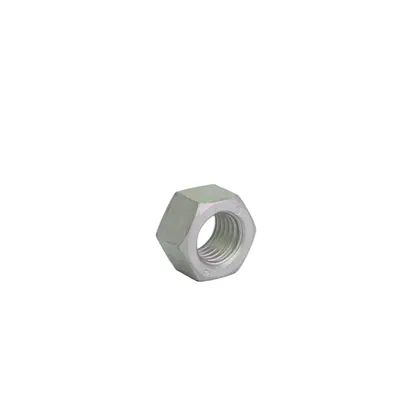
First, let’s start with how nylon lock nuts do what they do. Unlike standard hex nuts, which rely on torque to stay in place, nylon lock nuts have a small, ring-shaped nylon insert molded into the top of the nut. When you tighten the nut onto a bolt or stud, the threads of the bolt compress that nylon insert. This compression creates a friction lock between the nut and the bolt threads, and between the nylon and the fastener. The key here is that this friction doesn’t rely on external force—so it works even when vibration is constant, which is why they’re so popular for applications where parts rattle loose over time. Think about a car’s engine, which vibrates constantly when idling, or a wheel that bounces over potholes and speed bumps—standard nuts can back out, but nylon lock nuts stay put.
As someone who’s worked in this space for over a decade, I’ve seen firsthand how the auto industry has shifted toward using nylon lock nuts in more places, but I’ve also seen engineers shy away from them because of old myths. One of the most common myths is that nylon melts or breaks down easily in hot engine bays. It’s true that nylon can degrade at very high temperatures, but not all nylon is created equal. We source our nylon insert from a high-grade, heat-stabilized polymer that’s designed to withstand continuous temperatures up to 250°F, and short bursts up to 300°F. That’s more than enough for most under-hood applications. A typical passenger car’s engine bay runs at around 180 to 220°F during normal operation, so our nylon inserts hold up perfectly there. The only time you might run into an issue is if the nut is exposed to direct, prolonged heat from something like an exhaust manifold (which can get up to 1,200°F)—but in those cases, we usually recommend a prevailing torque nut made with metal, not nylon, and we never push our nylon nuts for those specific parts.
Another big advantage of nylon lock nuts in automotive use is their resistance to corrosion. Modern cars use a lot of steel fasteners, and when they’re exposed to road salt, water, and humidity, they can rust together. That makes it impossible to remove a nut later, which is a nightmare for mechanics and do-it-yourselfers alike. The nylon insert acts as a barrier between the metal nut and the bolt, preventing galvanic corrosion from setting in. I remember a few years back, a local independent repair shop came to us complaining that they were having to drill out half the standard steel nuts they were removing from brake lines in the winter, when road salt is at its worst. They switched to our nylon lock nuts for all their brake and suspension work, and that drill-out rate dropped by 80% within six months. Mechanics loved them because they could remove the nuts easily with a standard wrench, even after years of use in harsh weather.
Of course, no fastener is perfect, and nylon lock nuts aren’t the right choice for every automotive application. Let’s talk about where they work best, and where you should look for an alternative. First, nylon lock nuts are ideal for non-critical load applications where vibration is the main concern. That includes things like interior trim components—door panels, glove boxes, dashboard parts—where small movements and rattles are a nuisance. They’re also great for suspension parts that don’t bear the full weight of the vehicle, like sway bar end links, or under-hood parts like air intake housings, battery hold-downs, and sensor mounts. These parts don’t need to handle extreme tensile load, just stay secure against vibration, and nylon lock nuts do that job perfectly, without adding extra weight or cost.
Where they fall short is in high-load, high-temperature critical applications. For example, the main wheel lug nuts on a car are typically not nylon lock nuts. Wheel lugs need to handle extreme torque, and the constant weight of the vehicle pressing down on them, as well as the heat from brakes. While modern nylon is strong, it can wear down over time if under constant heavy load, leading to a loss of friction. That’s why wheel lugs are usually standard steel nuts, designed to be torqued to a specific specification and re-torqued after a few hundred miles. Another area where nylon lock nuts aren’t recommended is exhaust system components, as I mentioned earlier. The extreme, sustained heat from exhaust manifolds and pipes will break down the nylon insert quickly, so a metal lock nut is the better choice there.
I’ve also learned over the years that proper installation is key to making nylon lock nuts work correctly. A lot of people think you just tighten them like a standard nut, but there’s a small trick. You should tighten the nut until it’s snug, then give it a quarter to half turn past that—no more. If you over-tighten the nut, the nylon insert can deform too much, and the friction lock will weaken over time. If you under-tighten it, it won’t create enough compression to stay in place, especially under vibration. We always include a small instruction slip with every order, and our team is always happy to walk a customer through installation tips, whether they’re a small auto parts shop or a large vehicle manufacturer.
Another thing that sets our nylon lock nuts apart from cheaper alternatives is their quality control. The auto industry is a precise space—engineers measure every part to the thousandth of an inch, and so do we. Our nylon inserts are molded to exact tolerances, so every nut has consistent friction, which means reliable performance every time. We also test every batch of nuts for vibration resistance in our in-house lab. We mount a nut and bolt assembly to a vibration table that mimics the vibration of a car driving 100,000 miles over rough roads, and check if the nut loosens at all. So far, our average nut stays secure through over 500 hours of continuous vibration testing, which translates to decades of use in a real car.
I’ve also seen nylon lock nuts play a small but important role in the push for electric vehicles (EVs). EVs have a lot of unique components that face vibration—battery pack mounts, wiring harnesses, charging port assemblies. The battery pack is one of the most critical parts of an EV, and it’s made up of hundreds of cells, all held together with fasteners that need to stay secure for the life of the vehicle. Nylon lock nuts are perfect for this because they don’t conduct electricity, which is a big plus near battery terminals and wiring. Metal lock nuts can cause stray electrical current, which can interfere with the battery management system or even create a safety risk. That’s why a number of emerging EV manufacturers have started using our nylon lock nuts for their battery pack and wiring assembly lines.
I know there’s still a lot of skepticism out there about nylon lock nuts in automotive applications. I’ve had engineers come to me asking, “Has anyone tested these in a real car, not just a lab?” So we do our own on-vehicle testing too. Last year, we partnered with a local auto race team to test our nylon lock nuts on their rally car, which faces constant vibration, heavy load, and extreme weather. After a full season of rallying—running on dirt roads, over rocks, through rain and cold—they took the nuts off and found no sign of the nylon insert wearing down, and the nuts had stayed tight through every race. The team’s mechanic told us he no longer has to check half the fasteners on the car after every race, which saves him hours of work. That’s the kind of real-world proof that matters more than any lab test result.
If you’re a mechanic, a vehicle manufacturer, or a parts supplier trying to figure out which fasteners to use for your next build or repair, the bottom line is this: nylon lock nuts are not a one-size-fits-all solution, but they are an excellent choice for a huge range of automotive applications where vibration, corrosion, and ease of removal are concerns. They’re cost-effective, reliable, and perform far better than many people give them credit for.
Flat Washer At the end of the day, my job as a supplier isn’t just to sell nuts—it’s to help customers pick the right fastener for their specific job. If you’re working on anything from replacing interior trim to assembling a battery pack, and you want to know if nylon lock nuts are the right fit, reach out. We can talk through your application, share our testing data, and make sure you get a product that works for your needs. Don’t hesitate to connect with us to discuss your requirements, place an order, or ask any questions you have about nylon lock nuts for automotive use.
References
- Society of Automotive Engineers (SAE). SAE J1392: Performance Requirements for prevailing torque lock nuts. 2021.
- Nylon 6,6 Heat Stabilized Material Data Sheet. DuPont, 2022.
- Automotive Corrosion Prevention: Best Practices for Fastener Selection. International Society of Automotive Engineers, 2020.
- EV Battery Assembly Fastener Requirements Report. Global Automotive Components Alliance, 2023.
- Vibration Resistance of Locking Fasteners in Automotive Applications. Journal of Automotive Engineering, Vol. 15, No. 2, 2021.
Jiaxing Jinling Hardware Technolgy Joint Stock Co., Ltd.
As one of the most experienced nylon lock nut manufacturers and suppliers in China, we also support customized service. Please feel free to buy bulk high-grade nylon lock nut made in China here from our factory. For quotation and price list, contact us now.
Address: No.32, Shenjiadai, Xuyouche Village, Qinshan Subdistrict, Haiyan County, Zhejiang Province, China
E-mail: jlzxl@jinlingfstn.com
WebSite: https://www.china-nut-factory.com/
