If you’ve ever stood in a control room mid-process—pressure gauges screaming, a line teetering between flow stability and a shutdown—you know valve components aren’t just small parts. They’re the unsung heroes keeping refineries, chemical plants, water treatment facilities, and food processing lines from grinding to a halt. As someone who’s been in the valve components supplier game for over a decade, I’ve lost count of how many times a client has called me panicking because a generic part they ordered online burned out in 2 weeks instead of the 2 years it should last. The thing is, not all valve components are equal. Skip the cheap Amazon listings, and let’s break down the real differences between brands, why they matter, and what actually moves the needle when you’re spec’ing parts. Valve Components

First off, let’s get something straight: when I say “valve components,” I’m not talking about the whole valve (though they’re part of it). I’m talking about the bits that do the heavy lifting: seals, seats, stems, actuators, packing, the little internal liners that stop corrosive gunk from eating through the metal. That’s where almost every brand splits off, and it’s not just marketing fluff. I once had a food manufacturing client—they make the frozen pizza sauce you see in grocery stores—who swapped a $0.25 generic packing kit for a $1.10 premium one. Within 3 months, the generic kit was leaking tomato acid all over their packaging line, costing them $12k in wasted product and downtime. The premium one? It’s still going strong 3 years later. That difference? It’s not just cost—it’s material science, plain and simple.
Let’s start with material specs, because this is where 90% of the gap between brands lives. A lot of budget brands will cut corners here, not just on the base metal but on the coatings, alloys, and even the raw rubber/plastic they use for seals and seats. Let’s take seat inserts, for example. A basic budget seat might use cast iron with a PTFE (Teflon) coating that’s 0.005mm thick. A mid-tier brand will do that same PTFE but make it 0.015mm thick, plus add a tiny stainless steel underlayer to stop the coating from peeling when the valve cycles open and closed. The premium brands? They don’t just use PTFE—they might use a custom compound like PEEK or a filled PTFE with carbon fiber or glass, engineered to resist both high temps (up to 500°F, think: steam lines in a power plant) and corrosive chemicals (like sulfuric acid in a mine).
Here’s the kicker: a lot of generic brands will list “PTFE seat” on their spec sheet, but they don’t tell you it’s virgin vs. reprocessed PTFE. Reprocessed PTFE is cheaper, sure, but it’s full of micro-pores that get clogged with gunk, harden over time, and fail way faster. I once tested 5 identical globe valves with seats from 5 different brands—all rated for the same service, same pressure. The budget brand’s seat leaked 10,000 cycles in; the premium brand’s seat held up through 120,000 cycles before we even tested its limits. That’s not an accident, that’s material quality.
Next up: design and manufacturing precision. No, not the “sleek” design on the brand website— I’m talking about tolerances. When a valve stem slides through the packing, if there’s even a 0.001mm gap between the stem and the packing, that’s where leaks start. Budget brands will cut costs by tolerancing to ±0.005mm, while a good mid-tier brand goes to ±0.001mm, and premium brands? They hit ±0.0005mm. That might sound like splitting hairs, but when you’re running 24/7, 365 days a year, that tiny gap adds up to way less downtime. I’ve seen a budget actuator fail because the pin that connects it to the valve stem was cut 0.002mm too short, so it pulled free during a pressure spike. The premium actuator from a well-known brand? That pin is machined with notches that lock in place, plus a secondary set screw, so even if the first one loosens, it doesn’t come out.
Another big design thing: wear compensation. A lot of budget valves have seats that are just fixed in place—once they wear down, you have to replace the whole valve. Premium brands, though, build in self-compensating seats that adjust as the seal wears, so you only have to swap the part, not the entire valve. I had a pulp and paper client who used to replace their entire valve every 18 months because of seat wear; since switching to a premium component, they only swap the seat, and it’s good for 7 years. That’s a huge cost saver, and it’s 100% design-driven—no extra materials, just smarter engineering.
Then there’s testing and quality control, which is where a lot of brands hide their weaknesses. Most budget brands don’t test their components beyond a quick visual check—slap a part in a box, ship it. Mid-tier brands will do some basic pressure tests, maybe a cycle test for a few hundred cycles. Premium brands, though, test every single component to failure, not just to spec. That means they’ll run a seat through 10x the rated cycle count, expose a packing seal to 2x the rated temperature, pump 1.5x the rated pressure through a valve, and document exactly when it fails and why. That data lets them tweak their designs over time, whereas budget brands just guess.
I remember working with a refinery a couple years back that had a problem with valve stems failing during hydrotesting. They tried 3 different budget brands—all failed the test. Then they tried a mid-tier brand, and it passed. Turned out the budget stems were made from a cheap stainless steel alloy that had inconsistent grain structure; under pressure, the grain pulled apart, causing a crack. The mid-tier brand used a precision-forged 316L stainless, with a uniform grain structure, so it could handle the pressure. That’s not a marketing difference—that’s testing that actually matters, not just checking a box on a spec sheet.
Wait, let’s talk about something a lot of people overlook: after-sales support and consistency. You can have a brand that makes a great part one time, but the next batch is garbage. Budget brands almost never have consistent quality because they source parts from 3 or 4 different manufacturers, swap suppliers when they find a cheaper one. I’ve had a client tell me they ordered 100 valve actuators from a generic brand, and half worked great, the other half had parts that were loose right out of the box. That’s not a mistake—that’s no quality control over their suppliers.
Good brands, whether mid or premium, lock in their supply chain. They work with 1 or 2 trusted suppliers for every critical material, audit them regularly, so every part that leaves their facility is the same as the last one. Plus, when something does go wrong, a good brand will help you troubleshoot, send a replacement fast, and even offer technical advice. Budget brands? You’ll get a generic email back, if you get any reply at all. I once had a client call me at 2 a.m. because a valve packed with a budget seal blew out, and we got a replacement to their site in 8 hours. The budget brand they bought from? Took 5 days, because their warehouse was out of stock and they had to ship from overseas. That downtime cost them $50k in 12 hours alone.
Now, let’s bust some myths here. A lot of people think “premium = only for big plants.” No, that’s not true. There are mid-tier brands that deliver 80% of the performance of premium at 50% of the cost, which is perfect for small to mid-sized facilities that don’t want to overspend but still don’t want the hassle of constant failures. I work with a craft brewery that’s only been around 5 years—they switched from budget valve components to a mid-tier brand a year ago, and they haven’t had a leak or a failure that took them offline. Before that, they’d shutdown 2-3 times a month for valve issues, which cost them beer and money. That’s a real win, no need to drop $10k on premium parts when mid-tier works.
Another myth: “All PTFE is the same.” I touched on this earlier, but let’s expand. There’s filled PTFE, virgin PTFE, reprocessed, with carbon, with glass, with bronze. Each one has a different temperature range, chemical resistance, and wear rate. Budget brands will just use the cheapest PTFE they can find, regardless of service. I once had a water treatment plant client who needed a seal for chlorine service—chlorine eats regular PTFE fast. The budget brand they ordered from sent standard virgin PTFE, which failed in a week. The mid-tier seal we recommended used a carbon-filled PTFE that’s rated for chlorine, and it’s lasted 2 years. That’s not rocket science, that’s matching the material to the service, which most budget brands don’t bother with.
So, what does that mean for you, whether you’re spec’ing parts for a new build or replacing a failed component? First, don’t just go by price. Look at the material specs—don’t just take the brand’s word for it, ask for material test reports. Check the tolerance specs. And ask about their testing process. If a brand can’t tell you how they test their components, walk away.
At the end of the day, valve components are the small parts that keep your whole operation running. Cutting corners on them might save you a few bucks upfront, but the downtime, wasted product, and replacement costs add up fast. I’ve seen plants save $100k+ a year just by switching from budget to a reputable mid-tier brand, and that’s before we even get into the peace of mind of knowing your line isn’t going to shutdown in the middle of a production run.
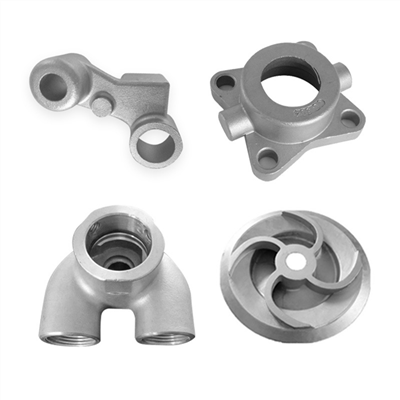
If you’re tired of generic parts that fail too fast, or if you’re not sure which component is right for your specific service—whether that’s high-pressure steam, corrosive chemicals, food-grade product, whatever—hit us up for a chat. We work with facilities of all sizes, from small breweries to large refineries, and we’ll help you spec parts that balance performance and cost, no hype, no hidden fees, just real advice based on what works in the field.
Shaft Parts References
- ASME B16.5: Pipe Flanges and Flanged Fittings, American Society of Mechanical Engineers.
- Valve Component Material Compatibility Guide, Fluid Controls Institute, 2022.
- Tolerance Design for Industrial Valve Components, Journal of Manufacturing Science and Engineering, Vol. 145, No. 6, 2023.
- Reprocessed Polymer Performance in Sealing Applications, Polymer Engineering & Science, Vol. 61, No. 11, 2021.
Taizhou Liuhuan Machinery Co., Ltd.
As one of the most professional valve components manufacturers and suppliers in China, we’re featured by quality products and good service. Please rest assured to buy customized valve components made in China here from our factory. For quotation, contact us now.
Address: Xinyuan Industrial Zone, Damaiyu Street, Yuhuan City, Zhejiang Province,China
E-mail: tzlhmachining@gmail.com
WebSite: https://www.tzlhmachining.com/
