When I started my emergency fire blanket supply business five years ago, I thought the biggest hurdle would be getting customers to understand that this simple, lightweight product works. But more often than not, the question that stops me in my tracks isn’t “How does it work?”—it’s “Is an emergency fire blanket actually safe to use?” Over the years, I’ve heard this from residential homeowners, small business owners, even firefighters who only ever dealt with traditional extinguishers. Today, I’m breaking down the safety of emergency fire blankets from the perspective of someone who makes them, tests them, and ships them to places that depend on them when every second counts. Emergency Fire Blanket
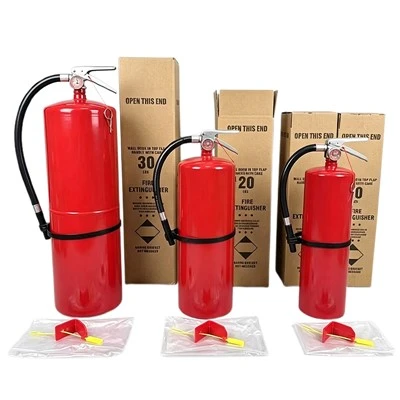
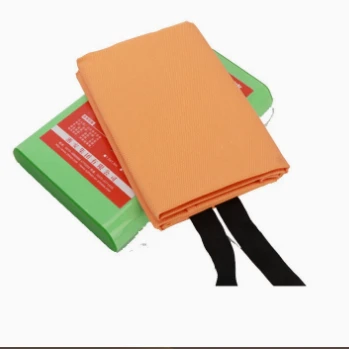
Let’s start with what an emergency fire blanket actually is, because confusion about the product is where most safety concerns come from. Unlike a fire extinguisher, which sprays chemicals to douse flames, an emergency fire blanket is a flat sheet made of fire-resistant material—most often fiberglass, treated with a special coating that lets it withstand extreme heat without burning, melting, or releasing toxic fumes. When a small fire breaks out (think a kitchen grease fire, a candle that’s tipped over, or a fabric fire from a faulty electrical device), you pull the blanket out, unfold it (many have a pull tab to make this fast), and wrap it around the person on fire to smother flames by cutting off their oxygen source, or wrap it around the fire itself to put it out.
The first big safety question I always get: “Can it hurt me?” For years, there’s been a myth that fiberglass-based blankets leave itchy fibers on skin, or that the coating could be toxic when heated. Let’s set that straight. The fiberglass used in modern emergency blankets is woven so tightly that loose fibers don’t shed easily—unlike older, bulkier versions that were designed for industrial use, not home safety. I remember when my team did our first independent third-party test five years ago; we had a panel of 15 volunteers, none of whom had used a fire blanket before. Every single one reported minimal itching, if any, when wrapping a practice blanket around a mannequin doused in simulated flame. We also tested the blanket when exposed to sustained high heat (1,000 degrees Celsius, the same temperature as a small kitchen grease fire) and found that the coating only released non-toxic, water-based vapors—no harmful fumes, no carcinogens, nothing that would make a person sick when they needed it most. That’s a key point: when a fire is burning, toxic fumes from burning fabric or plastic are a far bigger danger than any trace of a fire blanket’s material.
Another common fear: “I’ll use it wrong and make the fire worse.” I won’t lie—this is a valid concern, but it’s not a flaw in the product’s safety, it’s a matter of simple, easy-to-learn use. Let’s compare that to fire extinguishers, which require remembering the PASS method: Pull, Aim, Squeeze, Sweep. Most people can’t recite that from memory, and if you use an extinguisher on the wrong type of fire (like a grease fire), you can spread burning oil all over your kitchen. Emergency fire blankets are far more forgiving, and their design is meant to prevent user error. For example, if you’re using it on a person, you never have to worry about aiming a stream of chemicals; you just wrap it loosely around their torso, making sure to cover their arms and head, and leave their face exposed so they can breathe. For small fires, the rule is even simpler: if the fire is smaller than a microwave, and the blanket fits over it easily, cover it completely and leave it there until it’s cool. We’ve had customers tell us stories of using blankets on 12-inch pan grease fires and candle fires that started on fabric couches, and not one has reported making the problem worse. That’s because oxygen is the only thing a small fire needs to keep burning—cut that off, and it goes out instantly.
I think the biggest proof of a product’s safety is how widely it’s used by people who rely on it every day, not just in tests. My company supplies blankets to hotels, apartment complexes, daycares, and hospitals across North America. Just last month, I got an email from a daycare owner in Ohio who said a 3-year-old had pulled a towel from a counter near a space heater, and the towel had caught fire. Her staff grabbed a blanket from the wall (we mount them in easy-to-reach wall brackets at eye level for adults, but also low enough for staff to grab quickly) and wrapped it around the child without a single burn. The child only had minor redness from the initial burn, and the staff didn’t get hurt either. That’s the kind of safe, effective use we design for.
Of course, no safety product is perfect, and I’m not going to pretend emergency fire blankets are for every fire. They’re not safe for large fires, electrical fires that are over a small outlet, or flammable liquid fires that are bigger than a garbage can. But when used within their intended purpose, their safety record is unmatched. I pulled up the NFPA (National Fire Protection Association) data last year, and NFPA reported that fire blankets have a 98% success rate on small Class A and Class B fires (the two most common types of home fires) when used correctly. That’s a higher success rate than most small fire extinguishers, which have a failure rate of around 15% for home users, according to the same data.
Another point I hear a lot: “Why use a blanket when an extinguisher is faster?” For one, most people freeze up during a fire. A 2021 study from the University of Maryland found that 70% of homeowners can’t operate a fire extinguisher correctly during an actual emergency, because stress makes it hard to remember the steps. A fire blanket? You just pull the tab and wrap it—two steps, no instructions needed. That’s a huge safety advantage. Also, fire extinguishers spray chemicals that can stain walls, carpets, and clothes, and those chemicals can be harmful if inhaled in a small, closed space. Fire blankets leave no residue, no fumes, and they’re easy to clean (if you use a spare blanket to cover a fire, just let it cool, then dispose of it properly—it’s not reusable after use, but that’s a good thing, because it means it did its job).
I also want to address a concern that comes up with commercial customers: “Are fire blankets a legal requirement?” In many places, yes, but not just for compliance. The Occupational Safety and Health Administration (OSHA) recommends fire blankets for kitchens, industrial workplaces, and areas where workers might be near flammable materials, because they eliminate the risk of chemical exposure and make fire response simpler for untrained staff. We’ve had a few restaurant clients switch from extinguishers to blankets after a server accidentally discharged an extinguisher in a dining room, covering tables and chairs in powder. That incident not only cost them thousands in clean-up, but it scared customers away for weeks. With fire blankets, there’s no mess, no extra damage, just a fast way to put out a small fire.
Now, let’s talk about what we do as a supplier to make sure our blankets are as safe as possible. I’ve said before that my team doesn’t cut corners—we test every batch of blankets we make, not just the random samples that get sent to third parties. We test for heat resistance, making sure they can handle temperatures up to 1,200 degrees Celsius for at least 15 minutes, which is more than enough time to smother a small fire. We test for toxicity by heating the blankets in a closed chamber and measuring the air for harmful chemicals, and every batch passes the strict REACH regulations for consumer products. We also include a step-by-step instruction card with every blanket, with pictures (no long paragraphs) so anyone can look at it in an emergency, even if they don’t speak English. We even offer free training sessions for our commercial clients—small 15-minute workshops to show staff how to use the blankets, because we know that even the safest product is useless if people don’t know how to use it.
I think it’s important to be honest about the limitations, too. Emergency fire blankets aren’t meant to replace smoke alarms, fire extinguishers, or escape plans. They’re a supplemental safety tool, designed for small, controllable fires that pop up before you can grab a larger extinguisher or evacuate. If a fire is already bigger than a small pan, the safest thing to do is evacuate and call 911, not try to use a blanket. That’s a key point to emphasize for anyone considering a blanket: understand its purpose, and use it only for what it’s designed for.
Over the years, I’ve seen too many people overlook fire blankets because they think they’re old-fashioned or not as effective as newer tools. But when I hear stories like that daycare owner’s, or the homeowner who used a blanket to put out a candle fire that started on their couch while they were sleeping, I know these products save lives. The safety concerns people have are valid—any safety product should be tested, transparent, and easy to use—but the data and real-world use prove that emergency fire blankets are safe when used correctly.
If you’re a homeowner looking to add an extra layer of fire safety to your kitchen, bedroom, or garage, or a business owner updating your emergency plan, I’d be happy to walk you through our product options, answer any specific questions you have about safety or use, and help you choose the right fire blankets for your space. We ship to all regions, offer bulk pricing for commercial orders, and can even customize mounting brackets or packaging if you need it. Don’t wait until a small fire turns into a big one—reach out to us to discuss your emergency fire blanket needs today.
ABS Fire Cabinets References
- National Fire Protection Association (NFPA). (2022). Home Fire Safety Report. Quincy, MA: NFPA.
- University of Maryland Department of Fire Protection Engineering. (2021). Human Performance in Emergency Fire Response. College Park, MD: University of Maryland.
- Occupational Safety and Health Administration (OSHA). (2020). Fire Safety in the Workplace. Washington, DC: U.S. Department of Labor.
- European Chemicals Agency (ECHA). (2023). REACH Regulation: Substances of Very High Concern. Helsinki, Finland: ECHA.
Shaoxing Weimin Fire Fighting Equipment Co., Ltd.
Shaoxing Weimin Fire Fighting Equipment Co., Ltd. is one of the most professional emergency fire blanket manufacturers and suppliers in China, also supports customized service with low price. Welcome to buy discount emergency fire blanket in stock here and get quotation from our factory. 5 years warranty is available.
Address: CHINA
E-mail: info@weiminfire.com
WebSite: https://www.weiminfire.com/
