If you’ve ever stood in front of your home entrance in the middle of the night, fumbling for your keys while the dim glow of a traditional bulb fought to cut through the dark, you know the frustration well. That’s why, as someone who’s spent the last decade supplying LED door light bulbs to homeowners, electricians, and property managers, I get asked one question more than any other: “How do these little bulbs work, exactly?” LED Door Light Bulbs
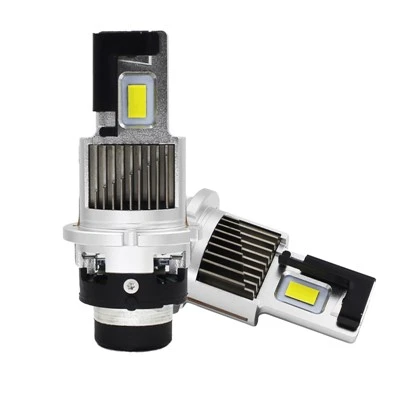
It’s a fair question—especially when you compare them to the incandescent or halogen bulbs many of us grew up with. Those old bulbs are relics of a past era, wasteful and short-lived, while LED (Light Emitting Diode) door light bulbs feel almost magical in their efficiency and reliability. But there’s no trick here—just solid physics and engineering that’s been refined over years. Let me break it down, plain and simple, because when you’re choosing a bulb to light one of the most high-traffic spots on your property, you deserve to know exactly what you’re buying.
First, let’s start with the core of every LED door light bulb: the diode. A diode is a two-terminal semiconductor device, and the key word here is semiconductor. Unlike conductors (like copper wire) that let electricity flow freely, or insulators (like rubber) that block it entirely, semiconductors are in between. They only allow current to move in one direction, and that direction is critical for how light is created.
The most common semiconductor material used in LEDs is gallium arsenide or gallium nitride—specifically doped with other elements like aluminum, indium, or phosphorus. Doping means adding tiny amounts of other atoms to the semiconductor to tweak its electrical properties. For example, if you take pure gallium arsenide and add a little phosphorus, you adjust the energy levels of the electrons inside the material. That’s the foundation of light emission.
When you turn on your LED door light bulb, you’re sending an electrical current through that semiconductor diode. Here’s where the magic happens, and it starts with electrons. Atoms in semiconductors have electrons that sit in specific energy “shells” around the nucleus. Under normal conditions, these electrons stay in their lowest, most stable energy shell—we call this the ground state. When you apply voltage (the push that moves electricity), you give those electrons extra energy, and they jump up to a higher, less stable energy shell—this is the excited state.
Electrons don’t want to stay excited, though. They quickly fall back down to the ground state, and when they do, they release that extra energy they absorbed. In an incandescent bulb, that energy is released as heat and light; in an LED, it’s released as photons—particles of visible light. The color of that light depends on how much energy the electron releases when it jumps back. Higher energy equals shorter wavelengths, which we see as blue or violet light; lower energy equals longer wavelengths, like red or amber. That’s why we get everything from warm white (great for doorways, which feel welcoming) to cool white (good for larger entryways that need bright, clear light).
Wait, you might be thinking—most LEDs produce blue light first, right? That’s a common detail I share with customers, too. Early blue LEDs used gallium nitride, and while they worked, the blue light was too harsh for residential doorways. To turn that blue light into the softer, warmer white most people prefer, manufacturers coat the diode with a phosphor material—usually a ceramic powder that glows when hit by blue light. The phosphor absorbs some of the blue photons and re-emits them as longer-wavelength yellow and red light. Mix that remaining blue light with the phosphor’s yellow and red, and you get a balanced white light that’s easy on the eyes for a front door. That’s the same technology we use in all our LED door light bulbs, and it’s a big part of why they look so natural compared to old bulbs.
Now, how does this tiny diode become a full door light bulb? Let’s talk about the structure of the bulb, because that’s what makes it durable and ready for outdoor or high-traffic entryway use. Unlike incandescents, which have a fragile filament inside a glass bulb, LED door light bulbs are built to withstand bumps, temperature changes, and moisture—perfect for a spot that’s exposed to rain, snow, or extreme sun.
The core component is the diode assembly, which sits on a small metal circuit board called an MCPCB (Metal Core Printed Circuit Board). This board is key because LEDs run hot—even with their efficiency, they generate heat, and too much heat will kill a diode. The MCPCB has a metal base (usually aluminum) that pulls heat away from the diodes, preventing overheating. That’s why our LED door light bulbs have that small heat sink you can see on the base—sometimes it’s aluminum fins, other times it’s a metal core inside the plastic housing. Without that heat management, the diodes would degrade quickly, and the bulb would burn out in a year or two. We spend a lot of time testing our heat sinks, because a bulb that works for 50,000 hours (that’s over 11 years if you use it 12 hours a day) is only as good as its ability to keep cool.
Next, there’s the driver. This is a small electronic circuit inside the bulb that controls the amount of electricity sent to the diodes. Household power is AC (alternating current), which fluctuates in voltage, and LEDs need DC (direct current) at a steady, low voltage to work properly. The driver converts the AC power to DC, regulates the current, and protects the diodes from surges—like when your refrigerator turns on and causes a small power spike. This is another part we prioritize because a bad driver is the #1 reason LED bulbs fail early. We’ve had customers come to us with cheap bulbs that burned out in 6 months, and 9 times out of 10, it’s a faulty driver. Our drivers are rated to handle voltage fluctuations, so you never have to worry about your door light going out unexpectedly when you’re coming home late at night.
Then there’s the housing and lens. For LED door light bulbs, these have to be weatherproof—IP-rated, in industry terms. Most of our bulbs are IP65 or higher, which means they’re completely dust-tight and can handle low-pressure jets of water (perfect for rain or snow). The lens is usually made of shatter-resistant plastic, not glass, so if it’s hit by a stray branch or a ball, it won’t break. The lens also has a job: it spreads the light evenly across the door area, not just in one direction. You don’t want a harsh, spotty light on your doorstep—you want soft, uniform light that lights up the whole entry, so you can see keyholes, steps, and any packages left on the porch. That’s why we design our lenses with a slight diffusion, to cut down on glare without sacrificing brightness.
Now, let’s put this all together and compare it to the old bulbs you’re probably replacing. Incandescent door bulbs work by heating a tungsten filament until it glows—only about 5% of the energy they use becomes light; the other 95% is heat. That’s why a 60-watt incandescent bulb feels warm to the touch, and it’s so inefficient. Halogen bulbs are a little better, at about 10% efficiency, but still way behind LEDs. Our LED door light bulbs, by contrast, use 80-90% of their energy to make light, only 10-20% as heat. That means a 10-watt LED bulb gives you the same amount of light as a 60-watt incandescent, but uses 83% less electricity. Over the lifespan of the bulb, that adds up to hundreds of dollars saved on energy bills—and fewer bulbs to throw away, since our LEDs last 10-20 times longer than incandescents.
I often hear customers say, “But LED bulbs are more expensive upfront.” That’s true— a $5 LED bulb is more than a $1 incandescent. But when you calculate the total cost, it’s a no-brainer. Let’s do the math: an incandescent door bulb costs $1, lasts 1,000 hours, and uses $6 worth of electricity over that time (based on average US electricity rates). Our LED door bulb costs $15, lasts 50,000 hours, and uses $1 worth of electricity over that time. Over 50,000 hours, you’d need 50 incandescents for $50 plus $300 in electricity, totaling $350. Our LED bulb is $15 plus $5 in electricity, totaling $20. That’s a huge difference—and that’s why so many of our repeat customers are homeowners, property managers, and even small businesses that have multiple entryways.
Another thing people ask is about brightness and color temperature. Brightness is measured in lumens, not watts, these days. A standard 60-watt incandescent is about 800 lumens, so our LED door light bulbs are rated for 750-850 lumens—perfect for a front door, not too bright that it blinds you, not too dim that you can’t see. Color temperature is measured in Kelvin (K). For doorways, 2700K to 3000K is warm white, which feels welcoming—like a soft glow that makes your home feel safe. 4000K is neutral white, good if you prefer a brighter, more neutral light, and 5000K+ is cool white, which is too harsh for most residential entryways. We offer both warm and neutral white options for our LED door light bulbs, so customers can choose what fits their home.
I also want to talk about reliability, because door lights are used year-round, in all kinds of weather. We test every batch of our LED door light bulbs in extreme conditions: freezing temperatures down to -40°F, hot temperatures up to 120°F, and full water submersion for 30 minutes. That’s because a door light that fails in the middle of a blizzard is a real hassle—you’re fumbling for your keys in the dark, waiting for a repair, and that’s not something we want our customers to deal with. Our bulbs are also compatible with most existing door light fixtures, so you don’t have to rewire anything to switch from old bulbs to ours. Just screw them in, and you’re done.
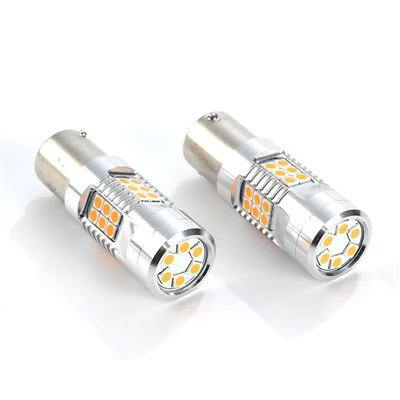
As a supplier, I don’t just sell bulbs—I talk to customers every day who’ve had bad experiences with cheap, no-name LEDs. They burn out fast, they flicker, they don’t put out the light they promised. That’s why we source our diodes from top manufacturers and design every bulb with heat management and durability at the forefront. We stand behind our LED door light bulbs, and we know they’re not just a commodity—they’re a part of your home’s safety and comfort.
LED Underbody Lights If you’re tired of changing door bulbs every few months, tired of high energy bills, or tired of dim, unflattering light on your doorstep, I’d love to help you find the right LED door light bulb for your needs. Whether you’re a homeowner looking for one bulb for your front porch, or a property manager needing 50 bulbs for a multi-unit building, we can work with you. Our team is here to answer any questions you have, from brightness to weather resistance to bulk pricing. Don’t settle for subpar bulbs that will let you down when you need them most. Reach out to our team to learn more about our LED door light bulbs and to discuss your procurement needs.
References
- National Renewable Energy Laboratory. (2022). Light Emitting Diodes (LEDs): How They Work and Their Benefits.
- U.S. Department of Energy. (2021). LED Lighting Basics.
- IEEE. (2019). The Science of Semiconductor Light Emission.
- Energy Star. (2023). LED Light Bulk Performance Requirements.
Shine Bright Optoelectronic Co., Ltd.
As one of the most professional led door light bulbs manufacturers in China, we also accept customized orders. Please feel free to buy bulk advanced led door light bulbs in stock here from our factory. Welcome to contact us for quotation.
Address: 6th Floor, Buildings B & C, Baotang Industrial Zone, No.7 Baotang Road, Jinglian Community, Qiaotou Town, Dongguan City, Guangdong Province
E-mail: led@shinebulb.com
WebSite: https://www.shinebulb.com/
