Hey everyone, it’s Jake from Flat Wire Winding here – today I’m breaking down a question I get all the time, especially from engineers designing motors, transformers, or even compact power electronics: what the heck insulation materials work best for flat wire? Flat Wire Winding
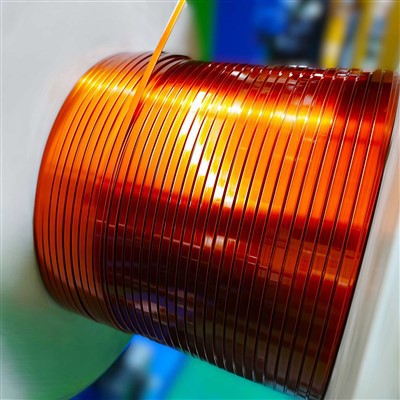
If you’ve ever worked with round magnet wire, you know insulation isn’t just a afterthought – it’s what keeps wires from shorting out when they’re packed tight, and directly impacts how well your component performs. Flat wire is way trickier here, though, because its rectangular shape means there’s way more surface area to cover, plus it’s often wound super tight into slots, so insulation has to handle both sharp edges and extreme heat. I’ve been supplying flat wire for over 8 years now, and I’ve tested almost every insulation option out there – so let’s cut the jargon and get into the real stuff.
First, let’s get one thing straight: not all insulation is created equal for flat wire. Round wire’s thin, stretchy polyamide works fine for slinky windings, but flat wire’s flat sides and sharp corners mean you need insulation that’s tough enough not to crack when it’s bent into coils, and can hold up to thermal and electrical stress without breaking down. Over the years, the two most common insulation types I see in high-performance flat wire applications are polyurethane enamel with a polyamide overlay, and polyimide film (often called Kapton, but that’s a DuPont brand name, not the generic term). Wait, I’ve also been messing with a newer hybrid coating lately that’s been a game-changer for some aerospace clients – more on that later.
Let’s start with the workhorse: enamel-coated flat wire, specifically the ones with a dual coat of polyurethane (PU) and polyamide-imide (PAI). If you’ve ever bought standard magnet wire, you know thin enamel is standard, but for flat wire, we bump that up to a thicker, dual-layer coat. Here’s why this is my go-to for most automotive and industrial motor jobs: polyurethane is flexible, so it can stretch a little when you bend a flat wire around a winding form without cracking – critical, because flat wire has sharp edges that would puncture a thinner coat. The top layer of polyamide-imide is where the strength comes in: it’s resistant to abrasion, can handle temps up to 220°C (way higher than the old 180°C enamel), and has great dielectric strength, meaning it doesn’t break down when you crank up the voltage.
A lot of new guys ask if we can just use regular round wire enamel for flat wire – trust me, don’t. Last year we had a client try that for a EV traction motor, and within 100 hours of testing, the sharp flat edges wore through the thin enamel, causing a short that fried the whole motor. The dual PU/PAI coat is non-negotiable here. Also, this insulation is pretty easy to process: it adheres well to copper and aluminum flat wire, and we can strip it with standard chemical strippers or even a hot blade during winding, which saves time for our clients’ assembly lines. The only downside? It’s not great for super high-frequency applications, like high-speed switching power supplies, because the enamel can have a little capacitance loss. But for 90% of what we supply, this is the bread and butter.
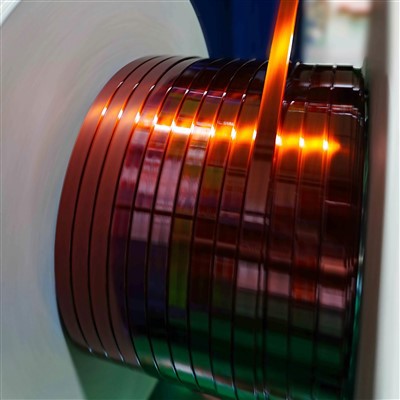
Next up, the heavy-hitter for extreme conditions: polyimide film insulation, usually called “film-wrapped flat wire.” This is where we take a bare copper or aluminum flat wire, wrap it tightly with a thin layer of polyimide film (like Kapton) on all sides, then sometimes add a final varnish coat for extra protection. Why use this? Polyimide is basically the toughest insulation out there for extreme temps – it can handle up to 260°C continuous, and even short bursts up to 400°C, which is way higher than any enamel. It’s also incredibly dielectric, so it’s perfect for high-voltage transformers, power inverters, and even aerospace components that have to deal with extreme heat and voltage spikes.
But it’s not all perfect with film-wrapped wire. The big catch is handling: polyimide film is thin (usually 25 to 50 microns) and can tear if you’re not careful during winding, especially when you’re going around tight radii. I’ve seen so many fabricators mess this up by wrapping the film too loose or pulling it too tight – if it tears, you’ve got a weak spot that will fail eventually. Also, stripping film-wrapped wire is way more of a hassle than enamel-coated wire; you can’t just use a chemical stripper, you have to carefully sand or cut off the film, which adds time to assembly. That’s why I only recommend this for applications where enamel just won’t cut it – like a satellite power transformer that has to survive launch vibrations and extreme temperature swings.
Now, the new kid on the block that I’ve been obsessing over for the last couple years: hybrid ceramic-polyimide insulation. A lot of our clients in aerospace and industrial robotics have been asking for something that combines the flexibility of enamel with the high-heat resistance of polyimide, so we started working with a material that mixes ceramic micro-particles into a thin polyimide base coat. Here’s the tea: this hybrid coat is only about 30 microns thick, so it doesn’t add as much bulk as full film wrap, but it can handle up to 280°C continuous, which is hotter than standard enamel, and way more resistant to abrasion than regular polyimide film. We first tested this for a robotics joint motor that runs non-stop at 250°C, and it’s outperformed both enamel and film-wrapped wire by a long shot – no edge cracking, no shorts after 1,000 hours of continuous use. The only downside right now is it’s a little more expensive than standard enamel, but the longer lifespan makes it worth it for high-stress applications.
Wait, I can’t skip over aluminum flat wire, right? A lot of clients are switching to aluminum because it’s lighter and cheaper than copper, but aluminum is trickier for insulation because it’s softer, so insulation can wear through easier. For aluminum flat wire, we usually go with a thicker dual enamel coat (100 microns total, vs 60 for copper) or a thin polyimide film wrap, because that extra coat handles the soft metal’s tendency to deform when wound tight. I had one client that tried to use copper insulation on aluminum wire, and after winding, the wire deformed and the insulation peeled off – lesson learned: match the insulation to the metal, not just the wire shape.
Now, a common mistake I see all the time: clients buying the cheapest insulation they can find to save money, only to have parts fail early. I had a client in construction who bought cheap enamel-coated flat wire for their generator windings, and within 6 months, 20% of the units had shorted out because the thin insulation couldn’t handle the 180°C operating temp. We swapped them to our standard PU/PAI dual coat, and the failure rate dropped to almost zero. Insulation isn’t a place to cut corners – that’s where most component failures start.
So how do you pick the right insulation for your flat wire project? Let’s break it down quick, no fancy charts:
If it’s a standard motor, inverter, or transformer operating under 220°C: go with the dual PU/PAI enamel. It’s flexible, easy to process, and affordable.
If it’s high-voltage (over 1kV) or extreme heat (over 250°C): polyimide film wrap, or the hybrid ceramic-polyimide if you can swing the cost.
If it’s aluminum flat wire: thicker dual enamel or thin film wrap, no exceptions.
And if you’re still not sure, just send over your specs – I’ve tested enough of these to tell you exactly what will work, no guesswork.
At Flat Wire Winding, we don’t just sell you wire – we test every insulation batch before it leaves our shop, because I’ve seen too many projects go wrong because someone skipped that step. We check for edge cracking during winding, dielectric strength at high voltage, and thermal resistance in our in-house test lab, so you don’t have to. If you’re designing a new component and need the right flat wire insulation, or you’re dealing with a failing part that you think is insulation-related, hit us up to chat. We can send you test samples, walk through your application, and make sure you’ve got the right stuff before you place a full order.
Don’t settle for insulation that’s just “good enough” – that’s how you end up with costly failures down the line. Let’s build something reliable, together.
Wrapped Wire References
IEC 60317-13: Specification for particular types of winding wires – Polyurethane enamelled round copper wire, class 155
ASTM D1781: Standard Test Method for Rubber Property – Adhesion to Rigid Substrates
DuPont Kapton Polyimide Film Technical Data, 2024
Journal of Electrical Insulation and Dielectric Phenomena, “Thermal Stability of Hybrid Ceramic-Polyimide Insulation for High-Temperature Winding Applications”, 2022
Tianjin Jingwei Power Technology Co., Ltd.
As one of the most professional flat wire winding manufacturers and suppliers in China, we’re featured by quality products and good service. Please rest assured to buy durable flat wire winding made in China here from our factory. Contact us for more details.
Address: No.1 Chuangxin Rd. Xiaozhan Industrial Park, Jinnan District, Tianjin, China
E-mail: info@jwdc.cn
WebSite: https://www.jw-dcs.com/
