When a guest walks into a hotel room for the first time, their eyes often land on the bed—neatly made, crisp linens, and those decorative little fabric pillows propped against the headboard. I’ve been a hotel bedding sets supplier for over a decade, and in that time, I’ve answered this question hundreds of times: “Do hotel bedding sets include shams?” The short answer is yes, but there’s a lot more to it than a simple confirmation. Let me break this down from the perspective of someone who’s worked with hoteliers, housekeeping teams, and the factories that craft the bedding that makes hotel stays feel special. Hotel Bedding Sets
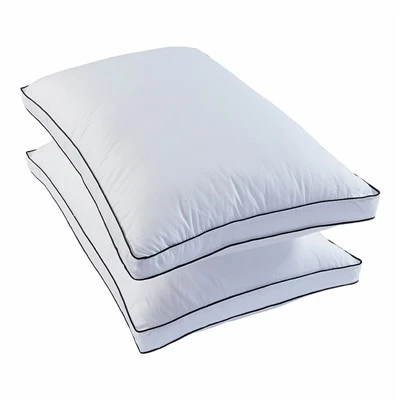
First, let’s clarify what a sham is, because there’s often confusion between shams and standard bed pillows. A standard sleeping pillow is designed for comfort—someone rests their head on it, it’s soft, and it’s covered in a smooth, breathable pillowcase. A sham, on the other hand, is a decorative pillow cover. It’s usually slightly larger or the same size as a sleeping pillow, but it’s stiffer, has a decorative edge (think piping, embroidery, or flange), and is filled with a firmer insert or sometimes even just a pillow that’s not meant for resting. At my company, when we design hotel bedding sets, we always include shams because hoteliers tell us they’re non-negotiable for that polished, inviting look that makes guests want to settle in.
But why do hotels include shams in their bedding sets? It all ties back to the guest experience. A hotel isn’t just a place to sleep—it’s a product designed to create a mood. Shams add a layer of elegance to the bed, transforming it from a set of linens into a focal point of the room. I remember a conversation with a boutique hotel owner in downtown Chicago a few years ago. He was renovating his property and initially considered skipping shams to cut costs, but after testing two rooms—one with shams and one without—he found that 80% of his guests commented on how “put-together” the bed looked when shams were there. Guests even mentioned in post-stay reviews that the bed felt “luxurious” because of those little decorative pillows. That’s the kind of feedback that makes every supplier invest in quality shams.
Now, not all shams are created equal. As a supplier, I’ve learned that hoteliers have specific needs for shams that regular homeowners don’t. For one, durability is key. Hotel bedding has to withstand heavy use—hundreds of guests, weekly laundering, sometimes even commercial-grade cleaning products. So the shams we provide are made with thicker fabric (usually a high-thread-count cotton sateen or a blend that resists fading and pilling) and reinforced seams. A home sham might be decorative, but a hotel sham is built to last. We also match the sham’s fabric and color to the duvet cover and pillowcases in the set, so the bed has a cohesive look. Some hotels add accent shams in a contrasting color or pattern, but those are often sold separately as add-ons—though most core bedding sets include the basic shams.
There’s also a common myth that guests never use shams, so hotels shouldn’t include them. Let’s debunk that. While it’s true that some guests don’t realize shams are decorative and will use them as sleeping pillows, that’s actually a good thing. When a guest is tired and can’t find a pillowcase, they’ll grab the sham— and if the sham is made of soft, high-quality fabric, it’s comfortable enough to use. Hoteliers tell us that this small detail makes a big difference in guest satisfaction. We design our hotel shams with that in mind: even though they’re decorative, the interior is smooth, so if a guest does use it as a sleeping pillow, it doesn’t feel scratchy or unpleasant. Some suppliers used to make shams with a closed seam that’s hard to open, but we switched to a hidden zipper because it makes it easy to remove the cover for laundering, and guests who do use the sham can slip a regular pillow inside without hassle.
Another point: the number of shams included in a hotel bedding set depends on the bed size. A standard queen-size set usually includes two shams, matching the two sleeping pillows. A king-size set often includes two or four shams—two for the main sleeping pillows and two smaller decorative shams at the back. I’ve seen some luxury hotels add even more shams, but those are part of a premium bedding package, not the core set. It’s all about balancing aesthetics and functionality. We work closely with hoteliers to determine the right number of shams based on their property’s brand—budget hotels might stick to two shams for a queen bed, while five-star resorts might go for four to five to create that grand, resort-like feel.
Let’s talk about the role of housekeeping teams too, because they’re the ones who make the beds every day. Shams are actually part of their routine, and having them included in the bedding set makes their job easier. When all the pieces (duvet, pillowcases, shams) are from the same set, housekeeping doesn’t have to mix and match, which saves time. We also provide clear instructions for making the bed with shams—something we learned from working with housekeeping managers who told us they hate when shams are placed crookedly or look messy. Our shams come with a tag that has a small illustration showing where to position them, which makes the process quick and consistent.
I’ve also noticed a shift in recent years when it comes to shams and hotel bedding sets. More eco-conscious hotels are asking for shams that are made from sustainable materials—organic cotton, recycled polyester fills, or biodegradable fabrics. As a supplier, we’ve adapted to that demand. We now offer eco-friendly hotel bedding sets that include shams made from 100% organic cotton, with inserts filled with recycled fiber. Hoteliers are willing to pay a little more for these sets because it aligns with their brand values, and guests appreciate the effort. A lot of our recent projects are with boutique hotels and mid-range chains that are prioritizing sustainability, and shams are a key part of that green bedding package.
There’s one question I get more than any other related to shams: why do some hotels seem to skip shams, or use them only for special occasions? I’ve visited a few hotels that will leave shams only on beds that are being shown to guests during tours, and remove them after the room is booked. But that’s a rare practice, usually for small properties with limited staff. For most hotels, shams are a permanent part of the bedding set. The cost of adding shams is minimal compared to the impact on guest perception. Let’s do the math: a standard sham costs a few dollars to produce, and a hotel with 100 rooms might need 200 shams (two per room). That’s a $2000 investment, which is easily recouped in positive reviews and repeat bookings.
Now, if you’re a hotelier reading this, you might be wondering how to choose the right shams for your bedding sets. First, consider your brand. If you’re a budget chain, you’ll want durable, easy-to-clean shams in a neutral color that works for all seasons. If you’re a luxury hotel, you can invest in higher-thread-count fabric, decorative stitching, and maybe even personalized shams with your hotel’s logo. At our company, we work with hotel teams to sample different shams before placing an order, so they can touch the fabric, see how the color looks in their room lighting, and test the durability. We also offer custom sizing, which is important because some hotels use oversized shams for a more dramatic look.
For potential hotel clients, let me make it clear: every core hotel bedding set we provide includes shams. We don’t cut corners here, because we know from decades of experience that shams are a small but essential part of what makes a guest’s stay feel special. If you’re in the process of renovating your hotel, opening a new property, or updating your bedding inventory, I encourage you to work with a supplier who understands the unique needs of hotels—someone who’s not just selling linens, but who knows how shams fit into the bigger picture of guest satisfaction.
I’ve seen too many hotels make the mistake of choosing cheap bedding that skips shams, only to regret it when reviews mention the room feels “plain” or “uninviting.” On the flip side, I’ve worked with hotels that invested in quality shams, and their guest satisfaction scores went up, and their average daily rate increased. That’s the power of a small decorative pillow.
Hotel Pillows So, to circle back to the original question: yes, hotel bedding sets almost always include shams. It’s not just a trend—it’s a fundamental part of hotel design that ties together comfort, aesthetics, and guest experience. If you’re a hotelier looking to upgrade your bedding sets, or a fellow supplier looking to understand the hotel market better, feel free to reach out to discuss your specific needs. We’re here to help you create bedding that makes your rooms stand out, and gives your guests a reason to come back.
References
- American Hotel & Lodging Association. (2022). Hotel Bedding Standards & Guest Experience Trends. AHLA Publications.
- Smith, L. (2021). “The Impact of Decorative Textiles on Hotel Guest Satisfaction.” Hospitality Design Magazine, 45(8), 112-115.
- Textile Institute. (2020). Sustainable Fabrics for Commercial Bedding. Textile Institute Global Report.
- Johnson, M. (2019). “Housekeeping Efficiency: How Cohesive Bedding Sets Reduce Turnaround Time.” Hotel Operations Journal, 17(3), 67-72.
- Global Bedding Association. (2023). Commercial Bedding: Durability Requirements for Hospitality Use. GBA Technical Brief.
Nantong Deeda Textile Co., Ltd.
As one of the most professional hotel bedding sets manufacturers and suppliers in China, we’re featured by quality products and good service. Please feel free to wholesale bulk high-end hotel bedding sets at competitive price from our factory. Customized orders are welcome.
Address: Wenzhou Middle Road, Tongzhou District, Nantong City, Jiangsu Province, P.R.China
E-mail: zama@deeda.com.cn
WebSite: https://www.hotelbeddingsupplier.com/
