Hey everyone, and welcome to my corner of the web. For those who don’t know me, I’ve been running a small but sharp adapter supplier for smart wearables for the past 8 years—yep, that’s where most of you who own a smartwatch have probably brushed past our parts without even realizing it. A lot of folks reach out to me asking, “How on earth does a smartwatch adapter even work? It just plugs in and makes things click, right?” Today, I’m breaking this down like I would for my nephew who once tried to melt his smartwatch in a microwave (don’t ask). No stuffy jargon, no overcomplicated tech rants—just the real, behind-the-scenes of what we build every day. Adapter
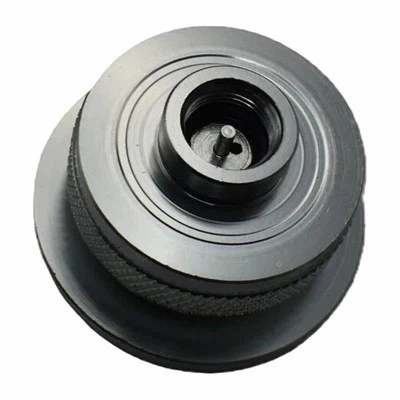
First off, let’s get one thing straight: the adapter for a smartwatch isn’t that flimsy plastic thing you might’ve dug up for an old phone. It’s a tiny, precision-made middleman, and its whole job is to keep your watch talking to whatever you hook it up to—whether that’s a charging dock, a computer for firmware updates, or even a heart rate monitor add-on. If that middleman messes up, your watch dies mid-day, or it glitches when you’re trying to sync your run stats. I’ve seen it happen too many times, so we build ours to not just work, but survive the 50+ times you yank the charger out wrong every month.
Let’s start with the core: the interface match. Every smartwatch has those tiny pogo pins or charging contacts on its underside, right? Those are like the watch’s “mouth”—it uses them to suck up power or send data. The adapter’s first gig is to match exactly the layout of those contacts. No cutting corners here—if one pin is even 0.2mm off, it won’t connect, period. A lot of new suppliers try to save a buck by using generic layouts, but that’s how you end up with a adapter that works half the time when your watch is tilted. We test every single batch of adapters against 12 different watch models (the most popular ones, obviously) before they leave our shop, just to make sure that connection is solid.
Next up: power regulation. Your smartwatch’s battery is super sensitive—too much voltage, and it swells; too little, and it takes forever to charge. The adapter isn’t just a wire, it’s got a tiny circuit board inside with a microchip that acts like a traffic cop for power. When you plug your USB cable into the adapter, it pulls whatever voltage your USB port puts out (usually 5V, for the new folks) and cranks it down to the exact 4.2V that your watch needs to charge safely. It also has those little things called overcharge protection chips—so once your watch is 100% charged, the adapter cuts off the power before it leaks back and fries the battery. I’ve had customers come to me saying their old adapter made their watch die after a year—nine times out of ten, that’s the cheap protection chip skipping out. We use TI or Analog Devices chips for our power regulation, no random off-brand stuff. Worth the extra 50 cents per unit, trust me.
Then there’s data transfer, which is the quieter half of the job. A lot of people forget that adapters aren’t just for charging—they’re for syncing too. When you plug your watch into your laptop, the adapter has to let your computer’s USB port talk directly to your watch’s internal storage, so you can update apps, back up your health data, or fix a glitchy firmware. That means the circuit board has to have a USB-to-serial converter chip—again, nothing fancy, but it has to be low-power so it doesn’t drain your watch’s battery while it’s syncing. We even add a tiny shield layer on the adapter to block out electrical interference from your laptop or charger—otherwise, you’ll get error messages mid-sync, or your watch’s time will jump 10 minutes randomly. I’ve seen adapters without shielding cause so many headaches for users, so we make sure that’s non-negotiable.
Wait, let’s talk about the physical build too, because that’s where most of the “why this adapter is better than that one” stuff lives. The shell is usually plastic, but not just any plastic—we use a heat-resistant polycarbonate that can take being dropped from a 3-foot counter (yep, we test that too) or being left in your car on a 90-degree day. The pogo pins (or the contact points on the adapter’s end) are made of gold-plated copper, not cheap steel. Gold doesn’t corrode, so even if you leave the adapter in a drawer for 6 months, it’ll still click into your watch the first time you plug it in. Steel pins will rust a little, and then you’re wiping off gunk every time you charge, which is just a pain.
Oh, and there’s a tiny detail most people miss: the tension. If the adapter is too loose, it’ll slip off the watch mid-charge when you move your wrist too much. If it’s too tight, you’ll struggle to pull it off, and you might bend the watch’s pins. We set the tension exactly—tested against how much you’d pull a charger out of a phone, basically. Our adapters have just enough give to stay connected while you’re moving, but not so much that you’re fighting to disconnect it. We also added a little marker line on the side so you can tell which way to plug it in—no more flipping it 3 times like an idiot because you can’t see the tiny arrows. That’s the stuff that makes our customers come back.
Now, let’s answer a question I get a lot: why don’t smartwatches just have a universal adapter? The short answer is, they’re too small and too specific. A Garmin Fenix has different contact layout than an Apple Watch Ultra, which is different from a Samsung Galaxy Watch. Each watch’s charging protocol is slightly different, so you can’t just slap one adapter on every model. We specialize in popular models, so we make adapters tailored to the ones that sell the most, but we also do custom ones for smaller brands that can’t make their own charging gear.
I should also mention the testing we do, because this isn’t something we throw together in a garage (though sometimes it feels like it, in the best way). Every adapter goes through: 1) a continuity test, to make sure all the pins connect right, 2) a charge test, to make sure it doesn’t overheat or undercharge, 3) a drop test, 4) a corrosion test, where we leave them in a humid box for 48 hours to make sure they don’t rust, and 5) a sync test, to make sure data transfers without errors. If any of those tests fail, they get tossed—no exceptions. We had a run of a 100 adapters last year that failed the sync test, and instead of selling them for a discount, we recycled them. Bad adapters give the whole industry a bad rap, and I’m not here to do that.
So, next time you plug your watch into a charger, spare a thought for that tiny adapter sitting between it and the wall. It’s not just a hunk of plastic and metal—it’s the middleman keeping your watch alive, whether you’re running a 5K, taking a work call, or just checking the time.

If you’re a brand owner, a repair shop, or even someone who goes through adapters way too fast (no judgment, we all do), and you’re tired of cheap adapters that die after 2 months, hit us up. We build reliable, customizable adapters that work with all the popular smartwatch models, and we’re happy to chat about what you need—no hard sales pitches, just honest talk about what works.
Butane Gas Torch References:
- Texas Instruments. (2022). Power Management for Wearable Devices. Retrieved from technical application notes for smartwatch charging circuits
- Analog Devices. (2021). USB-to-Serial Converters for Low-Power Devices. Retrieved from component specifications for wearable data transfer modules
- International Electrotechnical Commission. (2020). IEC 62368-1: Audio/Video, Information and Communication Technology Equipment – Safety Requirements. Retrieved from standards for wearable device adapter safety testing
- Garmin International. (2023. Product Technical Specifications for Fenix Series Charging Adapters. Retrieved from industry-specific layout requirements for smartwatch contact interfaces
- Samsung Electronics. (2022. Wearable Device Charging Protocols. Retrieved from proprietary protocol standards for Samsung Galaxy Watch adapters
Yuhuan Shunshida Intelligent Electromechanical Co., Ltd.
As one of the most professional adapter manufacturers and suppliers in China, we’re featured by quality products and good service. Please rest assured to buy durable adapter at low price from our factory. We also accept customized orders.
Address: No. 186 East Nanxing Road, Chumen Town, Yuhuan City, Zhejiang Province
E-mail: yuhuanshunshida@gmail.com
WebSite: https://www.cmssdgastorch.com/
