Hey everyone, it’s Sam here from your go-to drum core inductor supplier – and let’s cut to the chase: I get so many emails a week asking me “dude, what’s the actual difference between drum core inductors and bar core ones?” Because, let’s be real, if you’re new to electronics or just trying to pick the right inductor for your circuit, this stuff can feel like decoding a weird, overcomplicated recipe. I’ve been in the game for 8 years now, helping everyone from hobbyists building their first solar charge controller to big OEMs cranking out thousands of wireless chargers, so I’ve seen first-hand how mixing these two up leads to headaches, wasted parts, and even dead prototypes. Today, I’m breaking this down like we’re chatting over coffee – no boring textbook jargon, just real, usable info that’ll save you time and money. Drum Core Inductors
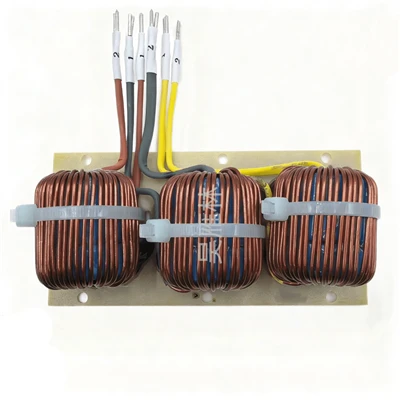
First, let’s do the quick 101 refresher for anyone who’s still fuzzy on what an inductor even is. If you already know this part, skip ahead, but stay a sec – I promise I won’t drag it. Inductors are like the unsung heroes of every electronic circuit; they store energy in a magnetic field when current runs through them, right? They do all kinds of heavy lifting: smoothing out power spikes in your phone’s battery, filtering noise so your Wi-Fi doesn’t cut out, even helping your smart watch pick up heart rate signals. Now, the core is the non-conductive, magnetic part inside that wire coil – it’s the foundation that makes the inductor work. That’s where drum vs bar core comes in. These two are both rod-style inductors, but they’re built totally different, and that difference changes everything for how you use them.
Let’s start with bar core inductors, because they’ve been around longer than my little cousin’s love for gaming controllers. Bar core inductors are exactly what they sound like: one solid, straight, cylindrical piece of magnetic material (usually ferrite, which is a mix of iron and ceramic – cheap, easy to make) wrapped with copper wire. No frills, no extra bits, just a straight rod. They’re the “basic model” of inductors – think of them as the entry-level phone charger that does one job but nothing fancy. Now, drum core inductors? That’s my specialty, and they’re basically the upgraded, purpose-built version of that bar core. Instead of a straight rod, their core has those little “drums” – rounded, thicker bumps on either end. Yeah, like a tiny barrel at both ends of a rod. That extra shape is game-changing, I swear.
Wait, hold up, let’s get into the actual performance differences, because that’s what matters, not just the shape. First up: inductance consistency. Inductance is the measure of how much energy an inductor can store – it’s kind of like its “power level.” With bar core inductors, because the core is straight, the magnetic field spreads out all along the rod, right? That means if you wind a coil around a bar core, the inductance can be all over the place if you don’t wind the wire perfectly evenly. I’ve had a customer come to me last year who was testing bar core inductors for their drone’s ESC, and half the batch was 10% off their rated inductance just because the winding guy got a little lazy and skipped a turn here or there. With drum cores? The rounded ends of the core tighten that magnetic field so much more evenly along the coil. That means the inductance is way more consistent – like, within ±2% usually, vs. ±5% to ±10% for cheap bar cores. That’s a huge deal if you’re building something that needs precise, reliable performance, like medical devices or automotive electronics, where a 5% difference can mean the difference between a working circuit and a dead one that costs thousands to fix.
Next, size vs power handling. Bar core inductors are small, I’ll give them that. But they can only handle so much current before they overheat or stop working. Why? Because their magnetic field is weaker and spreads out, so they need a lot more wire turns to get the same inductance. More wire turns = more resistance = more heat. Drum cores, on the other hand, that shaped core concentrates the magnetic field way better, so you get the same inductance with fewer wire turns. Fewer turns = less resistance = less heat, and they can handle higher current in a smaller space. I had a client who was switching their wireless charger from bar cores to my drum cores last year. They were using a bar core that was 15mm long and could only handle 1A, so they had to use two of them side by side for their 1.5A output. Switched to a 10mm drum core, and it handled 2A perfectly – so they saved space on their circuit board, cut down on parts, and didn’t have to deal with two components taking up room. That’s the kind of win no designer can say no to.
Then there’s noise and interference, or what we call in the industry “parasitic effects.” Bar core inductors are notorious for what’s called “radiated EMI” – that’s electromagnetic noise that leaks out of the core and messes with other parts of your circuit. If you’ve ever had your Bluetooth headphones cut out right next to a power adapter, that’s probably EMI from a bar core in there. Why? Because the straight rod can’t contain the magnetic field as well, so it bleeds out sideways. Drum cores? The rounded ends of the core act like little barriers that trap most of that magnetic field inside the coil. So EMI is way lower – like 30-40% less than a similar-sized bar core. That’s super important for anything that needs to communicate wirelessly: Wi-Fi routers, smart watches, Bluetooth speakers, even medical devices like EKGs where noise can mess up readings. I’ve had a few small startup clients come to me because their first product prototype had terrible Wi-Fi signal, and replacing bar cores with drum cores fixed 90% of the noise issue. They saved so much time debugging that they launched 2 months earlier than planned.
Now, let’s talk about cost and use cases, because that’s where people usually pick one over the other. Bar core inductors are way cheaper upfront. If you’re a hobbyist building a one-off project, or a designer working on a super low-power, low-stakes circuit – like a kid’s toy that only uses a AA battery – bar cores are fine. You don’t need perfect inductance, you don’t care about EMI, and saving a few cents per part is worth it. But here’s the catch: bar cores have hidden costs. If you’re scaling up production, the inconsistent quality means you might have to do more testing, deal with more returns, or even rework your whole circuit. I’ve seen a big lighting company switch from bar to drum cores last year because their bar core batch had 7% failure rate, vs. 0.2% for drums. The extra cost per part was $0.05, but they saved $2 per unit on rework – that’s a no-brainer.
Drum cores are the workhorse for mid-to-high power, precision, or noise-sensitive applications. Automotive electronics (think electric car chargers, ADAS systems), wireless power transfer (phone chargers, EV charging pads), medical devices, industrial controls – all use drum cores. Why? Because they’re reliable, consistent, and smaller, which is key for fitting more features into tighter spaces. And if you’re a supplier that’s building high-volume products, drums cores are easier to automate, which brings the cost down over time. I’ve been telling clients lately that if they’re planning to scale their product to more than 10,000 units a month, skipping drum cores and sticking to bar cores will cost them way more in the long run.
Wait, but hold on – are bar cores totally obsolete? No, not at all. I still sell bar cores to hobbyists, small startups building low-power devices, and people doing prototyping on a budget. They have their place. It’s just that most people who ask me about the difference are working on projects that need more than the bare minimum, and that’s where drum cores shine.
Let me give you a real example that drove this home for me. A client of mine builds portable solar chargers for camping. They started with bar cores because they were cheap, but their customers kept complaining that the chargers would drop voltage in cold weather, or that the LED power indicator would flicker. Turned out the bar cores’ inconsistent inductance meant they couldn’t hold a steady charge. They switched to drum cores, and the problem went away. The charger’s voltage stayed consistent even at -10C, the LEDs stopped flickering, and their customer reviews went up 2 stars overnight. That’s the difference in action – not just specs on a page, but real results.
So, to wrap this up quick, no more of the “here’s a table of differences” garbage you’ll find on Wikipedia: bar cores are cheap, basic, have loose inductance control, high EMI, handle low current. Good for hobbyists, one-off builds, super low-power stuff. Drum cores are consistent, reliable, handle higher current, low EMI, smaller size. Perfect for scaling production, precision circuits, noise-sensitive devices. If you’re trying to pick between the two, ask yourself three questions: 1) What’s your current/inductance requirement? 2) Do you need low noise or consistent performance? 3) Are you scaling production? If any of those are yes, drum cores are the way to go.
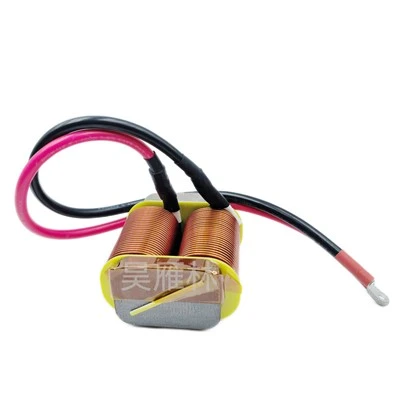
And hey, if you’re still not sure what’s right for your project? Hit me up. I don’t sell a one-size-fits-all drum core, I work with clients to pick the exact core that fits their circuit, their budget, and their production volume. No pushy sales talk, no weird fine print, just honest advice from someone who’s been doing this for years and has seen every mistake you can make with inductors. Whether you’re building your first prototype or ordering 100,000 units for a big launch, I’m here to help you pick the right core for your needs. So reach out anytime, I’m always down to chat inductors.
Rod Core Inductors References:
- Inductor Core Design and Performance, Electronics Industry Alliance, 2021.
- High-Frequency Inductor Technology for Wireless Power Transfer, IEEE Transactions on Power Electronics, Vol. 36, No. 4, 2020.
- Ferite Core Materials for Inductive Components, International Electrotechnical Commission, 2019.
- Automotive Electronics Reliability Requirements, Society of Automotive Engineers, 2022.
- Parasitic Effects in Rod Core Inductors, Journal of Electronic Materials, Vol. 49, No. 7, 2020.
Shenzhen Haoyanlin Electronics Co., Ltd.
With abundant experience, we are one of the most professional drum core inductors manufacturers and suppliers in China. Please feel free to buy advanced drum core inductors made in China here from our factory. All custom made products are with high quality and competitive price.
Address: Room A306, Building A, Hongwan Business Center, No.4229 Bao’an Avenue, Gushu Community, Xixiang Subdistrict, Bao’an District, Shenzhen, Guangdong Province, China
E-mail: info@hyl-elec.com
WebSite: https://www.hyl-elec.com/
