If you’re in the market for low voltage power cables, you already know that continuity is non-negotiable. I’m the guy who’s been supplying low voltage power cables for over 12 years, and I’ve seen too many installers cut corners when testing continuity only to end up with messy callbacks, frustrated customers, and even reworks that cost way more than the test itself. This isn’t rocket science, but it’s a step that too many beginners mess up—and honestly, even some old hands skip the little details that make the test actually accurate. Let’s break this down like we chat around the warehouse floor, no jargon, no fancy stuff, just what works for our cables. Power Cable Low Voltage
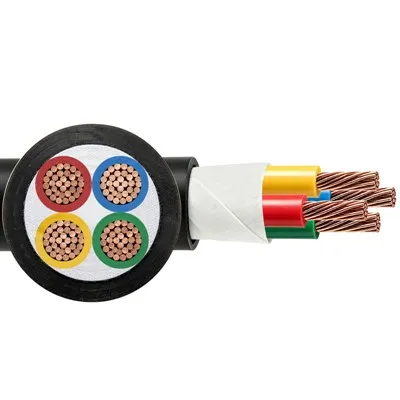
First, let’s start with the basics: what even is continuity here? For low voltage cables (that’s usually 1000V or less, right? The stuff used in residential wiring, small commercial spaces, solar setups, generator connections), continuity means there’s an unbroken path for electricity through the cable’s conductors. If the path is broken, the cable’s useless for its intended job—like trying to run a outlet with a wire snapped inside, or a solar panel string where a cable has a hidden nick. Testing continuity isn’t just “is this wire connected?”; it’s confirming that our cables (since we test every batch before they leave our warehouse) perform exactly as promised.
Now, before you grab your multimeter, there’s a few things you need to sort out first, especially if you’re testing cables you just unboxed from us. First, make sure the cable is de-energized. I can’t stress this enough—even a tiny jolt from a 120V line is enough to fry your multimeter, or worse, give you a painful zap. If the cable is still installed somewhere, disconnect it from the power source entirely. If you’re testing a raw cable (like the ones we roll out in 500ft spools), strip about an inch of insulation from both ends, but leave the conductors intact—don’t twist them together yet.
Next, pick the right tool. 9 times out of 10, a basic digital multimeter (DMM) is all you need. You can grab these for $20-$50 at any hardware store, and if you’re buying low voltage cables from a reputable supplier like us, we don’t skimp on conductor quality, so a cheap DMM works perfectly. Some guys use continuity testers that just beep if there’s a path—those are fine for quick checks, but I’d always recommend a multimeter too, because you can get a resistance reading, which tells you more than just “good or bad.” Low voltage copper conductors should have really low resistance, right? Like, for a 100ft 14AWG cable, you’re looking at around 0.025 ohms. If the number jumps to 0.5 ohms or more, that’s a problem—either the conductor has a thin spot, or there’s a hidden break.
Now, let’s walk through the actual test step by step, tailored to our low voltage cables. First, set your multimeter to the continuity setting (usually that little speaker icon, or if you’re using resistance mode, set it to the lowest ohm setting, like 200 ohms). Then, touch the multimeter’s two probes to the two ends of the same conductor. So if you’re testing the black hot wire on a 14/2 Romex cable, stick one probe on the exposed copper at one end, the other on the exposed copper at the opposite end. What should happen? If the conductor is unbroken, you’ll hear a steady beep (if you used the continuity setting) and the resistance will show a tiny number—no more than a few ohms, even for long runs. If you don’t hear a beep, or the resistance is infinite (that’s what multimeter reads when there’s no path), that means the conductor is broken somewhere inside.
Wait, what if you’re testing a multi-conductor cable? We make a lot of 2, 3, and 4-conductor low voltage cables for residential and commercial use, so testing each conductor separately is key. Don’t get cross-contamination here—if you accidentally touch the black probe to the white conductor’s end, you’ll think the black wire is broken when really you just messed up the probe placement. For multi-conductor cables, I always mark each conductor with a tiny piece of tape at one end before testing. Label each conductor “1, 2, 3” on the tape, then test each one separately against its match at the other end. That way, no mix-ups.
Here’s a pro tip we learned in our warehouse: always test both ends, not just one. A lot of installers will test one end of a raw cable, it works, and they call it good— but what if the break is halfway? We’ve had a couple of returns over the years where someone did that, only to find out the cable had a small nick during manufacturing that broke after 200ft of pulling. Testing both ends catches that, and we make sure to mention this on every product sheet for our low voltage cables, because it saves everyone the hassle.
Another thing to watch out for: loose probe connections. If your probes aren’t tight to the copper conductor, you’ll get a high resistance reading, or no beep, even if the wire is fine. Take a second to make sure the exposed copper is shiny—if there’s any oxidation or insulation debris on the end, scrape it with a small flathead screwdriver before touching the probe. We prep all our cable ends in the warehouse for shipping, so you shouldn’t have a lot of oxidation, but it’s still a good check.
What if you’re testing a cable that’s already installed in a wall or conduit? This is where it gets a little trickier, because you can’t access both ends easily. For that, you can use a continuity tester with a tone generator and tracer—those are super handy for installed runs. You clip the tone generator to one end of the cable, and run the tracer along the wall or conduit; the tone will get louder when you’re on the exact line of the cable. If the tone drops off suddenly, that’s where the break is. This is extra useful for low voltage cables used in solar systems, where you might have a string of cables running up a roof, and you need to find a break without tearing into the roof.
Now, let’s talk about what a bad test result looks like, and when it’s actually the cable’s fault vs. something else. If you test a raw cable and get no continuity, first check your multimeter: is the battery dead? That’s a common mistake, especially with older multimeters. Test a known good wire first to make sure the multimeter is working. If the multimeter checks out, then the cable is almost certainly the issue—either a manufacturing defect, or damage during shipping. We stand behind all our low voltage cables, so if that happens, just reach out, we’ll replace it no questions asked. If you’re testing an installed cable with a tone generator and there’s no tone at all, the cable is either not connected to the tone generator, or there’s a total break. If there’s tone on half the run, that means the break is between the tone generator and the tracer’s loud spot.
Wait, another thing: when testing continuity, you want to make sure you’re not testing against ground. That’s a mistake a lot of new installers make. If you touch one probe to a conductor and the other to the cable’s metal jacket (for armored low voltage cables) or the ground wire (for grounded cables), that’ll give you a false continuity reading, because you’re connecting the conductor to ground, not itself. Always test a conductor to its matching other end, not to ground.
Let’s also cover common mistakes that lead to wrong results. First, using a multimeter on too high an ohm setting. If you set it to 2000 ohms instead of 200, a low resistance path might register as no reading, even if it’s fine. Second, twisting conductors together during testing—if you twist both ends of a conductor together, you’ll get continuity, but that defeats the purpose of finding a break. Third, testing when the cable is still energized. We can’t say this enough—turn off the breaker, disconnect any power sources, even if you think the cable is not connected. Low voltage is still enough to damage your tools and hurt you.
Now, why does all this matter when you’re sourcing low voltage cables? Because continuity is the foundation of any electrical system. A cable with a bad continuity test can cause all sorts of issues: a room with no power, a solar panel string that doesn’t produce any power, even fire hazards if the broken conductor arcs. When you buy from us, we test every single spool of low voltage cables before they leave our warehouse. We run two continuity tests: one at the factory before packaging, and another random spot check before shipping. That way, you don’t have to waste time testing every single meter, but it’s still smart to do your own test, especially if you’re installing in a tight space or pulling the cable through conduits.
If you’re in the market for reliable low voltage power cables, skip the hassle of testing bad cables yourself. We carry all types: 14/2, 12/3, solar cables, generator cables, even the armored stuff for commercial use. We ship fast, have bulk discounts, and our team is on hand to answer any questions you have about testing, installation, or picking the right cable for your job. Don’t waste time with subpar cables that fail continuity—let us hook you up with the right stuff, and we’ll make sure it works when you test it.
If you’re looking to order, have questions, or need a quote, just reach out. We don’t do hard sell, we just do good cables and good service. Let’s get your project running smoothly.
Data Communication Cable References
- Low Voltage Electrical Installation Standards, National Electrical Code (NEC), 2023
- Electrical Continuity Testing Best Practices, Underwriters Laboratories (UL), 2022
- Residential Wiring Cable Testing Guide, International Association of Electrical Inspectors (IAEI), 2021
Yangzhou Huayu Cable Co., Ltd.
Yangzhou Huayu Cable Co., Ltd. is one of the most professional power cable low voltage manufacturers and suppliers in China, also supports customized service with low price. Please feel free to wholesale advanced power cable low voltage made in China here from our factory. Contact us for pricelist.
Address: No.9 Jingang Road, Yangzhou City, Jiangsu Province, China
E-mail: info@huayucabletech.com
WebSite: https://www.huayucabletech.com/
