Hey everyone, it’s Jake here, and I’ve been getting hit up nonstop lately—like, at least 5 times a week—from folks in the medical device space asking the same exact question: “What’s the shrinkage rate of medical silicone for molds?” Look, I get it. If you’re trying to make a catheter, a surgical seal, or even a tiny implant component, one tiny miscalculation in silicone shrinkage can mean the difference between a part that passes ISO 13485 and one that gets tossed in the trash (or, worse, makes its way to a real patient). I’ve been in the medical silicone molds game for 8 years now, so let’s break this down like I’m explaining it to a new tech on our shop floor—no stuffy jargon, just real talk that actually works for your projects. Medical Silicone Molds
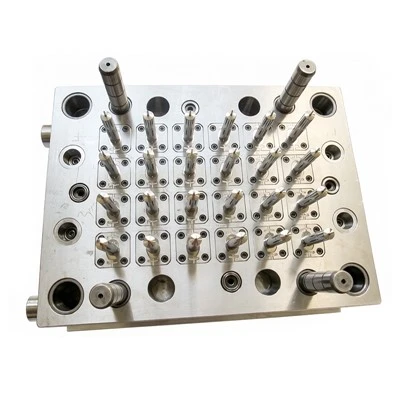
First off, let’s get one thing straight: there’s no single “one-size-fits-all” shrinkage rate for medical silicone. That’s the biggest myth I see online, and it drives me nuts. Every medical grade silicone we work with at our shop is a two-part, platinum-cured system (that’s the only kind we use, by the way—tin-cured is out for medical stuff, no exceptions) and shrinkage is dependent on like 5 different variables. Let’s list ‘em out because ignoring any of these will mess up your parts: the type of silicone itself, cure temperature, cure time, mold material, and even part geometry. I’ll walk through each because I’ve tested every single one of these in our R&D lab more times than I can count.
Starting with the silicone type. Medical silicones are grouped by their Shore hardness, right? We do everything from Shore 10 (super soft, like a breast implant filler) up to Shore 80 (hard, rigid stuff for orthopedic spacers). For platinum-cured medical silicone, the baseline shrinkage I see across most of our standard grades is between 0.8% and 1.2% when we cure at room temp (that’s called room temperature vulcanization, or RTV, in the biz). Wait, but if we heat cure it—like at 100°C (212°F) instead of waiting 24 hours—shrinkage drops to 0.5% to 0.9%? No, hold on, that’s not the whole story. The really soft stuff—Shore 10 to 30—tends to shrink a little more, like 1.0% to 1.2% RTV, because those have more filler (wait, no, actually they have less cross-linking, which makes them more flexible, so they contract more as they cure). The harder stuff—Shore 60 to 80—stays at 0.7% to 0.9% RTV, and even lower when heat cured. I tested this last month when a customer needed 100 tiny microfluidic chips—Shore 40 silicone—and RTV shrinkage was 1.1%, but when we heat cured at 120°C (248°F) for 10 minutes, it dropped to 0.6%. That’s a huge difference for a part that’s only 5mm wide, right? If you don’t adjust for that, the channel is off by 0.025mm and it doesn’t work.
Next variable: cure temperature and time. This is where people mess up all the time. If you rush a medical silicone cure, you get what’s called “post-cure shrinkage” — oh, right! I forgot to mention that most people only measure shrinkage right after demolding, but medical silicones keep shrinking for days after that because the cross-linking isn’t complete yet. That’s a big one. Let’s clarify: immediate demold shrinkage is what you see when you pop the part out of the mold, but total shrinkage after full post-cure (which is required for medical parts, per FDA guidelines) is what you need to account for. For example, take Shore 50 platinum silicone: immediate demold at room temp is 0.9%, but after 7 days of full curing, that jumps to 1.1% to 1.3% because the cross-links keep forming. That’s why a lot of first-time customers get confused—they measure the part right after demold, think shrinkage is low, and then it’s too small a week later. We always tell our customers to wait at least 7 days before final measurements, and to adjust their mold dimensions accordingly. If you’re heat curing, post-cure is way faster—do a 2-hour post-cure at 150°C (302°F) and you get almost full cure shrinkage in 2 hours instead of a week. I had a customer last quarter who was making surgical gaskets, and he measured right after demold, used a mold with 0.9% shrinkage, and then his parts shrank another 0.3% and didn’t seal. That’s a $20k order that almost got scrapped because he skipped post-cure testing.
Mold material is another factor no one talks about. If you’re using an aluminum mold, silicone shrinkage is a little different than if you’re using a 3D printed mold or even a steel mold. Wait, aluminum is the most common mold material we use for medical parts because it’s machinable, holds detail well, and conducts heat evenly for curing. When silicone cures against aluminum, the adhesion is pretty good, so it can’t pull away as much during shrinkage, so shrinkage is lower by like 0.1% to 0.2% compared to if you use a 3D printed resin mold (those are porous, so silicone can pull away more as it cures, leading to higher shrinkage—like 1.0% to 1.4% for the same Shore 40 silicone in a resin mold). I tested this for a customer who was 3D printing low-volume molds for a clinical trial, and he kept getting inconsistent parts until we swapped to aluminum molds for the production runs, which fixed his shrinkage issue. That’s a trick most small shops don’t know about—mold material isn’t just about cost, it directly affects how much your silicone shrinks.
Part geometry is the final big variable. Tiny, thin parts—like 0.5mm wall thickness—shrink more than thick, bulky parts. Why? Because thin parts cure faster, so the surface skin forms first, and the inner material cures later, pulling the outer skin tight. I’ve seen thin micro-needles (like 0.2mm thick) have shrinkage up to 1.5% after full cure, while a 10mm thick implant part only shrinks 0.8%. It’s the same silicone, same cure time, but geometry changes everything. That’s why we never give a generic shrinkage rate on our spec sheets—we always ask customers for part dimensions, volume, and whether they need RTV or heat cure, then test a small sample first. That’s non-negotiable for medical parts, because FDA requires traceability and consistency, so you can’t guess.
Wait, let’s also clear up a common confusion between medical grade silicone and regular silicone. Regular silicone (like the stuff you buy at a hardware store for caulk) has way higher shrinkage—like 2% to 5%—but that’s because it’s not platinum-cured, it has additives that volatilize during cure, and it’s not tested for biocompatibility. We only use platinum-cured medical silicones because they’re USP Class VI, ISO 10993 compliant, and don’t have those volatile additives, so shrinkage is way lower and way more consistent. That’s a huge difference for medical applications—you can’t use hardware store silicone for a catheter, end of story.
Now, what do we actually recommend for our customers? Let’s make this actionable, not just numbers. If you’re prototyping, use a 0.1% buffer on the high end: so if you think your final shrinkage will be 1.0%, make your mold 1.01% bigger, to account for variables. If you’re doing low-volume runs with RTV silicone, plan for 0.9% to 1.3% total shrinkage, post-cure. For high-volume heat-cured parts, it’s 0.5% to 0.9% total shrinkage, because the cure is faster and more consistent. And for super thin or micro parts, add another 0.2% to that. Also, always do a trial run. We provide free sample molds (well, low-cost, since we have to machine them) for customers to test shrinkage before they commit to a big order. That’s saved so many customers from wasting thousands of dollars on bad parts.
Let me give you a real example that’s fresh in my mind. A startup came to us 3 months ago making a new wound care pad—Shore 20 medical silicone, 2mm thick, RTV cure for low-volume clinical trial runs. They tried to make their own molds at home using 3D printed resin, guessed shrinkage was 0.5%, and their pads were coming out too small by 0.8mm, which made them not fit the wound dressings. They were about to scrap their whole prototype when they reached out. We tested their silicone, found shrinkage was 1.1% (due to Shore 20 and 3D printed mold), adjusted their mold dimensions, and their next sample was perfect. They just placed a 50,000 part order last week, and we’re using our aluminum molds for production, so shrinkage is down to 0.9% like we predicted. That’s why I harp on all these variables—because one wrong guess ruins everything.
Also, let’s talk about post-cure, because medical parts can’t go to market without it. The FDA requires most implantable or contact medical devices to go through a post-cure step to reduce residual monomers and extractables, which is also when final shrinkage happens. If you don’t account for that, your part will be out of spec. We always include post-cure shrinkage in our mold calculations, and we provide a full test report with every order so customers can show to the FDA that their parts are consistent. No cutting corners here—medical device companies have enough hoops to jump through without our mistakes making it worse.
Wait, I should address a common question: can you compensate for shrinkage by over-molding? Yeah, but that’s a band-aid, not a solution. If you guess wrong and over-mold, you end up with excess material that’s hard to trim, or parts that are too stiff. It’s way better to get the shrinkage rate right from the start by testing, than to fix it later. We’ve had customers come to us who tried over-molding and ended up with 3x the scrap rate, so they switched to working with us, and their scrap dropped to under 1% for production runs. That’s the value of knowing your silicone shrinkage.
Now, let’s wrap this up because I know you’re here for actionable stuff, not just facts. The key takeaways: medical silicone shrinkage isn’t a single number—it ranges from ~0.5% to 1.5% depending on silicone hardness, cure method, mold material, and part geometry. Platinum-cured medical grade is way more consistent than non-medical silicone, so don’t cut corners there. Always account for post-cure shrinkage, not just immediate demold. And for the love of all things regulatory, do a test run before committing to a full order.

If you’re working on a new medical device, need help calculating mold dimensions, or just want to stop guessing about silicone shrinkage, hit us up. We’ve supported startups, big pharma, and clinical trial groups with their silicone mold needs, and we test every grade we use so we can give you accurate, real-world shrinkage rates, not numbers from a textbook. Don’t let a shrinkage mistake derail your project—reach out, and we’ll help you lock in consistent, compliant parts that work right the first time.
Capping Machine References:
- ISO 10993-5: Biological evaluation of medical devices — Part 5: Tests for in vitro cytotoxicity
- Society of Plastics Engineers (SPE) Medical Plastics Division: “Silicone Elastomer Shrinkage in Medical Molding” 2022 Technical Report
- FDA Guidance for Industry: “Use of Elastomeric Components in Medical Devices” 2021 Update
Taizhou Koni Mould Co., Ltd.
As one of the most professional medical silicone molds manufacturers and suppliers in China, we also support customized service. Please feel free to wholesale high quality medical silicone molds made in China here from our factory. For pricelist, contact us now.
Address: No. 97 Jinju Road, Chengjiang Subdistrict, Huangyan District, Taizhou City, Zhejiang Province
E-mail: kn@kenimould.com
WebSite: https://www.kenimouid.com/
