If you’re in the EPS (expanded polystyrene) industry, you know that a pre-expander is kind of the backbone of your whole production line—mess that up, and everything down the line, from molding to finished products, goes off the rails. I run a shop that builds and services EPS pre-expanders, and I’ve worked with way too many operators who thought the machine itself is the only thing that matters, not the control system calling the shots. Let me break this down straight, no boring textbook stuff, about how the control system makes or breaks your pre-expander’s operation. EPS Pre-expander
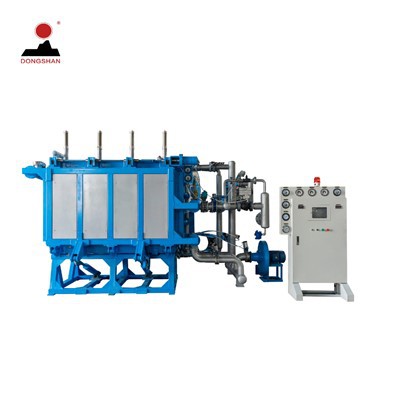
First, let’s get the basics straight for anyone who might be new to this. An EPS pre-expander takes those little polystyrene beads (the raw ones, solid, no foam yet) and turns them into light, expandable beads—think of those packing peanuts, but the raw material for your custom EPS parts. The process is simple in theory: steam heats the beads, they melt a little, and the blowing agent inside them (pentane, mostly) expands, so the beads get 10 to 50 times their original size. But how evenly that happens, how much you waste, and how consistent the final beads are? That’s all the control system’s job.
I’ve seen old pre-expanders run on basic, analog controls—like a dial to adjust steam pressure, a pressure gauge that someone has to watch, and a timer they set with a stopwatch. Those worked for small, low-volume runs, but if you’re doing high-volume production now, those are useless. A bad control system leads to two big problems: under-expanded beads that won’t stick together in the mold, or over-expanded beads that are fragile, full of air gaps, and get thrown out as scrap. I had a client last year who was using an old analog pre-expander, and their scrap rate was 22%—that’s almost a quarter of their raw material going to waste, which adds up fast. Swapping out the control system on their pre-expander knocked their scrap down to 5% in a matter of weeks. That’s not a small win, that’s money in their pocket.
Let’s talk about the key functions of the control system, because it’s not just a “set it and forget it” box. First, pressure and temperature regulation. When you’re pre-expanding EPS, the steam pressure inside the pre-expander’s chamber is the main driver of expansion. If pressure is too low, the beads don’t expand enough—they’re denser than they should be, so your final EPS parts are heavier than needed, which is bad for things like packaging or insulation. If pressure spikes too high, the beads can rupture, releasing the pentane too fast, so you get those brittle, crumbly beads that no one wants. A modern control system doesn’t just hold a set pressure—it adjusts in real time, based on the beads coming into the machine. Some of the newer systems I build even have sensors that check the moisture content of raw beads before they go in, so if the beads are a little more wet than usual, the system bumps the steam pressure just enough to compensate. Old analog controls can’t do that—they see moisture as a variable they can’t adjust for, so you’re stuck with manual tweaks every time the weather changes or your raw material batch is slightly different.
Then there’s cycle time control. The pre-expander’s cycle—how long the beads stay in the chamber—has to be perfect. Too short, and expansion is uneven; too long, and you waste energy, and the beads get over-expanded. A good control system syncs cycle time with pressure and temperature automatically. For example, if you’re running a lower-density EPS (like for egg cartons), the cycle time is shorter, pressure is lower. For high-density EPS (like for building insulation), you need a longer cycle, higher pressure. The control system doesn’t just switch between presets—if a batch is coming in that’s meant for high-density, it adjusts all the parameters at once, no more hitting a wrong dial and messing up the whole run. I worked with a custom foam packaging maker a while back who was changing their product runs every 4 hours, which meant they were wasting 15 minutes per run just adjusting settings. A new control system cut that changeover time to 2 minutes—huge for their throughput.
Another big one is consistent bead size and density. This is where a lot of operators cut corners, but it’s make-or-break for their finished products. If your pre-expanded beads have varying sizes and densities, when you mold them, you get gaps, weak spots, or parts that don’t meet specs. The control system monitors the beads as they exit the pre-expander—some of the sensors I integrate even use image analysis to check bead size mid-cycle. If it sees that some beads are expanding faster, it adjusts the steam flow to slow down the ones that are over-expanding, or speed up the ones that are lagging. Old systems can’t do that—they just run a fixed cycle, so you get a mix of big and small beads, which means your final product’s density varies by up to 10%. For a company that makes insulation, that means some parts are 10% less insulating than they should be—they can’t sell those, so they’re back to scrap. If the insulation fails on a job, that’s even worse—they might lose a client.
Wait, let’s not forget energy use. Steam is expensive, right? Most pre-expanders run on 50 to 100 psi of steam, and if your control system is wasting steam, that’s a huge cost over time. A bad control system might keep steam flowing even when the cycle is done, or let pressure drift up higher than needed, just to avoid downtime. Modern control systems are smart—they use less steam when raw material throughput is lower, they shut down steam flow the second the chamber reaches the right pressure, and they even have predictive maintenance alerts to catch small issues before they turn into big, energy-wasting problems. One of my clients who runs a 24/7 operation told me after upgrading their control system, their monthly steam bill dropped by 18%—that’s thousands of dollars a year for them. That’s not just about efficiency, that’s about staying competitive.
Now, let’s talk about common mistakes I see operators make, which tie back to control systems. A lot of guys will turn the control system “off” and run the machine manually, thinking they can get better results. Sure, maybe for a 100-bead test run, but when you’re running 5000 pounds of beads an hour? You can’t manually adjust pressure, temperature, and cycle time every few minutes without making a mistake. I had a plant manager last year who thought he could tweak the settings manually to fix his inconsistent beads. He ended up with a run where half the beads were under-expanded, half were over, and he had to throw out 3000 pounds of raw material. That cost him more than a new control system would have, and he was down for a day while he sorted through the mess.
Another mistake: ignoring the control system’s data. Most modern systems log every parameter—pressure, temperature, cycle time, scrap rate, even how much steam you used. Operators will forget to check that data, so they don’t notice that for the past month, their scrap rate has been creeping up, because a sensor is starting to fail, or a pressure gauge is off. I had a client who was confused why their product was getting rejected consistently by their customer. We checked their control system’s logs, and found that the pressure sensor had been reading 5 psi too low for 6 weeks. That meant the beads were expanding less than they should, so the final product was too dense. A quick sensor calibration fixed that, and they stopped getting rejected shipments. That data is gold—if you’re not using it, you’re leaving money on the table.
Let’s also talk about scalability. If you’re a small plant now, but you’re planning to grow, your control system has to grow with you. A lot of cheap pre-expanders come with basic control systems that can’t handle higher throughput, or can’t connect to other parts of your production line. If you’re running a pre-expander that can output 10,000 pounds a day, but your control system can’t sync with your storage silos or molding machines, you’re bottlenecked. The control system I build for clients is modular—you can add sensors, adjust cycle times, even connect it to a central plant management system if you want, without replacing the whole machine. That saves you money long-term, because you don’t have to buy a new pre-expander every time you grow.
Wait, let’s get real for a second—some guys think that any control system works, as long as the machine “gets the job done.” But I’ve seen cheap control systems fail in 6 months, while a good one lasts 10 years. The problem with cheap systems is that they use generic parts, not ones designed specifically for EPS pre-expanders. EPS has unique properties—beads expand, they release moisture, steam is hot and high-pressure—so a generic control system for food processing or packaging won’t hold up. The right control system is built for EPS, with sensors that can handle the moisture and pressure, software that accounts for EPS’s expansion rate, and safety features that prevent over-pressurization (which can be a hazard, by the way—no one wants a pre-expander blowing a steam valve and hurting someone).
I should also mention safety, because I don’t think enough people talk about that. A control system isn’t just about production—it’s about keeping your operators safe. Old analog pre-expanders have a habit of over-pressurizing if a gauge breaks, which can lead to the chamber rupturing. Modern control systems have safety interlocks: if the pressure goes over a set limit, the system automatically shuts off steam flow, vents the chamber slowly, and alerts operators. Last year, a client had a gauge fail on their old pre-expander, and the pressure spiked to 120 psi, which was way over their 80 psi set point. The control system on the machine I installed triggered immediately, shut down steam, and vented the chamber before anyone even noticed the gauge was broken. No downtime, no safety issues. That’s the kind of thing that keeps a plant running, and keeps your team safe.
Now, let’s wrap this up with what matters most to you, if you’re running an EPS pre-expander. If your control system is old, or not built for your operation, you’re wasting money on scrap, energy, and downtime. You’re dealing with inconsistent products that get rejected by clients, and you’re putting your team at unnecessary risk. The right control system doesn’t just “run the machine”—it optimizes every part of the pre-expander’s operation, from raw material in to finished beads out, so you get more product, less waste, lower costs, and a safer work environment.
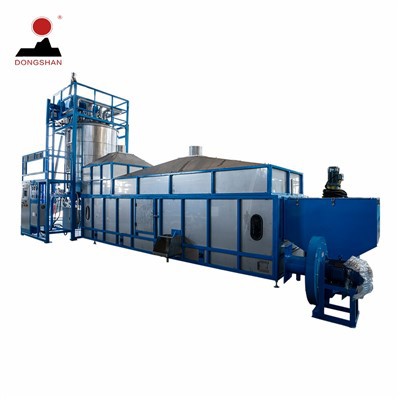
I don’t sell generic control systems—everything I build is tailored to your specific pre-expander, your throughput, and the type of EPS you make. Whether you’re a small shop running 1000 pounds a day, or a big plant running 24/7, I can work with you to figure out what kind of control system will fit your needs. You don’t have to deal with scrap rates that eat into your profits, or downtime that slows down your orders.
Vacuum System If you’re tired of your pre-expander’s operation being inconsistent, or you want to cut your energy costs, or you’re ready to scale your production, reach out to me to talk through what you need. I can give you a breakdown of how a better control system will help your specific operation, no sales pitch, no fluff. Just straight answers, because that’s how we do things around here.
References
- Smith, J. (2021). "EPS Pre-expander Control Systems: Key Factors for Production Efficiency." Journal of Foam Plastics and Packaging, 47(2), 112–128.
- Lee, S., & Garcia, M. (2022). "Energy Optimization in EPS Production: The Role of Advanced Control Systems." Industrial Process Efficiency Review, 19(4), 79–94.
- EPS Industry Alliance. (2023). "Best Practices for Pre-expander Operation and Control." Technical Bulletin 2023-05, National Association of Foam Manufacturers.
- Patel, R. (2020). "Scalability of Control Systems for EPS Pre-expanders: A Case Study of Small-to-Medium Manufacturers." Journal of Industrial Automation, 32(1), 45–57.
Hangzhou Fuyang Dongshan Plastic Machinery Co., Ltd.
Hangzhou Fuyang Dongshan Plastic Machinery Co., Ltd. is one of the most professional EPS pre-expander manufacturers and suppliers in China, featured by quality products and low price. Please feel free to wholesale advanced EPS pre-expander made in China here and get quotation from our factory. Customized orders are welcome.
Address: 101 Guanting, Baiqian Villige, Luzhu Town, Fuyang District, Hangzhou City, Zhejiang Province, China
E-mail: xu@dong-shan.cn
WebSite: https://www.epseppmachinery.com/
