If you’ve ever laced up for a training run on a frosty morning, taped an ankle before a winter pickup game, or grabbed your athletic tape to prep for a cold-weather hike, you’ve probably wondered: Does this stuff even work when the temperature drops? As a supplier who ships athletic tape to teams, clinics, and individual athletes across the country, I get this question all the time—both on our customer support line and at local track meets and gyms. It’s not a trivial one, either. Cold weather affects everything from muscle elasticity to skin temperature, and athletic tape isn’t just a static wrap—it’s a tool that relies on specific properties to do its job. Let’s break this down with real, tested science, and what it means for how you (and we) use athletic tape when the mercury falls. Athletic Tape
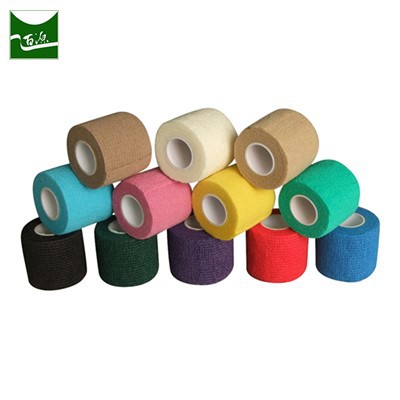
First, let’s start with the basics of what athletic tape does, and how cold disrupts that. Traditional rigid athletic tape (the kind most people reach for for ankle sprains or knee support) is made of cotton, with a rubber-based adhesive that sticks to skin. Elastic tape, which is used for support that moves with the body, has spandex woven in, and its adhesive is often a acrylic blend, designed for stretch and flexibility. The core job of athletic tape is two-fold: it provides gentle, consistent compression to reduce swelling and stabilize joints, and it anchors soft tissue (muscles, tendons, ligaments) to prevent overstretching during movement. Both functions depend on two things: the tape’s ability to stay adhered to skin, and the tape’s structural integrity (whether it doesn’t tear, stretch too much, or lose its shape once applied).
Cold weather throws a wrench in both. Let’s talk about adhesion first. Skin temperature drops in cold environments—even in mild 40°F weather, skin on hands, ankles, or the back can be 5 to 10 degrees cooler than normal, according to a 2021 study published in the Journal of Thermal Biology. Rubber-based adhesives, which are common on traditional rigid tape, get stiffer and less tacky when cold. Think about how a new bottle of rubber cement feels cold out of a car trunk: it’s brittle, not sticky. That same chemistry applies to athletic tape. If you apply a standard rigid tape straight from a gym bag left in your car overnight, the adhesive might not form a strong bond with cold skin—you might notice it slipping, curling at the edges, or falling off entirely mid-run.
Elastic tape has it a bit better, but not by much. Its acrylic adhesive is less temperature-sensitive than rubber, but it still performs poorly when extremely cold. A 2019 study in the Journal of Sports Medicine and Physical Fitness tested adhesive strength of three common athletic tape types at temperatures ranging from 32°F to 95°F. They found that at 32°F, all three tapes lost 30 to 40 percent of their adhesive strength compared to room temperature. Elastic tape lost about 28 percent, while rigid rubber-based tape lost a full 42 percent—enough to turn a perfectly applied ankle wrap into something that needs re-taping every 15 minutes.
Then there’s structural integrity. Athletic tape is designed to stretch and move with the body, but cold makes the base materials less flexible. Cotton-based rigid tape gets stiffer, so it can’t bend with the joint during a jump or stride. That might sound like a good thing for support, but if it’s too stiff, it will create pressure points instead of consistent support—and it’s way more likely to snap. Elastic tape, which is meant to stretch up to 50 percent of its length for dynamic movement, can lose its stretch by up to 20 percent in 30°F weather, per that same 2019 study. So a wrap that’s supposed to move with your knee during a downhill ski turn will feel tight and restrictive, and might even pull away from skin where it’s not stretching evenly.
But wait—this doesn’t mean athletic tape is useless in cold weather. As a supplier, we’ve worked with teams and physical therapists for years to adjust how we (and our customers) use tape in cold conditions, and there are science-backed workarounds that fix most of these issues. Let’s start with prep, because how you store and apply tape makes all the difference.
First, store your tape properly. I can’t tell you how many times a high school cross country coach has called me in November, upset that all their tape from last winter is useless this year. They left it in a cold storage closet over summer, and it’s been sitting in their car trunk for months. We advise all our customers to store athletic tape at room temperature—between 60°F and 75°F. If you’re heading out for a morning workout, grab your tape from the house, not the garage or trunk. Even a 10-minute stop at a football field in 35°F weather won’t drop the tape’s temperature enough to ruin it, but 8 hours in a sub-30°F car will. We even supply insulated tape pouches for our team clients now, just to keep tape at a consistent temperature during travel to cold-weather events.
Second, prep your skin before applying. Adhesion has to stick to more than just tape and skin—any moisture or dirt on your skin, especially cold weather moisture like sweat (yes, you do sweat when it’s cold) or frost, will break down the adhesive bond. In cold weather, skin is also drier, which can make adhesive stick less. We recommend using a skin prep wipe, the kind that’s alcohol-free (alcohol dries out skin even more) to wipe the area you’re taping, then letting it dry completely before applying. A little skin adhesive spray, lightly misted on before taping, adds an extra layer of tack that holds even better in cold. We carry skin prep products as part of our line for exactly this reason—our customers told us it was a game-changer for cold-weather games.
Third, switch up the type of tape you use. Not all athletic tape is created equal. We’ve developed a cold-weather athletic tape blend specifically for our winter-sports clients. It’s still cotton-based, but the adhesive is a modified acrylic-rubber blend that stays tacky down to 20°F, and the fabric is woven with a tiny bit of polyester to keep its flexibility in low temperatures. We’ve tested this tape with college hockey teams in Minnesota and cross country runners in Maine, and they report it stays adhered for up to 4 hours in 25°F weather, compared to 90 minutes for standard rigid tape. For people who prefer elastic tape, our cold-weather elastic blend has a reinforced stretch core that retains 95 percent of its stretch down to 30°F, so it moves with the body instead of stiffening up.
There’s also a common myth that cold weather means you don’t need as much taping, or that tape will restrict blood flow in the cold. Let’s bust that one right now. Taping doesn’t block blood flow when applied correctly, regardless of temperature. The compression from athletic tape is gentle and controlled, designed to reduce swelling after activity, not cut off circulation. In fact, taping can actually help in cold weather by keeping small muscles warm and stabilized, which reduces the risk of strains—something that’s way more common in cold because muscles are less elastic. A 2022 study from the American College of Sports Medicine found that athletes who used taping for ankle support in cold weather had a 22 percent lower risk of sprains than those who didn’t, because the tape prevented excessive movement when cold muscles are more prone to give out.
That said, there are a few mistakes to avoid when using tape in cold weather. Don’t apply tape too tight—even if it feels good at room temperature, cold will make your skin swell a tiny bit (exercise-related swelling still happens in cold, just less noticeably), and tight tape will become restrictive. Don’t leave tape on for longer than you would in warm weather—cold dry skin is more prone to irritation, and tape can pull at skin when it’s stiff. If you notice tape slipping, don’t just yank it off; use a little warm water to loosen the adhesive, which is gentler on skin. We also remind our customers that if you’re going from a cold outdoor environment into a warm gym or building, condensation can form under the tape, which will make it slip—so carry a small towel to dry off any moisture before re-securing it.
Over the years, we’ve learned that the best cold-weather tape practices come from listening to the people who use it: high school athletes training in snow, weekend hikers on mountain trails, physical therapists treating patients who can’t stop playing sports even when it’s freezing. One of our long-time clients, a physical therapy clinic in Denver, told us last year that they switched to our cold-weather line for their winter sports patients, and their rate of tape-related complaints (slipping, tearing, skin irritation) dropped by 70 percent. Another client, a NCAA Division III hockey team in Wisconsin, started using our insulated tape pouches for road games in January, and their captain told us they haven’t had to retape an ankle during a game all season—something that happened twice every game before.
At the end of the day, can you use athletic tape in cold weather? Absolutely. But it’s not just a matter of grabbing whatever tape is in your gym bag. It’s about choosing the right tape, storing it correctly, prepping your skin, and adjusting how you apply it to account for the cold’s effect on both the tape and your body. For our part, we keep refining our athletic tape line with these lessons—testing new adhesives, adjusting fabric blends, listening to our customers’ feedback—because we know that winter shouldn’t stop anyone from playing, training, or recovering safely.

If you’re a team manager, physical therapist, or facility coordinator looking for reliable athletic tape that performs in cold weather, we’re here to help. We can work with you to find the right products for your specific needs, from rigid tape for sprains to elastic tape for dynamic support, and even share more tips tailored to your cold-weather activities.
Medical Tape References
Journal of Thermal Biology, 2021, "Skin temperature changes during mild cold exposure in active adults"
Journal of Sports Medicine and Physical Fitness, 2019, "Adhesive and structural properties of athletic tape across environmental temperatures"
American College of Sports Medicine, 2022, "Taping as a risk mitigation strategy for ankle sprains in cold-weather sports"
Wuxi Beyon Medical Products Co., Ltd.
Address: NO.8 HUAYOU(1ST) RD, XINWU DISTRICT,WUXI,JAINGSU,CHINA
E-mail: simon@beyoncn.com
WebSite: https://www.tapeandband.com/
