Hey folks, thanks for hanging out in my corner of the internet today. For anyone who doesn’t know me, I’ve been running a small cam lock supply shop for almost a decade—seen every question under the sun when it comes to locking hardware, and one I get at least once a week is: “Can cam locks be used on safes?” It’s a solid question, and it’s not one with a simple yes or no answer. Let me break this down like I would for a regular customer who walks in off the street. Cam Lock
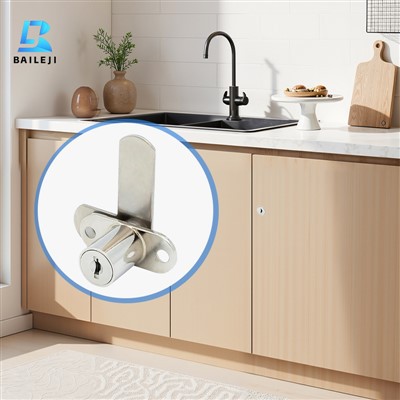
First, let’s recap what a cam lock actually is—for anyone new to the game. A standard cam lock is that little cylindrical lock you see on everything from toolbox drawers, file cabinets, utility boxes, even some older home mailboxes. It works by turning a key (or a combination dial, though keyed is way more common for industrial use) which twists a metal cam—a flat or angled piece attached to the lock core—up to 90 degrees. When you turn the key, the cam protrudes from the lock, slots into a small notch on the other side of the surface you’re locking, and clamps the two sides together; turn it back, the cam retracts, and the thing opens up. Simple, right? Super reliable for low-security, high-volume use where you just need to keep out casual snoopers, not a determined thief or a safe cracker.
That last part is key when it comes to safes. Safes aren’t file cabinets. They’re built for way more than just keeping your vacation paperwork or your lawn tools safe. A good safe is designed to resist forced entry—drilling, prying, bolt cutters, even torch attacks for commercial-grade units. So the question of whether a cam lock works here hinges on a couple big factors: what kind of safe it is, how you’re using the cam lock with it, and how secure that cam lock actually is.
Let’s start with the types of safes. There are two main categories people usually deal with: home use safes (think small fireproof boxes you keep under your bed or in a closet for passports, jewelry, cash, and small documents) and commercial or high-security safes (the big ones you see in bank vaults, retail store back offices, or business server rooms that hold cash, high-value inventory, or sensitive company data).
For small home safes: Yeah, cam locks are actually super common here. A lot of entry-level fireproof safes come standard with a basic keyed cam lock. Why? Because for most people, a safe in the closet is just to keep a kid from grabbing your handgun or your extra cash, not to withstand a professional break-in. The standard cam lock on these safes is strong enough for that—again, it’s just keeping out casual access, not someone who’s going to spend 20 minutes prying at the door. I sell tons of these for home use, and I get almost zero complaints about them for that specific use case.
But wait, let’s not gloss over the issues here. The main problem with using a basic off-the-shelf cam lock on a safe—even a small one—is their vulnerability. Standard cam locks have two big weaknesses: they’re easy to pick, and they can be snapped or drilled out in seconds. I’ve seen guys with a basic lock pick set pop a standard cam lock on a home safe in less than a minute, no fancy tools needed. And if you’re up against someone who’s a little more skilled, a 1/4-inch drill bit will go right through the thin metal of a lot of those basic lock cores. So if your safe is holding something valuable—like a $10k engagement ring or a half-dozen life insurance policies—don’t rely on a regular cam lock. It’s just not going to cut it.
Now for the bigger commercial safes, or high-security safes: This is where cam locks get tricky, and where a lot of people make a mistake. A lot of commercial safe manufacturers will still use a cam lock for the auxiliary lock, but they never use it as the primary locking mechanism. Wait, what’s the difference? Primary locks on high-security safes are usually either dial combination locks (the big rotating dials you twist for three numbers) or electronic keypad locks, or even biometric scanners. Those are built into the safe’s door, designed to resist prying, and they lock the whole door into the safe frame. The cam lock here is just a secondary thing—usually to lock the door from the inside, or to prevent someone from turning the dial if the main lock gets damaged. That’s a legitimate use for a cam lock, but it’s not the main way the safe is secured.
Can you replace the primary lock of a high-security safe with a cam lock? Short answer: No, not if you want it to actually be a safe. The whole design of a high-security safe is built around the main lock. If you yank out the thick, reinforced combination lock core and swap it for a thin standard cam lock, you’re basically turning a secure storage unit into a glorified toolbox. A determined thief will be through that cam lock in 30 seconds with a drill and a pry bar. Even if you get a heavy-duty cam lock for that, it’s still not going to match the security of a purpose-built safe lock.
Wait, but let’s talk about custom setups, right? A lot of people come to me wanting to modify their safe, maybe add a second lock because they’re worried about losing their keys, or they have a safe that’s missing its original lock. Is that possible? Yeah, but only if you do it right. I’ve worked on a few custom jobs where someone has a small home safe, wants to upgrade the lock from a basic keyed cam to a heavy-duty cam lock with a keyway that’s pick-resistant, or even a combination cam lock that’s harder to crack. That’s a good call—just not the super basic $5 cam lock you get at the hardware store for your file cabinet.
What makes a cam lock safe enough for a safe? Let’s break down the specs. First, the lock core. A standard cam lock has a brass core, which is soft and easy to drill through. A high-security cam lock has a hardened steel core, sometimes with anti-drill pins or anti-pick pins that make it way harder to tamper with. Then there’s the cam itself. A lot of basic cams are thin stamped steel, which can bend or break if someone uses a pry bar. A heavy-duty cam is solid steel, thicker, angled to lock deeper into the safe’s frame so it can’t be pried open. Also, the mounting: if you’re installing a cam lock on a safe, you want it to be mounted flush, not sticking out, and you want to reinforce the hole around the lock so someone can’t drill through the safe door right next to the lock to pop it.
I should also mention a common myth out there: some people think any cam lock will work on a safe, no matter the size or type. That’s not true. I had a customer last year who bought a $10 heavy-duty cam lock from a big box store, tried to install it on his $2k fire safe, and called me panicking because he couldn’t get it to fit. Turns out, the lock’s cylinder was too long, and it was sticking out past the safe door, which made it way more vulnerable. So fit matters a lot—you can’t just grab any old cam lock; you need one that’s sized specifically for the thickness of your safe door, and that mounts securely.
Another thing: compliance. If you’re using a lock on a safe that’s meant to store valuables, like guns or cash, you might need it to meet certain industry standards. Gun safes, for example, have to meet FBI standards for lock security if you’re storing firearms for personal use. A basic cam lock doesn’t meet that, so if you’re modifying your gun safe, you need to make sure whatever lock you use is rated for that. That’s another reason I always tell people to check with their safe’s manufacturer if they’re swapping out locks—don’t just wing it, because you might void your safe’s warranty if you install the wrong lock.
Wait, let’s get back to use cases, because that’s the biggest factor. If your safe is a small, basic home safe, and you’re just using it to keep casual access out—kids, house guests, people who don’t know your combination—then a good cam lock works totally fine. If your safe is a high-security commercial unit, and you want to add a secondary lock for extra peace of mind, a heavy-duty cam lock is a great, affordable option for that. If you’re using a cam lock as the main lock for a safe that holds high-value stuff, or if you’re trying to turn a regular cabinet into a safe, save your money and get a proper safe lock instead.
I’ve had to turn down a lot of custom orders over the years where someone wants me to help them make a $500 toolbox into a “safe” with a cam lock. I don’t do that, because it’s not a secure setup, and I don’t want someone coming back a month later saying their stuff got stolen because the lock was weak. But if someone has a safe that needs a secondary lock, or a small home safe that just needs a reliable basic lock, I’m all in.
One last thing to wrap this up. A lot of people see cam locks as cheap, low-security hardware, but the right cam lock can be way more secure than you think. The difference between a $3 cam lock and a $30 heavy-duty cam lock is night and day. The hardware store one will pop open with a bobby pin. The heavy-duty one has a core that’s almost impossible to pick, and a cam that can’t be bent or snapped. So it all comes down to matching the lock to the job. If your job is to secure a safe, make sure you’re not using a lock that’s too weak for what you’re storing.
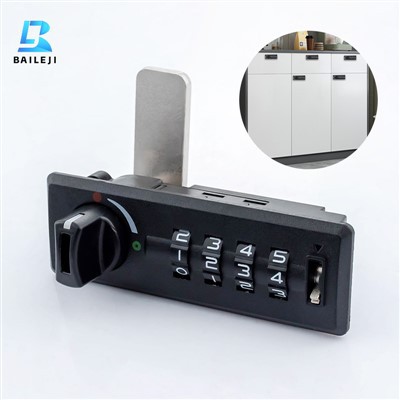
If you’re in the market for a cam lock for your safe—whether it’s a primary lock or a secondary one, a small home safe or a commercial unit—feel free to reach out. I can help you pick the right size, the right security rating, and make sure it fits your safe properly. No fake sales pitches, no confusing jargon, just straight talk about what will work for your needs. Hit me up to chat through your setup, and we can figure out the best cam lock for you.
Drawer Lock References
- Locksmithing Principles and Practices, National Locksmith Association, 2018
- Safe Security Standards and Compliance, Underwriters Laboratories (UL), 2021
- Cam Lock Application Guide, Industrial Lock and Hardware Association, 2022
Suzhou Baileji Intelligent Lock Industry Co., Ltd.
As one of the most professional cam lock enterprises in China, we’re featured by quality products and good price. Please rest assured to buy discount cam lock in stock here and get pricelist from our factory. Also, customized service is available.
Address: 3rd Floor, Building 9, Shengteng Industrial Park, No. 8 Ruyuan Road suzhou, jiangsu, China
E-mail: vip@bailejilocks.com
WebSite: https://www.bailejilock.com/
