If you’re a vehicle owner, mechanic, or even someone who works in the auto parts industry, you’ve probably heard the term “auto bushings” tossed around in service bays or online forums. But when it comes to how these tiny, critical components perform, one question comes up again and again: “What’s the tolerance range I should be working with?” As a supplier who’s spent 12 years engineering, testing, and delivering auto bushings to repair shops, vehicle manufacturers, and independent garages across North America, I get it—this isn’t just a technical detail. It’s the difference between a smooth ride, long-lasting suspension parts, and a breakdown on the highway. Let’s break this down, no jargon, no overcomplicated spreadsheets—just the real-world facts I’ve learned on the job. Auto Bushing
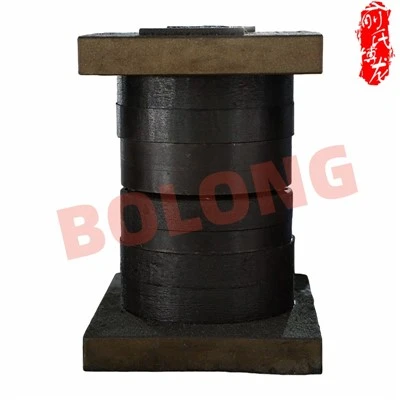
First, let’s start with what a bushing actually is, because if you mix up a bushing with a bearing, you’ll never nail tolerance right. Bushings are rubber (or sometimes a blend of rubber and polyurethane) cushions that sit between metal parts—think the metal control arm and the metal frame of your car. Their whole job is to absorb vibration, reduce noise, and let parts move just a little when you turn, hit a pothole, or accelerate. Unlike bearings, which reduce friction for spinning parts, bushings are about controlled flexibility. That flexibility relies entirely on precision: if the bushing is too loose or too tight, it can’t do its job. That’s where tolerance comes in.
Tolerance, in simple terms, is the slight amount of allowed variation in a part’s size or fit. For bushings, it’s not a one-size-fits-all number—it depends on the vehicle type, the bushing’s location, and the material it’s made of. Let’s walk through the most common scenarios I see every day.
Passenger cars, for example, use most of the bushings we supply, and their tolerance range is usually more forgiving than heavy-duty trucks. For a standard front control arm bushing on a 2018–2023 Toyota Camry, the outer metal sleeve (the part that bolts to the frame) is typically designed to have an inner diameter (ID) of 30.00 millimeters. The rubber core’s outer diameter (OD) is 30.15 mm, and the inner hole (where the control arm bolt goes) is 12.00 mm. Here’s the tolerance: the outer sleeve’s ID can’t vary more than ±0.02 mm. That means if a sleeve comes in at 29.98 mm or 30.02 mm, it’s within spec. The rubber core? That’s a little more flexible—most rubber bushings have a ±0.05 mm tolerance on their OD, because rubber compresses slightly when pressed into the sleeve. Too tight, and the rubber will tear when the bushing flexes; too loose, and the sleeve will slide, causing clunking noises.
Now, heavy-duty trucks or performance vehicles are a different story. A 2022 Ford F-350 front leaf spring bushing has a much tighter tolerance range, because these trucks carry thousands of pounds and deal with rough off-road terrain. The outer sleeve here is only allowed ±0.015 mm variation, and the rubber core’s tolerance drops to ±0.03 mm. Why? Because a loose bushing on a work truck can lead to alignment issues, which wear out tires and suspension parts faster. Performance bushings, which we make for sports cars like the Mazda MX-5, also have tight tolerances—here, it’s about handling precision: even a 0.01 mm shift can make a car feel loose during turns, which is a big no for enthusiasts.
But tolerance isn’t just about metal and rubber dimensions. There’s also rubber hardness, which is part of the bushing’s tolerance profile. We measure hardness on the Shore A scale: passenger car bushings are usually 55–65 Shore A, heavy-duty is 60–70 Shore A, and performance can go up to 80 Shore A. The tolerance here is ±3 Shore A. If a bushing is too hard, it will transmit every bump and vibration into the cabin, making the ride rough; too soft, and it will wear out in a year or two. I’ve seen shops replace a Camry’s bushings with aftermarket ones that were 10 Shore A too soft, and within 18 months, the rubber had cracked from constant flexing. That’s a tolerance mistake that costs the customer more in the long run.
Now, let’s talk about what happens when a bushing is out of tolerance—because that’s where the real problems show up. Last year, a small independent shop in Detroit reached out to us because they’d installed a set of budget replacement bushings on a customer’s Honda Civic, and within two months, the car had clunking noises and uneven tire wear. When we tested the old bushings, we found the inner hole tolerance was off by 0.08 mm—way more than the ±0.02 mm spec. The bolt was sliding around inside the bushing, causing the control arm to shift, which threw the alignment off. The shop went back to the budget brand, but that’s not a tolerance issue unique to cheap parts: I’ve also seen brand-name OEM bushings that were out of spec because a factory machining tool was misaligned for a shift. That’s why we test every batch of bushings we make, not just random samples.
Testing tolerance is a step we never skip. When we receive raw materials, we measure every metal sleeve’s ID and OD with a micrometer that’s calibrated to within 0.001 mm. For rubber cores, we use a durometer to check hardness and a coordinate measuring machine (CMM) to make sure the outer diameter is within tolerance. For the final assembled bushing, we do a “press fit test”: we press the inner sleeve (the part that connects to the control arm) into the rubber core, and measure how much force it takes. If the force is too low, the bushing is too loose; too high, and it will bind when the car moves. That test ensures the total fit—metal + rubber—is within the tolerance range the vehicle manufacturer designed for.
Wait, but what about polyurethane bushings? A lot of people ask about these, since they’re popular for performance and off-road use. Polyurethane is stiffer than rubber, so their tolerance ranges are different. For a polyurethane control arm bushing, the outer sleeve tolerance is still ±0.02 mm, but the inner hole tolerance often tightens to ±0.01 mm, because polyurethane doesn’t compress like rubber. If the inner hole is too big, the polyurethane will slide on the bolt, just like rubber, but because it’s stiffer, that sliding puts more stress on the material, leading to cracks. We have a lot of off-road customers who switched to polyurethane and then came back to us because they didn’t realize the tolerance range was smaller—they’d installed bushings that were too loose, and they cracked after 6 months.
Another common misconception: “tolerance is just a manufacturing thing, I don’t need to worry about it when I install the bushing.” That’s half right. Installation does affect the final tolerance. If you use too much force to press a bushing into place, you can compress the rubber core beyond its spec, making it too tight. If you use too little, the bushing will be loose. I’ve seen mechanics hammer a bushing in with a sledgehammer, instead of using a press, and that compressed the rubber so much the bushing only had a 10,000-mile lifespan instead of the 50,000 it’s rated for. That’s a installation error, but it ties back to tolerance—if the final pressed fit isn’t within spec, the bushing won’t perform.
So, how do you know if a bushing is within the correct tolerance range? For mechanics, the best tool is a set of calipers or a micrometer, and the vehicle’s service manual. The manual will list the exact dimensions for each bushing. If you’re a vehicle owner, you can check for symptoms: clunking when you go over bumps, uneven tire wear, or loose steering. Those are signs the bushing is worn beyond tolerance, and needs replacement. And if you’re ordering replacement bushings, make sure the supplier lists the tolerance range—any supplier that just says “fits your car” without giving dimensions isn’t being transparent, and that’s a red flag.
As someone who’s been in this industry for so long, I can tell you that the tolerance range of auto bushings isn’t just a number on a spec sheet. It’s what keeps a car safe, comfortable, and long-lasting. I’ve supplied bushings to customers who run fleet trucks, and we make sure their tolerance is spot-on so they don’t have breakdowns on the job. I’ve supplied enthusiasts who want better handling, so their bushings are within the tightest specs possible. And I’ve supplied family sedans, where a slightly more forgiving tolerance keeps the ride smooth without sacrificing safety.
But here’s the thing: not all suppliers take tolerance as seriously as we do. It’s easy to cut corners—use a less accurate machining tool, skip the hardness test, assemble a bushing that’s just close enough. But that’s why we test every single batch we send out, because we stand behind the parts we make. If you’re a mechanic, a fleet manager, or a vehicle owner looking for replacement bushings, don’t just go for the cheapest option. Ask about their tolerance range. Ask if they test every batch. A good supplier will have those answers ready.
At the end of the day, auto bushings are small, but they’re foundational. Get the tolerance right, and your suspension works as it should. Get it wrong, and you’re looking at costly repairs down the line. We’ve built our business on getting those tolerances right, because that’s what our customers rely on. If you’re shopping for bushings for your next job, or you have questions about tolerance for a specific vehicle, we’re here to talk. Reach out to our team to discuss your needs, and we’ll make sure you get the right parts, with the right tolerance, for the job.
Surface Finishing References:
- Society of Automotive Engineers (SAE) International. “Bushing Tolerance and Performance Standards for Light-Duty Vehicles,” SAE J1455, 2021.
- Automotive Aftermarket Industry Association (AAIA). “Suspension Bushing Best Practices for Installation and Tolerance Verification,” AAIA Technical Bulletin, 2022.
- Rubber Manufacturers Association (RMA). “Design and Tolerance Guidelines for Elastomeric Suspension Components,” RMA Technical Report No. 12, 2020.
Ningbo Fenghua Bolong Machinery Manufacturing Co., Ltd.
Ningbo Fenghua Bolong Machinery Manufacturing Co., Ltd. is one of the most professional auto bushing manufacturers and suppliers in China, also supports high quality customized service. With abundant experience, we warmly welcome you to buy durable auto bushing made in China here from our factory.
Address: No. 27 Hehai Road, Binhai New Area, Fenghua Economic Development Zone, Ningbo City, Zhejiang Province
E-mail: seven@nbbolongmachinery.com
WebSite: https://www.nbbolongmachinery.com/
