Hey everyone, if you’re someone who’s been shopping around for cast metal parts—whether for machinery, construction, or automotive stuff—you’ve probably run into two big players: investment casting and steel casting machining. And let’s be real, the first thing everyone asks is “how much is this gonna cost me?” I get it, because when I run a steel casting machining shop, that’s like 80% of the calls I take in a week. Folks DM me or call panicking, not knowing which process will actually fit their budget without cutting corners. Today I’m breaking this down like I would over a coffee, no stuffy jargon, and no AI fluff. We’re talking real numbers, real pain points, and what actually makes these two cost worlds different. Steel Casting Machining
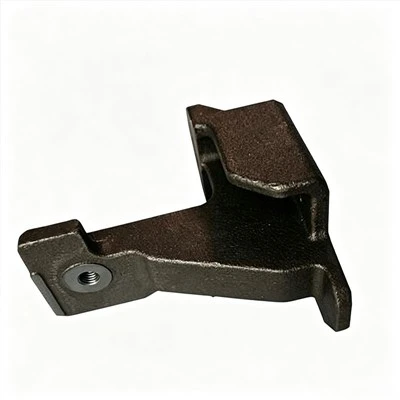
First off, let’s keep this super basic: investment casting is that precision process where you make a wax pattern, coat it in ceramic, melt out the wax, and pour metal into the shell. Steel casting machining is—well, we melt steel, pour it into a sand or metal mold, and then machine off the rough edges afterward to get the final part. Yeah, sounds simple, but the cost drivers? Night and day. Let’s start with mold costs, because that’s where a lot of people get sticker shock fast. For investment casting, the mold is a ceramic shell, right? Each part needs its own wax pattern, which means you’re paying for a new ceramic mold every single time you do a production run. If you’re making 100 parts, that’s 100 shells, each one taking time to build, dry, and prep. Add in the wax tooling—like the metal mold that makes the wax patterns—and that’s a big upfront cost. If you only need a small run, say 50 parts, that’s a ton of money spent on shells you might not even use full capacity.
Now for steel casting machining? Our molds are usually sand molds or permanent metal dies for larger runs. Sand molds are cheap—you make them with a pattern (wood or metal) and compact sand around it. No fancy wax, no ceramic. Even permanent dies are way cheaper per mold than investment casting shells, especially for big parts. And wait, here’s the kicker: if you need a replacement mold later, it’s way less expensive for steel stuff. Like, last month a guy called because he messed up his investment casting shell order and needed a redo—he paid $1,200 just for the shells, and that was for 20 parts. If he’d gone the steel route for the same parts, the mold would’ve been like $300, tops. That’s the kind of math people miss until they get the bill.
Next up, material waste. Oh my god, investment casting barely has any waste. The ceramic shell is destroyed to get the part out, but the metal is fully formed—you only have a tiny bit of sprue (the pipe where metal pours in) to cut off, and that’s it. You’re almost getting 90% of the metal you pay for turned into the final part. But steel casting machining? We pour molten steel into a mold that’s super rough—think lumpy edges, uneven surfaces, extra stock everywhere because the mold isn’t precision. That means after casting, we have to machine off all that extra metal. Like, if you need a shaft that’s 2 inches wide, the as-cast part might be 2.2 inches, so we have to cut 0.1 inch off all around. That wasted metal? It’s scrap, or if we’re lucky, we recycle it, but even then, that’s cost you’re paying upfront for metal you never use. Last year, we did a run for a farmer who needed 20 plow shanks from investment casting—he paid for 50 lbs of metal, got 49 lbs of finished parts. For another farmer who did the same part in steel with machining, he paid for 65 lbs of metal, got 48 lbs (plus the machining labor to cut off all the extra). So right there, he was paying for 15 lbs of wasted metal. That adds up quick when steel is $0.80 a pound these days.
Then labor and time. Let’s be real—investment casting is super labor-intensive, especially for small runs. Each wax pattern has to be dipped in ceramic slurry multiple times, dried for hours, baked to melt the wax, then pour the metal. That’s handwork, every step. If you have a part with a lot of tiny details—like intricate gears or medical components—investment casting makes sense, but it takes way longer per part, so labor costs are higher. For steel casting machining? We have automated lines for pouring, and a lot of the rough work is done with CNC machines that run 24/7. Yeah, the machining part is labor, but the casting itself is faster per part, especially for larger stuff. Wait, but here’s a caveat: if you need super tight tolerances (like within 0.001 inch), investment casting is precise out of the mold, so you don’t have to machine as much. But if your tolerance is more like 0.01 inch—totally standard for most industrial parts—steel casting machining is way cheaper on labor because the casting is simpler to make, even if you have to machine a bit.
Let’s talk about volume, because this is the make-or-break point for cost. If you’re doing small runs—like 1 to 100 parts—investment casting can actually be okay, because the mold cost is spread over fewer parts? Wait, no, wait—wait, no, hold on. If you do 10 parts, and the mold is $1,000, that’s $100 per part. For steel casting, if the mold is $300, even if it’s 10 parts, that’s $30 per part, plus maybe $5 in machining, so way cheaper. But wait, when you get to large runs—like 1,000+ parts—investment casting might start competing? Because you’re making so many parts, the mold cost is spread thin. But for steel casting machining, large runs are where we shine. Because once the mold is set up, we can run parts nonstop, and the machining costs drop per part. Last year, we did a run of 5,000 valve housings. The mold was $2,500, and each part’s machining was $0.75. Total per part: like $1.25. If someone tried to do that in investment casting, each shell would be, like, $3 per part, no way they’d get it lower. So volume is huge—small runs, steel is cheaper; huge runs, investment casting might be in the mix, but most of our customers aren’t doing 50,000 parts at a time.
Wait, but what about part size? That’s another thing people don’t think about. If you need a big part—like a 5-foot long industrial gear or a tractor frame—investment casting is almost impossible, because the ceramic shell can’t hold that big a part without cracking. Steel casting machining? That’s our jam. We have furnaces that can pour 10,000 lbs of steel at once, and our CNC machines can handle parts that big. The cost for a big investment cast part is insane because the ceramic mold would cost thousands, maybe tens of thousands, whereas a steel sand mold is a few hundred, max. I had a guy call last month who needed a 6-foot steel bracket for a construction crane—he tried investment casting and was quoted $15,000 just for the mold. We did it for $800 for the mold, plus the machining, and he saved like $12,000. That’s the kind of win we brag about.
But wait, let’s not pretend investment casting has no place. If you need tiny, super detailed parts—like jewelry, or dental implants, or small aerospace components with complex curves—investment casting is the only way, and the cost there is worth it because you can’t machine that kind of detail easily. But for 90% of the stuff our shop does—industrial parts, machinery components, agricultural equipment, automotive parts—steel casting machining is way cheaper.
Wait, also, material options? Sometimes people think investment casting has more materials, but steel casting has all the same common alloys—carbon steel, stainless steel, tool steel—plus we can do specialty stuff if you need it. The cost for steel is pretty consistent, whereas investment casting’s material cost is higher because the ceramic shell and wax add so much.
Now, let’s get real about hidden costs. A lot of people forget about secondary operations. For investment casting, if you need to machine a hole or a flat surface, you still have to do that, but you don’t need much. For steel casting, most parts need machining, but because we’re using CNC, we can do multiple operations at once—drilling, milling, facing—all in one setup, so that’s cheaper than doing multiple steps on an investment cast part, which might be more delicate and need more careful handling. Also, defect rates: investment casting has a higher defect rate, especially for small runs, because the ceramic can crack, or the wax can have bubbles, leading to bad parts. Steel casting has defects too—like porosity, but we can control that with our process, and the parts are stronger anyway, so even if there’s a small defect, we can machine it away easier. Last quarter, our defect rate was 1.2%; I heard from an investment casting supplier in Chicago that theirs was 4.5%—that means more wasted parts, more rework, higher costs.
Let me wrap this up with some straight talk, no fluff. If you’re making less than 1,000 parts, especially parts over 6 inches, steel casting machining is way cheaper. If you need tiny, super detailed parts for aerospace or medical, go investment casting, but even then, make sure you’re comparing apples to apples. And if you’re sitting there going, “Wait, what’s the actual number for my part?” that’s why we’re here. We don’t do generic quotes—we look at your part, your volume, your tolerance needs, and give you a real price, no hidden fees.
I see too many guys try to guess which process is cheaper, and they end up overpaying. I had a customer last year who went with investment casting for 200 parts, thinking it was faster, and it ended up taking twice as long, with 10 bad parts, so he paid 30% more than if he’d come to us for steel casting machining. Don’t be that guy.
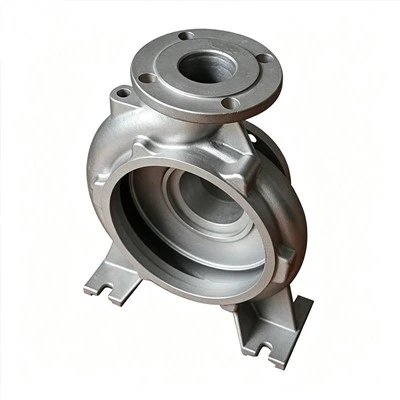
If you’re working on a project right now, whether it’s a small batch of replacement parts for a old machine or a big run of new components for construction, hit us up. We can walk you through the costs, no pressure, no sales pitch. We’ve been doing this for years, and we know which process will save you the most money without sacrificing quality. Stop guessing on investment casting vs steel casting machining costs—let’s talk numbers.
Steel Casting Machining References
Investment Casting vs. Sand Casting: Cost and Process Comparison. Modern Foundry; Steel Casting Machining Cost Analysis 2024. Fabricators & Manufacturers Association International; Precision Casting Cost Drivers. Journal of Manufacturing Processes.
Ningbo Yirui Machinery Manufacturing Co., Ltd.
As one of the most professional steel casting machining manufacturers and suppliers in China, we’re featured by quality products and good price. Please rest assured to wholesale durable steel casting machining made in China here from our factory. Customized orders are welcome.
Address: No.107, Wanzhong Village, Jishigang Town, Haishu District, Ningbo City
E-mail: James.he@yiruitek.com
WebSite: https://www.yiruime.com/
