If you’re running a warehouse, small business, or even a busy storage space, a manual stacker’s one of those workhorses that doesn’t get the spotlight—but if it conks out mid-lift, your whole day’s dead. I’ve been in the manual stacker game for over a decade now, seen way too many folks ignore small wear signs until their stacker’s stuck with a pallet of 50lb boxes hanging 4ft off the ground, or worse, bend a leg and crash into a shelf. This isn’t just “check your machine once a year” stuff; it’s quick, daily checks that take 2 minutes max, and they’ll save you from expensive repairs or accidents. Let’s break this down like we’re geeking out over a machine that’s actually built for hard work, no fancy jargon, no stuffy manuals. Manual Stacker
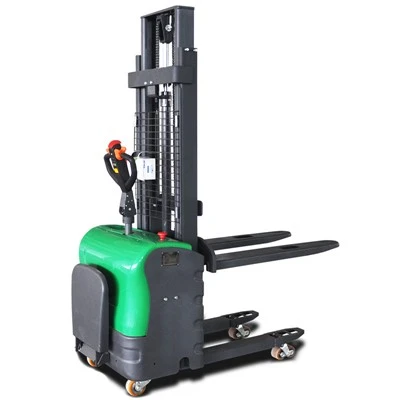
First, let’s start with the things you can spot before you even touch the handles. A lot of new users skip the pre-check walkaround, but that’s where 90% of hidden wear lives. Grab a flashlight if you’re working in a dim storage area—most warehouse lights are garbage anyway. Let’s start with the frame: that’s the main metal body that holds the forks, right? Give it a once-over for dents, bends, or cracks, especially near the base where it hits the ground all day. I’ve seen guys drop a stacker onto a concrete curb, bend a frame rail, and keep using it—next time they lift a heavy pallet, the frame splits down the middle. Small cracks can turn into big ones fast, especially if you’re lifting 2,000lb loads (most manual stackers max out around 2,200lb, so don’t push that limit). Also, check the side guards, the little metal flaps that run along the sides of the forks—those get scraped on walls and pallets, and if they’re loose or broken, the forks can wobble when you’re moving, which messes with load balance.
Next, the forks. These are the workhorses of the stacker, and they take the most abuse. First, check their length: if they’re bent, they won’t slide under pallets right, and you might end up lifting only half the load. I’ve had a customer once who thought his forks were “just a little off” until he dropped a box of 100lb drill bits on the floor—broke the bits, dented the forks, cost him way more than a quick fork replacement would’ve. Also, check the tips (the part that slides under the pallet). If they’re rounded instead of sharp, they won’t get under thin pallets, like the cheap ones you get from big-box stores. Pro tip: if the fork tip has a groove or wear mark 1/8 inch deep, that’s when you should start planning to replace the forks—ignore it, and the fork might snap when you’re lifting heavy. Also, check the fork pins (the little bolts that hold the forks to the carriage). If those are loose, the forks will shift side to side, and that’s a tip-over waiting to happen. Tighten ’em up if they wiggle, and if the pins look rusty or worn, swap ’em out—they’re cheap, way cheaper than a broken fork.
Now the wheels—oh man, wheels get so neglected it’s insane. Your manual stacker has two front load wheels (the ones under the forks that bear the weight) and two rear steering wheels (the ones you turn). Let’s start with the fronts: they’re constantly rolling over bumps, debris, and little bits of plastic or wood pallets. First, check for flat spots: if a wheel looks like it’s lopsided, not perfectly round, that’s a flat spot from dragging a heavy load for too long. Flat spots make steering hard, and they wear out the wheel’s bearing fast. Also, check the tire surface: if there are cuts, chunks missing, or tread worn down to the fabric, that wheel will pop on a load, and you’ll be stuck. I had a guy last winter who didn’t check his wheels, and one popped mid-lift on a pallet of frozen food—ruined the whole load, took him 3 hours to unload and clean up. The rear wheels? Same thing, plus check the axle where they attach to the frame. If there’s play (wiggle) when you grab the wheel and push it side to side, that means the bearing’s worn. Bearings aren’t expensive, but if you let them go, you’ll have to replace the whole wheel assembly, which is more cash. Also, clean the wheels every couple of weeks—dust, pallet chips, and mud get stuck in the wheel wells, and that adds extra load every time you move the stacker, wearing the wheels faster.
Now the part that actually does the lifting: the hydraulic system. This is where a lot of wear happens that’s not obvious until it’s too late. Let’s break it down step by step, no hydraulics degree needed. First, check the hydraulic fluid reservoir (that’s the little tank near the handle, usually clear plastic). Pop the cap off, and make sure the fluid’s at the right level—usually there’s a mark on the side, between “min” and “max.” If it’s low, don’t just top it off with any old oil—use the fluid the manufacturer recommends (I always tell customers to keep a small bottle of it in their truck, it’s like $10 a bottle, way cheaper than a blown seal). Next, check for leaks: look under the reservoir, along the hoses, and around the cylinder (the big metal tube that the forks slide up and down on). A tiny drip is normal over time, but a steady stream? That’s a bad seal. If you see leaks, don’t wait—hydraulic seals are cheap, but if the cylinder runs dry, you’ll have to replace the whole hydraulic unit, which is half the cost of a new stacker.
Now test the lift function—this is the real check, not just looking. Pump the handle a few times to lift the forks a little, then hold it at 3ft high, and let go. If the forks start to slowly lower on their own, that’s a sign the hydraulic valve or seals are worn. A little creep is normal, but if they drop more than an inch in 10 seconds, you’ve got a problem. Also, test the lower function: push the release lever, and make sure the forks lower smoothly, no jerks or grinding. If it’s jerky, the valve might be clogged with dirt, which is super common if you’re working in a dusty warehouse. A quick flush with the right fluid can fix that, no replacement needed. One more thing with hydraulics: the lift chain, the little chain that connects the hydraulic cylinder to the forks. Check for rust, stretched links, or broken pins. If the chain’s stretched, the forks won’t lift all the way, and if a link breaks, the forks can drop fast. I’ve seen a chain snap, dropped a pallet of 500lb cinder blocks, totaled the stacker and the pallet—avoid that, check the chain every week.
Next, the handle and controls—easy to miss, but if these are worn, you can get injured. The handle grip is probably the first thing you touch every time you use the stacker. If the rubber grip’s cracked, torn, or worn smooth, that’s not just annoying—it makes it hard to grip when your hands are sweaty, which can cause you to slip and drop the stacker. Replace the grip for $15, it’s a quick swap. Also, check the handle’s pivots (the part where the handle bends to steer). Give it a little push and pull side to side—if there’s too much play, the pivot pins are worn, or the bushings are gone. Tighten the pins if they’re loose, and if the bushings are gone, swap ’em out. Also, check the brake—wait, manual stackers don’t always have brakes, but if yours does, test it: when you stop with a heavy load, make sure it doesn’t roll forward or backward. If it’s not working, the brake pad’s probably worn, super easy to replace.
Now, the daily check routine I swear by—this is what I tell every customer, and it takes 2 minutes, no exceptions. Before you start your shift: 1) Walk around, check for frame dents, fork bends, wheel damage. 2) Pump the handle once, test a small lift, see if it holds. 3) Check the handle grip and pivot for play. 4) Glance at the hydraulic fluid level, no need to open it unless it’s low. That’s it. For weekly checks, add a deeper look: clean the wheels, inspect the hydraulic hoses for leaks, check the lift chain, tighten loose bolts everywhere. For monthly checks, do a full lift test with a near-max load, check for fork tip wear, inspect the hydraulic seals.
I see so many folks treating their manual stacker like a disposable tool, but they’re built to last 10+ years if you just do these checks. The biggest mistake I see is people waiting until something breaks before they do anything. A $20 seal replacement is way better than a $1,000 new hydraulic unit, right? Also, don’t ignore weird sounds: if your stacker is making grinding noises when you lift, or squeaking when you turn, that’s wear talking. Squeaks usually mean you need to lubricate the pivots and wheels—use a good heavy-duty grease, not WD-40 (WD-40 just dries out fast, grease lasts).
Here’s a quick tip I learned from a customer who runs a grocery warehouse: he keeps a little logbook for his stackers, writes down the date he did checks, any small issues, and when he did replacements. It’s 5 minutes a month, and he hasn’t had a major breakdown in 3 years. That’s way better than panicking when your stacker dies on a busy Saturday.
Wait, also—don’t overuse your stacker. Most manual stackers are rated for a specific weight, and pushing that max every single day wears everything out way faster. If you’re lifting heavy loads, maybe invest in a pallet jack helper, but even so, keep an eye on your stacker’s load. I had a customer who kept lifting 2,500lb loads on a 2,200lb rated stacker, and the frame bent in 6 months—replace that frame for $300, or just get a higher-rated stacker, way simpler.
Now, if you do notice wear, don’t try to fix it yourself unless you know what you’re doing. A lot of guys take apart the hydraulic cylinder and mess up the seals, which makes the leak way worse. If it’s a simple thing like a loose bolt, a new grip, or a wheel, that’s easy, but major hydraulic or frame issues? Call a pro, or reach out to our team for parts and guidance.
At the end of the day, checking your manual stacker’s wear isn’t just about keeping your machine working—it’s about keeping your team safe, keeping your inventory intact, and saving you cash. I’ve seen too many accidents where a worn wheel or a leaky hydraulic seal led to someone getting hurt, and that’s the worst part. Don’t cut corners here.
Shelf If you’re tired of ignoring small wear signs, or you need a new manual stacker that’s built to handle heavy use, get in touch with our team to chat through your needs. We’ve got parts and service, and we’ll help you keep your stacker running for years without the headache. Just reach out to us for more info on maintenance tips, parts, or to pick out the right stacker for your space.
- "Material Handling Equipment Maintenance Guide" by the Material Handling Industry Association, 2022.
- "Manual Stacker Operation and Safety Standards" by Occupational Safety and Health Administration (OSHA), 2021.
- "Hydraulic System Repair and Maintenance for Industrial Equipment" by Industrial Press, 2020.
- "Warehouse Equipment Longevity Best Practices" by Modern Materials Handling, 2023.
Huazheng Heavy Industry Machinery Equipment Co., Ltd.
With abundant experience, we are one of the most professional manual stacker manufacturers and suppliers in China. Please feel free to buy high quality manual stacker for sale here from our factory. We also accept customized orders.
Address: Room 423-101, Building C-4, Electronics Valley Technology Center, No.3088 Lekai North Street, Gaokai District, Baoding City, Hebei Province, China
E-mail: sales02@hzheavy.com
WebSite: https://www.hzheavy.com/
