Hey folks, if you’ve ever shopped around for aerial work equipment, you’ve probably stumbled upon used boom lifts while scrolling through listings or chatting with other job site leads. I get it—when you’re trying to keep projects on budget and hit emissions targets, it’s easy to wonder: are these used machines actually better for the planet than new ones? As a used boom lift supplier who’s been in this game for over a decade, I’m here to break this down without the corporate fluff or confusing jargon. Let’s cut to the chase. Used Boom Lift

First off, let’s get one basic truth out of the way that most environmental folks gloss over (and a lot of new equipment salespeople won’t tell you): the biggest carbon footprint of any machine doesn’t come from when it’s working—it comes from when it’s being made. Think about it: building a boom lift, whether it’s a 30-foot electric one for interior trim or a 135-foot diesel model for construction sites, requires mining metal, smelting steel, casting aluminum parts, assembling engines and hydraulics, and shipping that brand-new unit across the country (or even the world). Studies from the EPA and the Equipment Leasing and Finance Association (ELFA) back this up—for heavy construction equipment, up to 70% of its total lifecycle carbon emissions happen in that initial manufacturing phase.
Now let’s compare that to a used boom lift. If a machine’s already had its life once—maybe it worked on a warehouse build, then a movie set, then got traded in for a newer model—its big, dirty manufacturing footprint is already out of the way. That means every year you keep that used lift running, you’re not adding new emissions from making a brand new unit. It’s like buying a gently used car instead of a new one—everyone knows that new car’s value drops 20% the second you drive it off the lot, but the environmental side? That same logic applies. The embedded carbon (the emissions from making the thing) is already locked in, so extending a machine’s life cuts way more emissions than any tiny efficiency gain from a new model.
But wait a second—let’s not act like all used boom lifts are created equal. There’s a big difference between a well-maintained, low-hour used lift and one that’s been sitting in a field for five years, covered in rust, with a engine that’s burning oil like crazy. That’s where my team and I come in. We don’t just sell any used boom lift—we go through every single unit ourselves, from top to bottom. We do fluid flushes, replace worn hoses and seals, check hydraulic systems, test lift heights and load capacities, and for diesel models, we tune up the engine to make sure it’s running as clean as it can. In fact, we only keep units that have fewer than 5,000 hours of use (that’s roughly 5-7 years of normal work, not a machine that’s been cranked 12 hours a day every day for a decade). For electric boom lifts, we check the battery health (no one wants a lift that dies halfway up a wall), calibrate the motors, and replace any worn rubber parts. So when you buy from us, you’re not getting a beat-up hand-me-down—you’re getting a machine that’s just as reliable as a new one, without that giant manufacturing cost.
Now, let’s talk about the elephant in the room: emissions. A lot of people assume used diesel boom lifts are dirty, and yeah, if you buy a 20-year-old unit that’s never been serviced, that’s true. But modern used boom lifts—even ones that are 5-10 years old—meet Tier 4 Final emissions standards, which are the strictest for off-road equipment in the U.S. Tier 4 standards cut particulate matter and nitrogen oxide emissions by 90% compared to older models, so a well-maintained used Tier 4 diesel lift is actually way cleaner than a decade-old truck or even some new small construction vehicles. And for electric boom lifts? Used ones are often even better than new electric models, because the battery technology has gotten better over time, but most lithium-ion batteries (which are in newer lifts) have their own environmental cost from mining lithium and cobalt. A used electric lift that still has 70-80% of its original battery capacity left? That’s way better than a new one that requires a whole new battery (and its associated emissions) to be made.
Another angle that’s often overlooked: waste. The average boom lift has a lifespan of around 20,000 hours. If you run a new lift until it hits that, you’re probably looking at it for 15-20 years, max. But if you pass it on as a used lift, you’re extending that life—so that 20,000-hour machine gets to serve two, three, even four different job sites, instead of being scrapped after 10 years. Scrapping construction equipment is a huge source of waste—most machines have steel, aluminum, copper, and even some electronics that can be recycled, but if a machine is too old or too beat up, it ends up in a landfill, leaching fluids and wasting all those raw materials. We see this all the time: job sites will trade in a 10-year-old lift that still runs great for a new model, and that old one would otherwise be scrapped, but we pick it up, service it, and send it to another small contractor who can’t afford a new lift. That means one less machine in a landfill, and one less new machine being made.
But let’s be real—there are caveats. I’m not saying every used boom lift is good for the environment. If you buy a used lift from a private seller that hasn’t maintained it, you might end up with a machine that’s leaking fluids, burning excess fuel, or even breaking down halfway through a job. That’s not just bad for your project—it’s bad for the planet too, because you’ll have to use more resources to fix it, or it’ll be scrapped early. Also, if a used lift is so old that it doesn’t meet current emissions standards, that’s a problem. That’s why we only stock units that meet Tier 4 standards for diesel and have functional batteries for electric models. We also make sure to pass along all the service records to our customers, so they know exactly how the machine was cared for—transparency is huge here, and we’ve turned dozens of customers who were skeptical of used equipment into repeat buyers because of that.
Wait, another point: accessibility. A lot of small construction companies, indie filmmakers, tree care services, and event planners can’t afford a brand-new boom lift—those can run anywhere from $50,000 to $200,000, depending on the height and type. So if they can’t buy new, what do they do? They either rent, or they buy a used one. Renting is fine, but every time someone rents a lift, that machine is being moved from place to place, using more fuel, and having more wear and tear. If a small business buys a used lift that lasts them 10 years, that’s way better than renting one every few months, which leads to more total operating emissions over time. It’s a win-win: the small business saves money, and the planet doesn’t have to deal with making a new machine for every contractor’s short-term needs.
I’ve seen this firsthand. Last year, we sold a 40-foot electric boom lift to a small interior fit-out company here in Texas. They had been renting a lift for every office project they did, which was adding up to way more than buying a used one. We serviced that lift, replaced its battery (which only had 200 hours on it, even though it was a 7-year-old model), and sold it to them for 60% less than a new one. A year later, they reached out to us and told us that not only had they saved $15,000 on rental fees, but they’d also calculated that using this used lift instead of renting cut their annual emissions from aerial work by over 30%—because they weren’t moving a rental lift every month, and they had a reliable machine that was running efficiently. That’s the kind of win we love to see.
Now, let’s talk about the counterargument some environmentalists throw at me: what about energy use for maintenance, repairs, and transporting used lifts? Yeah, that’s a small factor, but it’s nothing compared to the emissions from making a new lift. Let’s do a quick rough calculation: a new 60-foot boom lift has an embedded carbon footprint of around 20 tons of CO2, according to a study from the University of California, Berkeley. Now, a used lift that’s 5 years old—its embedded carbon is still 90% of that, because most of that is from manufacturing, not the first five years of use. The energy we use to service that lift, transport it to a new owner, and repair it over its remaining life is maybe 1 ton of CO2 total. So even if we have to move it around a few times, we’re saving 19 tons of CO2 that would have been emitted making a new lift. That’s a no-brainer.
And let’s not forget about parts. When a used boom lift needs a replacement part, most of those parts are still in production for older models, or even available as used parts from scrapped machines. That means we don’t have to make new parts every time a used lift needs a repair, which cuts down on manufacturing waste and emissions too. For example, a hydraulic pump for a 2015 Genie boom lift is way cheaper to get as a used part than a new one, and it works just as well. That’s another hidden environmental benefit of buying used.
But here’s the thing—this isn’t about bashing new boom lifts. If you have a huge construction project that needs the latest safety features, or you’re in a part of the country where emissions regulations are super strict, a new lift might be the right choice for you. But for most small to medium-sized jobs, or for anyone who cares about the environment and their budget, a well-serviced used boom lift is a way better option. It’s better for the planet, better for your wallet, and it keeps a perfectly good machine out of a landfill.
I know there’s still skepticism out there. A lot of people think “used” means “broken” or “dirty.” That’s why we make it a point to be as transparent as possible with every single unit we sell. We post the hour counts, service records, and condition reports right on our listings, and we let customers test the lifts in person (or do a virtual walkaround if they’re ordering online). We also offer warranties on all our used lifts, so if something goes wrong, you’re covered—no more buying a lemon and being stuck with it.
At the end of the day, sustainability is all about making smart choices that don’t sacrifice what you need for the planet. Buying a used boom lift doesn’t mean you’re settling for less. It means you’re extending the life of a machine that’s already been built, cutting down on manufacturing emissions, keeping waste out of landfills, and supporting small businesses that can’t afford new equipment.
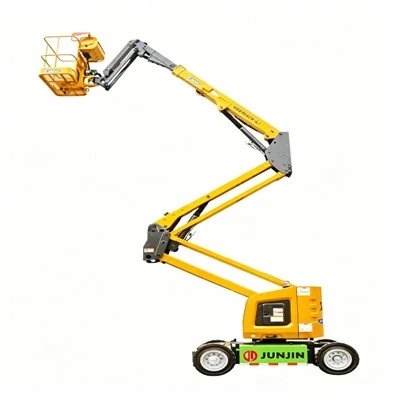
If you’re in the market for a boom lift, whether it’s for a construction project, tree care, event setup, or anything else, I’d encourage you to check out the used options. Don’t just jump into buying new without weighing the environmental and financial benefits of a well-serviced used machine. If you want to chat more about what we have in stock, or get details on a specific model, feel free to reach out—we’re here to help you make the best choice for your project and the planet.
Truck Mounted Aerial Work Platform References
- U.S. Environmental Protection Agency. (2022). Heavy-Duty Engine and Vehicle Standards.
- Equipment Leasing and Finance Association. (2021). Total Cost of Ownership for Construction Equipment.
- University of California, Berkeley. (2020). Lifecycle Carbon Emissions of Construction Machinery.
- Occupational Safety and Health Administration. (2023). Boom Lift Maintenance and Safety Guidelines.
Yantai Quanrui International Trading Co., Ltd.
As one of the most reliable used boom lift manufacturers and suppliers in China, we’re featured by high quality customized products. Please rest assured to buy discount used boom lift made in China here from our factory. Contact us for pricelist and quotation.
Address: No. 278, Sanya Road, Gaotuan Town, Fushan District, Yantai City, Shandong Province, China
E-mail: Info@quanjin1588.com
WebSite: https://www.qr1588.com/
