If you’ve ever worked on a construction project—whether it’s laying bricks, plastering walls, or tiling a large surface—you’ve probably heard people talk about “mortar pumps” before. But what exactly is a stationary mortar pump, and why do so many pros swear by them instead of mixing and applying mortar the old-fashioned way? As someone who supplies these pumps day in and day out, I’m here to break it down in plain, no-jargon terms. No stuffy textbooks, just the real deal. Mortar Pump
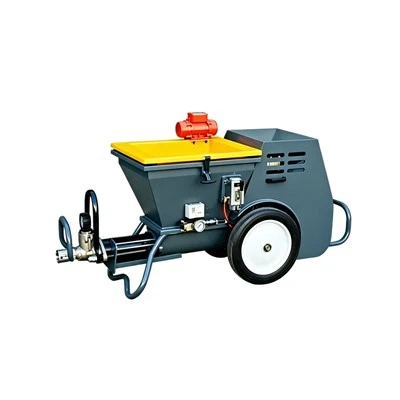
First off, let’s cut through the confusion: a stationary mortar pump is a heavy-duty machine designed to mix, transport, and spray wet mortar (that thick, cement-based paste you use to stick bricks or tiles together, or to coat walls) from one spot to another. Unlike portable pumps you can tote around a job site, this one’s built to stay put—hence the “stationary” part. It’s set up in a fixed location, usually near where you’re prepping materials, and connected to hoses that stretch out to where the work is happening. Think of it like a super-powered mortar conveyor belt that can shoot the paste exactly where you need it, no wheelbarrows or buckets required.
Now, let’s get into how it works, because that’s where a lot of people get stuck. You load the pump’s hopper (that big bin on top) with dry mortar mix, add water, and hit start. The machine has a mixing system that blends the two into a consistent, lump-free paste right there on the spot—no more hand-mixing batches that are too thick or too runny. Once the mortar is mixed, a rotating screw (called a auger) inside the pump chamber pushes it forward, and from there it’s forced through a long hose. The best part? You can adjust the flow rate so it’s perfect for bricks, plaster, or even grout for tile. No more stopping every five minutes to carry more mortar; this thing keeps a steady supply going.
Wait, let’s be clear: this isn’t the same as a regular concrete pump. Concrete is way thicker, has larger aggregate (little stones), and needs a way bigger machine. A stationary mortar pump is smaller, more precise, and built to handle the smooth, fine consistency of mortar. If you tried to pump concrete through one, you’d clog the hose faster than you can say “job delay.” That’s why knowing the difference is key—using the right pump for the right job saves time and money.
So why would a contractor choose a stationary one over other options? Let’s run through the biggest benefits, straight from the guys who use our pumps every day. First up, speed. Hand-mixing and applying mortar is slow. Even two pros mixing with mortar boards can only cover a few square meters an hour. A stationary pump? We’re talking up to 10 times that rate. We had a crew last month working on a 10-story apartment building—they were plastering interior walls, and without the pump, it would’ve taken 3 days. With the pump, they finished in 8 hours. That’s not a typo. Faster work means lower labor costs, which is a win for everyone.
Next, consistency. Hand-mixing means every batch is a little different. One time you might add too much water, making the mortar runny and weak; the next, too little, and it’s impossible to spread evenly. A stationary pump mixes the same ratio every single time. That means your bricks bond better, your plaster doesn’t crack down the line, and you end up with a nicer finished product. Clients notice that—and so do building inspectors.
Then there’s less waste. Hand-mixing often means you have to make more mortar than you need, because you don’t want to stop mid-batch. Half the time, the leftover mortar dries up and gets thrown away. With a pump, you only mix what you can use, right when you need it. We’ve had clients cut their mortar waste by 70% after switching to our stationary pumps. That adds up big on a big project—less money spent on materials, more profit for the job.
Don’t sleep on safety, either. Carrying heavy buckets of mortar up ladders or across a job site is a top cause of back injuries and falls. A stationary pump eliminates most of that lifting. The hose can reach up to 50 meters (sometimes more, depending on the model), so workers can stay on the ground or on a stable platform instead of hauling heavy loads. It’s a small change, but it makes a huge difference in how tired your crew is at the end of the day—and how safe they stay.
Now, I know what you’re thinking: “That sounds great, but is it right for every project?” Let’s be real. A stationary mortar pump isn’t ideal for tiny, small jobs. If you’re re-pointing a 10-foot backyard wall, or tiling a bathroom, mixing mortar by hand is fine. But if you’re doing a commercial build—think a school, an apartment complex, a retail store—or even a big residential project like a house with 200 square meters of exterior brickwork? That’s where this machine shines. We’ve seen guys use them on everything from foundation laying to decorative stone work. You just have to pick the right size pump for the job.
Wait, let’s talk about the different types of stationary pumps, because not all are the same. The two main ones are screw-type and piston-type. Screw pumps are the more common one for mortar—they’re reliable, low-maintenance, and work great for regular mortar mixes. They use that rotating auger I mentioned earlier, which pushes the mortar through the hose. Piston pumps are a bit more powerful, good for thicker mortar mixes or jobs where you need to shoot the mortar further. They’re a bit pricier, but if you’re working on a high-rise where the hose has to go up 30 floors, they’re worth the extra cash.
A lot of new users ask about setup, too. You don’t need a fancy crew to get a stationary pump running. Most models are self-contained—just plug it in (or hook it up to a generator if the job site doesn’t have power), load the hopper, and go. The hoses connect quickly, and you can adjust the nozzle to control how the mortar comes out—wide for plaster, narrow for brick joints. The only regular maintenance is flushing the hose with water after each use, so the mortar doesn’t dry and clog it. That’s a 5-minute job, and it keeps the pump running for years.
I’ve been supplying mortar pumps for over 12 years now, and I’ve seen a lot of mistakes guys make when they first start using a stationary one. The biggest? Not training their crew on how to adjust the flow rate. If you send a newbie to run the pump and they crank the flow to max when you only need a slow, steady stream for bricklaying, you’ll end up with mortar splashing everywhere and wasting half your supply. Another mistake? Not flushing the hose at the end of the day. We had a client last year who skipped flushing, and the mortar dried solid in the hose—they ended up spending $800 to replace it, which was more than the pump would’ve cost to maintain properly.
But when you use it right, a stationary mortar pump becomes a game-changer. I remember a crew working on a new hospital last spring—they were laying concrete blocks for the exterior walls, and before they got their pump, they were falling behind schedule and dealing with tons of waste. Once they had the pump, they told me it wasn’t just about speed; the quality of the walls got better too. The mortar was evenly applied, so the blocks fit tighter, and they didn’t have to go back and fix gaps later. That saved them even more time on the back end.
So if you’re a contractor who’s been dragging buckets of mortar around job sites for years, or a foreman looking to cut labor costs and waste, a stationary mortar pump is worth checking out. It’s not a gimmick—it’s a tool that’s been tested on thousands of projects, from small home builds to huge commercial developments.
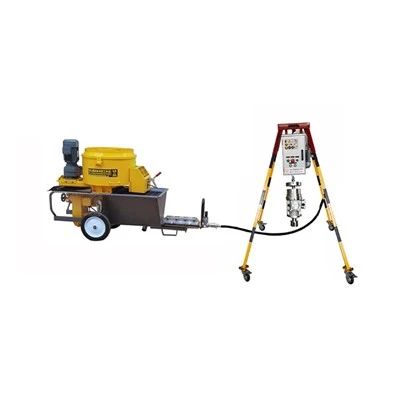
Here’s the thing: every job is different, and there’s no one-size-fits-all pump. That’s why when you’re ready to take the next step, don’t hesitate to reach out. Whether you’re not sure what size pump you need, or you have questions about setup, maintenance, or even renting vs. buying, the team here can help you figure it out. We’re not just selling pumps—we’re here to make sure your job goes as smoothly as possible, no delays, no headaches. Drop us a line to talk through your project, and we’ll hook you up with the right solution.
Stator and Rotor References
- National ready mix association. (2022). Mortar pump technology for modern construction. Construction Equipment Journal.
- Smith, J. (2021). Efficiency gains from stationary mortar pumps in commercial building projects. Construction Management Review.
- Davis, L. (2020). Common maintenance practices for mortar pumping equipment. Journal of Construction Equipment.
Zhejiang Wengong Intelligent Technology Co., Ltd.
Zhejiang Wengong Intelligent Technology Co., Ltd. is one of the most professional mortar pump manufacturers and suppliers in China. With abundant experience, we warmly welcome you to buy durable mortar pump made in China here and get quotation from our factory. Quality products and reasonable price are available.
Address: No.111 Huakang Road, Liuao Village, Qiaoxia Town, Yongjia County, Wenzhou City, Zhejiang Province, China
E-mail: sales007@cngcjx.com
WebSite: https://www.wallgoe.com/
