As a heavy duty power strip supplier who’s spent the last decade working directly with auto mechanics, woodworkers, and hobbyist workshop owners, I know exactly how frustrating it is to sift through generic power tools accessories and find a power strip that actually holds up to the demands of a workshop. I’ve seen it all: cheap office-grade strips that fried after a single overload, flimsy cords that frayed on sharp metal edges, and overloaded outlets that dimmed a circular saw mid-cut. If you’re asking “what is the best heavy duty power strip for workshop?” the answer isn’t just about the highest wattage or the priciest brand—it’s about matching the strip to your specific workshop tasks, durability needs, and safety requirements. Let’s break this down, from the non-negotiable features to the top picks I actually recommend, and why my team’s work focuses on making strips that solve real workshop pain points. Heavy Duty Power Strip
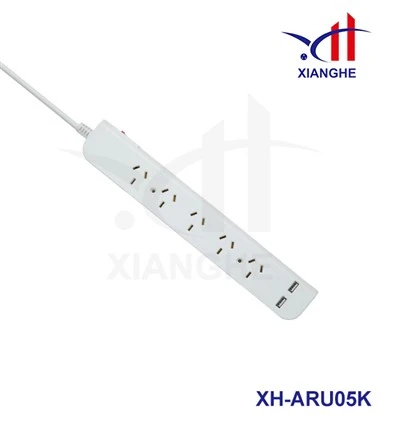
First, let’s get one thing straight: workshop power strips aren’t the same as the ones you use for a desktop computer or a home entertainment system. A typical residential power strip is rated for 15 amps max, which works for small devices like lamps or phone chargers. A heavy duty workshop strip? It needs to handle at least 20 amps, and usually 120 volts (for North American workshops) or 230 volts for international setups, because tools like table saws, compressors, welding machines, and dust collectors draw a lot more power. A 20-amp strip can handle up to 2,400 watts, which is the baseline for most heavy tools, but if you’re running multiple high-draw machines at once, you’ll want a 30-amp, 3,600-watt option for larger operations. That’s a non-negotiable starting point—any strip that doesn’t hit those amp ratings is a safety hazard.
Next, durability. Workshops are messy: there’s sawdust, oil, metal shavings, drops of water from cleaning supplies, and sharp edges on workbenches. A heavy duty power strip for workshop needs a casing that can take that abuse. I’ve tested strips with thin plastic housings that cracked after a single 50-pound tool fell on them—useless. The best ones have industrial-grade thermoplastic or metal housings. Metal ones are tougher, but make sure they’re grounded to avoid shock risks if they get scratched. Thermoplastic is lightweight, water-resistant, and still tough enough to handle bumps, so it’s a great middle ground for most workshops. Then there’s the cord: it can’t be a thin 16-gauge cord that kinks easily and frays on metal saw tables. Workshop strips need 12-gauge or 10-gauge SJOW or SOOW cords—these are flexible, oil-resistant, and rated for outdoor use too, so they can handle being dragged across concrete, wrapped around workbenches, and even left outside if your workshop is in a garage with no insulation. I once had a customer who used a 10-gauge cord for his 10-inch table saw; over two years, he dragged it across his concrete floor hundreds of times, and it never showed a scratch, let alone a fray. Generic office cords would have split open in a month.
Safety is another big one, and this is where cheap strips cut corners. Workshop tools draw startup power that’s 2-3 times their running wattage, so a strip needs surge protection that’s rated for heavy duty use—not the 300-joule protection you see on computer strips. Look for surge protection of at least 1,000 joules, and better yet, 2,000 joules for high-draw tools. Also, built-in circuit breakers are a must. Unlike residential strips that rely on the wall breaker, a workshop strip’s own breaker will shut off power instantly if you overload it, instead of letting the cord overheat or the outlet arc. Arc fault protection is another key feature— it detects small sparks that can ignite sawdust or oil vapors, which is a massive safety win for woodworking shops. I’ve had customers tell me that their strip’s breaker tripped when they tried to run a dust collector and a orbital sander on the same circuit, which prevented a potential fire that their old strip would have let slide. That’s not just a feature—it’s a lifesaver.
Now, what about layout? A lot of workshop owners complain that their power strips have outlets spaced too close together, so they can’t plug in big tools with bulky plugs. A table saw or a welder has a huge, blocky plug that won’t fit next to another standard plug, so you need spaced outlets—at least 3 inches between each, and even better, “wide-spaced” outlets that can handle NEMA 5-20 or NEMA 6-20 plugs, which are common for heavy tools. I’ve seen strips with 1.5-inch spaced outlets where someone had to unplug their compressor just to plug in their grinder. That’s a waste of time, and it leads to overloading circuits because people daisy-chain strips (another big no-no—never daisy-chain workshop power strips, that’s a fire hazard). So layout matters: enough outlets, enough spacing, and even some mounted options so you can screw the strip to a workbench or wall instead of leaving it on the floor where it can get kicked, run over by a cart, or collect dust.
Putting this all together, what’s the best heavy duty power strip for workshop? Based on 10 years of working with mechanics, carpenters, and small business owners, it’s a strip that hits all those points: 20-30 amp rating, 12-gauge or 10-gauge cord, industrial thermoplastic or metal casing, built-in circuit breakers and arc fault protection, wide-spaced outlets, and a heavy-duty cord. That’s exactly the kind of strip my team specializes in. I’ll also call out two key options that work for different workshop sizes: for small shops (1-2 people, basic tools), go with a 20-amp, 8-outlet strip with 3-inch spaced outlets, a 10-gauge 6-foot cord, and built-in surge protection. It’s compact enough to mount on a workbench, tough enough to handle daily use, and has enough outlets for a table saw, dust collector, light, and charger all at once. For larger shops with multiple high-draw tools, a 30-amp, 10-outlet strip with 2,000-joule surge protection and a 10-foot cord works for running welders, air compressors, and multiple power tools without overloading.
Now, let’s address some common myths I hear all the time. First myth: “More outlets are better.” No, not if they’re not spaced right. A strip with 12 tight outlets is useless if half of them are blocked by a bulky tool plug. Second myth: “The highest wattage is the best.” A 5,000-watt strip is overkill for most workshops; if you’re not running multiple 2,000-watt tools at once, you’re just paying for features you don’t need. Third myth: “Any heavy duty strip will do.” I’ve had customers come to me after buying a “heavy duty” strip from a big-box store that rated for 15 amps, not 20—they thought it was for workshop use, but it was just a marketing gimmick. Always check the amp rating on the label, not just the word “heavy duty.”

If you’re tired of replacing power strips every 6 months, dealing with burnt outlets, or worrying about safety in your workshop, the right strip is an investment, not a cost. At my company, we design every strip with workshop-specific needs in mind—we test each unit by dragging cords across concrete, pouring a small amount of water on the casing, and simulating overloads to make sure the breaker trips consistently. We don’t cut corners on materials, because we’ve seen what happens when cheap strips fail. If you’re looking to upgrade your workshop power setup, reach out to our team to discuss your specific needs—whether you’re a hobbyist with a home garage or a commercial shop with dozens of tools, we can help you pick the right heavy duty power strip that fits your budget and your workflow. We work with small businesses, contractors, and individual workshop owners, so no order is too big or too small.
Surge Protector Power Strip References:
- National Fire Protection Association. (2022). Electrical Safety in Workshops. NFPA 70E Standard for Electrical Safety in the Workplace.
- Occupational Safety and Health Administration. (2021). Heavy Duty Power Distribution for Industrial Workshops. OSHA Technical Manual, Section V, Chapter 2.
- International Electrotechnical Commission. (2020). Requirements for Power Cords and Receptacles for Workshop Use. IEC 60309 Standard.
- Consumer Product Safety Commission. (2019). Fire Hazards Associated with Misrated Power Strips. CPSC Safety Alert 510-805.
Hangzhou Xianghe Electric Appliance Co., Ltd.
Hangzhou Xianghe Electric Appliance Co., Ltd. is one of the most professional heavy duty power strip manufacturers and suppliers in China. Please feel free to buy bulk advanced heavy duty power strip made in China here from our factory. All customized products are with high quality and competitive price. Contact us for pricelist.
Address: South Industrial Zone, Meicheng Town, Jiande, Hangzhou City, Zhejiang Province, China
E-mail: xh@xianghe-electric.com
WebSite: https://www.xianghe-electric.com/
