If you’ve ever worked on mechanical projects — whether that’s building a backyard deck, assembling a bike, or fixing a car engine — you’ve probably come across nylon insert hex nuts. Those are the ones with a little nylon ring wedged into the top; they’re designed to stay tight even when vibrations would make regular nuts spin loose. But here’s the question I get all the time from folks ordering from our shop: “Do I still need to add a lock washer with these?” Nylon Insert Hex Nuts
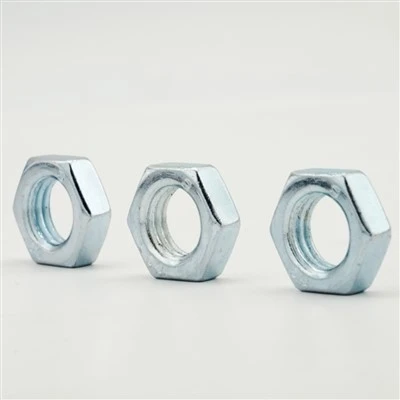
As a supplier who’s been selling these nuts for years, I get why this confuses people. You’ve got two separate parts that both exist to prevent loosening — why would you use both? The short answer is: it depends on what you’re working on. But let’s break this down like we’re chatting over a coffee, no fancy engineering jargon required.
First, let’s remember what each part does. A nylon insert hex nut works by squeezing that nylon ring between the nut and the bolt when you tighten it. The nylon is softer than metal, so it deforms a little, creating friction that stops the nut from spinning backward. That’s great for most general use — it’s why these nuts are used for everything from furniture assembly to automotive parts that shake a lot. Lock washers (the split-ring kind, or the tooth-locking ones) do a different job: when you tighten a nut around them, the washer’s edges dig into the nut and the surface it’s clamped to, creating tension that also fights loosening.
So when would you need both? Let’s start with the cases where skipping a lock washer is totally fine. If your project is low-vibration — like attaching a shelf bracket to a wooden stud, or assembling a kids’ playset that doesn’t get banged around much — the nylon insert alone is more than enough. Those vibrations aren’t strong enough to overcome the friction from the deformed nylon, and the surface you’re clamping (wood, plastic, thin sheet metal) won’t give the lock washer’s teeth anything solid to grip. Adding a washer here would just add unnecessary steps — and honestly, extra parts that can get lost mid-assembly are a hassle no one needs.
But here’s where things get trickier: high-vibration applications. Think of a truck’s wheel well, a heavy-duty conveyor belt, a motorcycle engine, or even a piece of industrial machinery that runs 24/7. The constant, intense shakes here can gradually wear down that nylon insert’s friction over time. Even if the nylon is holding strong now, after thousands or millions of cycles, that deformation can relax, and the nut might start to spin loose. In these cases, a lock washer adds an extra layer of security. It’s not about replacing the nylon insert — it’s about backing it up. The tension from the washer makes it way harder for any vibrations to break down that initial friction.
Wait, but not all lock washers are created equal, right? I see a lot of people grabbing random split-ring washers from their garage and pairing them with nylon nuts, and that can cause problems. Split-ring washers work by spring tension, but their ends can sometimes dig into the nylon insert over time and damage it. If the nylon gets nicked or compressed unevenly, its friction goes down, which defeats the whole purpose. For high-vibration jobs, we always recommend tooth lock washers (the ones with teeth on both sides) instead. Wait — no, actually, even better: flat fender washers? No, wait, no — let’s correct that. Tooth lock washers have sharp, hard teeth that bite into metal surfaces, so they won’t damage the nylon. That’s the sweet spot. If you pair a nylon insert nut with a tooth lock washer for heavy vibration, you’re covering both bases without hurting either part.
Another thing to consider: what you’re clamping the nut to. If the surface you’re working with is soft or malleable — like aluminum, plastic, or thin pipe — a lock washer might not do much good, and could even leave marks or deform the material. The nylon insert will still work here, because it’s creating friction against the bolt, not just the surface. But if you’re clamping two thick metal pieces together, a lock washer adds that extra tension that the nylon alone might not provide. For example, when assembling a steel frame for a patio deck that’s going to be exposed to wind and rain (which counts as medium vibration, by the way), adding a tooth lock washer is a smart move to make sure nothing comes loose after a few months of storms.
I also get questions about cost, from both hobbyists and small businesses. If you’re running a construction crew that uses thousands of these nuts a month, adding lock washers adds to your materials cost and your labor time. We always tell our clients: if you’re using them for low-vibration, casual projects, stick with just the nylon nuts. If it’s industrial, automotive, or something with constant shaking, the extra washers are a small investment to avoid costly downtime later. I’ve had a couple of clients come back to me a year later saying they skipped the washers on a conveyor belt, and the nuts loosened so much the belt had to shut down for repairs. That’s way more expensive than buying a box of lock washers.
Wait, let’s clear up a common myth here: some people think nylon insert nuts are “self-locking” so you never need anything else. That’s true for basic use, but “self-locking” doesn’t mean “indestructible.” The nylon wears out over time — it’s not a permanent fix. For example, a nylon nut on a bike handlebar: if you ride on bumpy roads every day, the nylon will eventually lose its grip, even with a lock washer. But the washer slows that process way down. Without it, you might have to tighten the nut every few weeks. With it, it’s good for months.
Another case where a lock washer is a must: when you’re using a bolt that’s going to be removed and re-tightened a lot. Like, if you’re building a machine where parts need to be taken apart for maintenance every few months. The more you take the nut on and off, the more the nylon insert flattens out. A lock washer adds tension that keeps the nut tight even after multiple reuses, which means you don’t have to replace the nylon nuts as often. That saves money in the long run, too.
Now, let’s talk about what doesn’t work. If you use a nylon insert nut with a flat washer (not a lock washer), that’s just a spacer. It doesn’t add any tension or locking power — it just keeps the nut from digging into the surface. So don’t confuse flat washers with lock washers. Only the ones that create tension (split-ring, tooth, or wave washers) add the extra security you might need.
As a supplier, we see a lot of customers making this mistake: ordering nylon nuts and then grabbing any random washer off the shelf, which either doesn’t help or damages the nut. That’s why we always include a quick note with every bulk order: “For high-vibration applications, pair with tooth lock washers. For general use, no washer needed.” It’s small, but it saves our customers from headaches down the line.
Let me wrap this up with a quick checklist, so it’s easy to remember:
- Low-vibration (shelves, furniture, light assembly): No lock washer needed. The nylon insert is enough.
- Medium-vibration (patio frames, automotive interior parts, bikes): Optional, but a tooth lock washer is a good idea for extra peace of mind.
- High-vibration (industrial machinery, truck parts, conveyor belts): Definitely use a tooth lock washer with your nylon insert hex nuts.

And if you’re still not sure? Just reach out. We’ve been in the game for years, and we can help you figure out exactly what you need for your specific project. No sales pitch, just straight talk — that’s how we’ve stayed in business. If you’re ordering in bulk or have questions about which nuts and washers work best for your use case, we’re here to help.
Hex Nuts References
- Machinery’s Handbook, 31st Edition, Industrial Press Inc., 2020, Section on Threaded Fasteners.
- Society of Automotive Engineers (SAE) Standard J483, “Locking Fasteners,” 2019.
- Fastener Engineering Magazine, “Self-Locking Nuts: Performance in Vibration Environments,” Vol. 45, No. 2, 2021.
- ASTM International Standard F2060, “Standard Specification for Metal Lock Washers,” 2022.
- Manufacturer’s Technical Data Sheet: Nylon Insert Hex Nuts, Fastener Technology Corporation, 2020.
Shanghai Welfast Enterprise Co., Ltd.
As one of the most experienced nylon insert hex nuts manufacturers and suppliers in China, our products have good reputation in the market. Please rest assured to buy bulk premium nylon insert hex nuts for sale here from our factory. Good service and quality products are available.
Address: 6C, No.201, Ningxia Road, Putuo District, Shanghai, China.
E-mail: sales@welfast.com
WebSite: https://www.welfast.com/
