Hey folks, Distribution Box
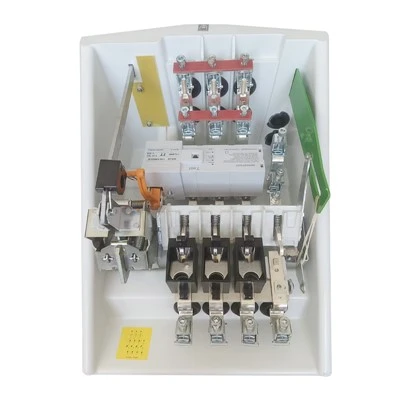
Let’s cut to the chase: if you’re a builder, electrician, or facility manager, you’ve probably stared at a rusty, dented distribution box on a sidewalk, utility closet, or garage wall and wondered, “How long is this thing even supposed to last?” I get it—for most of us, distribution boxes are the unsung heroes of electrical systems. They’re not flashy, they don’t make noise, and we only notice them when something goes wrong. But as a distribution box supplier who’s been in the game for over a decade, I’ve talked to hundreds of people who’ve guessed wrong about their lifespan—some replacing them way too early, others ignoring red flags until a safety hazard pops up. Today, I’m breaking down the real deal, no jargon, no fake stats, just what actually works in the real world.
First off, let’s clarify what a distribution box is, just in case. It’s that metal (or sometimes plastic) box that splits your main electrical feed into smaller circuits: for your kitchen outlets, your bedroom lights, your garage tools, whatever. It’s got circuit breakers or fuses, wires, and all the stuff that keeps electricity from jumping where it shouldn’t. Easy to overlook, right? But their lifespan depends way less on the box itself and way more on two big things: how it’s built, and how it’s used. That’s where most people mess up.
Let’s start with the “ideal” lifespan, assuming you’re using a high-quality box and not putting it through a grinder. For standard indoor distribution boxes—think the kind you find in a home’s basement or a small shop’s utility closet—you’re looking at 25 to 40 years. Outdoor boxes, the ones bolted to utility poles or mounted on the side of a building, are a bit trickier: 20 to 30 years. Why the gap? Exposure to the elements. Rain, snow, UV rays from the sun, temperature swings—those eat away at metal way faster than a dry indoor space. But wait, that’s just the baseline. I’ve seen boxes from trusted brands that lasted 50 years, and some cheap ones that died in 10. That’s the difference between “cheap garbage” and “built to last.”
Now, let’s get into the factors that actually speed up or slow down that clock. First up, the material. Most standard boxes are steel, but not all steel is the same. If a box is made of thin, uncoated steel, even indoors it’ll rust from tiny amounts of moisture over time. The good ones are galvanized steel—they’ve got a zinc coating that acts like a shield against rust. Outdoor boxes? They should be stainless steel or have a heavy-duty powder-coat finish. I’ve had customers bring back outdoor boxes that only lasted 15 years because they used a cheap powder coat that chipped off after a few winters. Plastic boxes are a different story—they’re light, cheap, and good for dry, low-load spaces like a small shed. But UV rays make plastic brittle fast, so they’re only a good pick for indoor use or shaded outdoor spots. Don’t put a plastic box out in direct sun for years; it’ll crack, and that’s a huge safety risk.
Next, how the box is loaded. Distribution boxes are rated for a specific number of circuits and a total power load—like 100 amps, 200 amps, whatever. If you cram way more circuits into it than it’s rated for, or plug in too many high-wattage appliances (think a big electric oven and a workshop welder on the same circuit), that creates extra heat. Heat is the #1 enemy of electrical components. It melts the insulation on wires, warps circuit breakers, and wears out the box’s internal parts way faster than it should. I had a customer a couple years back who had a 150-amp box installed in his small home, but he added 20 extra circuits for a home theater, a hot tub, and a new workshop—total load jumped to 250 amps. His box started overheating within 3 years, and he had to replace the whole thing way ahead of schedule. That’s a mistake a lot of people make: they think “more circuits = better,” but if you overload the box, you’re cutting its lifespan in half, easy.
Then there’s installation and maintenance. A box installed wrong—like not properly grounded, or with loose wire connections—will have issues fast. Loose wires create arcing, which is like tiny sparks inside the box, and that wears down components in no time. Regular maintenance matters too. I always tell my customers: check your box every 5 to 10 years. Just pop the cover off (make sure the main power is off first, safety first!) and look for rust, corroded wires, or dust buildup. Dust is a big one, especially in dirty spaces like workshops or construction sites. If dust gets into the box, it traps moisture and creates a conductive layer that can cause short circuits. A quick wipe with a dry cloth every few years goes a long way. Skipping maintenance? Your box might last half as long as it should.
Now, what are the red flags that your box is dying, even if it’s within the “ideal” lifespan? Because even a 25-year-old good box can go bad. Let’s list the obvious ones first: circuit breakers that trip for no reason, or you have to push them hard to get them to reset. That’s a sign the breakers are worn out, and if they’re failing, the whole box is on its way. Then there’s rust on the outside or inside of the box. If you can see flaky rust, that means it’s penetrating the steel and could be eating through the wall of the box, exposing wires. Another big one: buzzing or humming sounds coming from the box. That’s usually arcing or loose connections, which is not just a lifespan issue—it’s a safety hazard. If you hear that, call an electrician stat, don’t wait. And if your house is older than 40 years and you’ve never replaced the box? Even if it looks fine, most experts recommend getting it inspected. Wires degrade over time too, and an old box might not handle modern appliances like smart thermostats or EV chargers.
Wait, let’s talk about EV chargers, because that’s a huge thing right now. A lot of people adding home EV chargers are upgrading their distribution boxes, but they don’t realize how that affects the lifespan. If your existing box is 20 years old, even if it’s rated for the amps you need, the extra load from an EV will add heat that shortens its life. I’ve had customers who tried to add an EV charger to a 22-year-old box and ended up replacing the box 5 years later, when they could’ve just upgraded the box upfront and had it last another 15 years. It’s a small cost to add a new box when you’re doing a big upgrade, way cheaper than replacing it early and dealing with the hassle.
Let me throw in a real example from our shop to make this concrete. Last year, we supplied a galvanized steel 200-amp indoor box to a family in Ohio. They used it for their main home, didn’t overload it, had their electrician install it right, and did a quick check every 7 years. That box is still going strong after 32 years. On the flip side, we supplied a cheap uncoated steel 100-amp box to a guy in Arizona for his backyard shed. He put it in direct sun, added 12 extra circuits, and never checked it. That box cracked and rusted through after 8 years. See the difference? It’s not just the box—it’s how you use it.
Now, what if you’re on the fence about replacing your distribution box? Don’t just guess. Hire a licensed electrician to do an inspection. They can check the amperage rating, the condition of the box and wires, and tell you if it’s at the end of its life. A lot of people think replacing a distribution box is super expensive, but it’s way cheaper than a fire or a full electrical failure. Plus, a new box will last you another 25 years, so it’s a long-term investment.
As a supplier, I tell every customer who calls me about distribution boxes the same thing: buy the best box you can afford for your needs, don’t overload it, and take care of it. We’ve been supplying boxes for years, and the ones that last the longest are the ones that people don’t abuse. It’s not rocket science, but it’s easy to overlook when you’re busy with other stuff.
If you’re looking to replace your distribution box, or you’re not sure what size or material you need for your space, feel free to reach out to our team. We’ve helped builders, electricians, and homeowners pick the right box for their projects, no pressure, no weird sales tricks. Just tell us what you’re working on, and we’ll guide you through it. No need to guess, no need to worry about buying something that’ll die in 10 years.
Wait, quick note before I wrap up: plastic boxes—don’t sleep on them, but only for the right spot. We’ve got customers who use them for rental properties’ empty garages, where they only need a few circuits. They’re light, easy to install, and way cheaper than steel, as long as they’re not in direct sun. But for main house boxes? Steel is still the way to go for longevity.
Another thing: don’t ignore small issues. If your box trips once a month for no reason, don’t just reset it and forget about it. That tiny problem could turn into a big one, and it’ll cost you way more to fix later. Catching it early means the box might last the full 25 to 40 years, instead of getting cut short.
At the end of the day, a distribution box’s lifespan isn’t set in stone. It’s a balance of quality materials, proper installation, smart loading, and regular checks. As someone who sells these things, I want my customers to get the most out of their box, not have to replace it every decade. That’s why we only carry boxes that are built to last, and why we’re happy to answer any questions you have about yours.
If you’re ready to pick a new distribution box, or just have questions about yours, get in touch with our team to talk procurement and fit. We’ll walk you through all the options so you get exactly what you need for long-lasting, safe performance.
Distribution Panelboards References:
- National Electrical Manufacturers Association (NEMA). "Electrical Enclosure Performance Guidelines." 2022.
- Underwriters Laboratories (UL). "Standard for Safety for Power Outlet Assemblies and Circuit Breakers." UL 489, 2021.
- International Association of Electrical Inspectors (IAEI). "Residential Electrical Distribution Systems Lifespan Study." 2020.
Wenzhou Lanen Electrical Co., Ltd.
Wenzhou Lanen Electrical Co., Ltd. is one of the most professional distribution box manufacturers and suppliers in China, also supports customized service with low price. Please feel free to buy CE approved distribution box made in China here from our factory. Contact us for more discount information.
Address: Zhiguang Liushi Town Yueqing City Wenzhou City Zhejiang Province
E-mail: lanen@luyele.cn
WebSite: https://www.lanenelectrical.com/
