Hey there, if you’ve been around the solar industry for even a minute, you know that solar stamping parts are the unsung heroes of every panel, rack, and mounting system. I’m part of a team that’s been supplying these parts for over a decade now, and one question we get asked every single day is: “How much do solar stamping parts cost?” Solar Stamping Parts
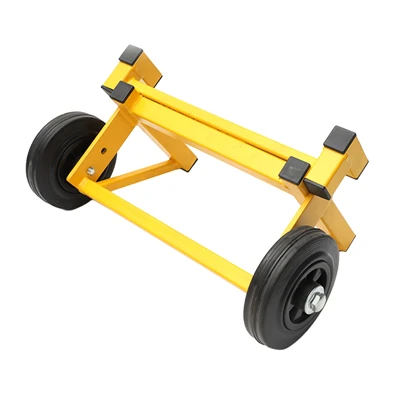
Let me cut to the chase – there’s no one-size-fits-all answer, and I’ve seen so many folks in the market get tripped up by that. Last quarter alone, a client who needed 10,000 frame clips thought they’d get the same price as another guy who ordered 100,000 base plates. Big difference, right? I’m gonna break down the real factors that swing those costs, what you’re actually paying for, and even a few tricks we’ve figured out to help clients save cash without cutting corners on quality.
First off, let’s clear up what solar stamping parts even are, for anyone new to this. We’re talking precision metal components – think steel or aluminum pieces that get bent, punched, or stamped into shape to hold solar panels together, secure mounting racks, or connect inverters. They’re not just random metal bits; they have to be weather-resistant, rigid enough to handle 10+ years of sun and rain, and perfectly sized to fit every panel model out there. So when someone asks for a “solar stamping part cost,” the first thing we ask is: what specifically do you need? Not all stamping is created equal.
Number one factor: material type. This is the biggest driver of cost, no question. We work with two main metals for solar parts: mild carbon steel and aluminum. Mild steel is way cheaper upfront – like, right now it’s around $0.50 to $1.20 per pound for hot-rolled steel, which is what most structural stamping parts use. But wait, there’s a catch: mild steel needs to be coated to resist rust. That’s where things like hot-dip galvanizing, powder coating, or E-coating come in, and those add 10-30% to the material cost. Aluminum, on the other hand, is naturally corrosion-resistant, so it skips the coating step – that’s why it’s popular for rooftop mounting parts, where salt air or frequent rain is a problem. But aluminum’s raw material price is way higher, around $1.80 to $2.50 per pound right now. So a 2-inch aluminum bracket might cost $1.80 vs. a steel equivalent that’s $0.90 before coating. Makes sense, but it’s a trade-off between upfront cost and long-term durability.
Then there’s the part size and complexity. Simple parts – like a basic mounting clip that just snaps onto a panel frame – are super easy to stamp. They use a single die, low material waste, and take less machine time. Those usually run from $0.15 to $0.80 per unit, depending on material. But if you’re talking about a custom base plate that has to fit a specific solar tracker, with multiple holes, bends, and cutouts? That’s more complex. We might need a custom die, extra setup time, and more precision to make sure it lines up with the tracker’s bolts. Those can jump to $1.50 to $5 per unit, sometimes more if the design is really unique. Last year, we did a custom part for a utility-scale solar farm that had 12 bends and 8 threaded holes – that worked out to $3.20 per unit, but the client needed 50,000 of them, so the volume brought the per-unit cost down.
Which brings me to volume. Oh man, volume is the game-changer. If you’re a small contractor putting up a 10kW residential system, you might need 200 parts, and we can’t offer super deep discounts there – that’s usually $0.30 to $0.90 per simple steel clip. But if you’re a big developer doing a 100MW farm, you’re ordering 100,000+ parts, and we can pass on the savings from bulk material purchases and faster machine setup. We once had a client go from ordering 5,000 rack feet ($1.20 per foot) to 200,000 rack feet ($0.75 per foot) just by upping their volume. That’s a huge difference. Pro tip: if you’re a small builder, team up with a few other contractors in your area for a bulk order – most suppliers will give a group discount if you hit a minimum together.
Coating and finishing is another big hidden cost. Like I mentioned earlier, steel parts need to be protected, but not all coatings are the same. Hot-dip galvanizing (HDG) is the standard for outdoor solar parts – it’s dipped in molten zinc, so it lasts 20+ years, no rust. That adds about $0.10 to $0.40 per part. Powder coating is fancier, comes in different colors, and is more scratch-resistant, but that’s $0.20 to $0.50 extra. If you cut corners here and use a cheap paint instead, you’ll have parts rusting in 3-5 years, which means replacing them and losing time on your installation. We see that all the time – a client saves $0.10 per unit now, but ends up spending 2x that on replacements down the line. Not worth it.
Custom vs. standard parts. If you’re using a standard solar panel model (like most common ones from Qcells, SunPower, or JA Solar), there are usually existing stamping part molds that we already have. That means no extra die cost, which keeps prices low – standard mounting clips or brackets are usually ready to go, so you don’t have to pay for tooling. But if you’re using a custom panel, or a unique mounting system, we have to make a new custom die – and custom dies can cost $500 to $5,000, depending on the part’s complexity. We pass that cost on to the client, but once the die is made, you can reorder parts from us at the standard rate later, no extra tooling. That’s why if you have a long-term project, the die cost is a one-time fee that spreads out over all your orders.
Now, let’s talk about some real numbers to make this concrete, based on what we’re seeing right now (2024, for anyone reading this later). Simple steel mounting clips (standard size, hot-dip galvanized): $0.20 to $0.50 each, for orders of 1,000 to 100,000. Aluminum rooftop brackets: $1.20 to $2.80 each, same volume range. Custom base plates for trackers: $2.00 to $4.50 each, when you’re ordering 50,000+ units. What about small orders, like 500 parts? Add 15-20% to those numbers because we have to handle smaller batches, which is less efficient for us.
Wait, but there are other costs that don’t show up in the per-unit price. Shipping, for one. If you’re ordering from a supplier across the world, you might get a lower per-unit cost, but shipping and customs can add 20-40% to the total price. That’s why a lot of US-based solar installers work with domestic suppliers like us – we can ship your parts in 2-3 days, no customs delays, and the total cost ends up being cheaper than ordering from overseas, even if the per-unit is a few cents higher. Also, lead times: if you need parts in a hurry (like 1-2 weeks), we can do that, but we charge a rush fee of 10-15% because we have to pause other orders to prioritize yours. If you can wait 4-6 weeks, you get the standard price, no rush charge.
I should also mention quality control. We do 100% inspection on all our stamping parts, checking for size accuracy, coating thickness, and material strength. Some cheaper suppliers overseas skip that, so you might get parts that are mis-sized, so they don’t fit your panels, or have thin coating that rusts fast. Last year, a client came to us after ordering $15,000 worth of cheap steel clips from a foreign supplier – half of them were bent the wrong way, so he had to toss them and reorder, costing him $8,000 in material and 2 weeks of installation time. That’s a way bigger loss than the extra $0.10 per unit he would have paid for a reliable supplier.
So how do you actually get the best price for your solar stamping parts? Let’s wrap this up with a few actionable tips, since you probably don’t just want numbers. First, be clear about your needs: tell us the material, part size, quantity, coating, and delivery timeline. The more specific you are, the more accurate your quote will be. Second, aim for a good volume – even if you’re small, group orders with peers to hit a minimum. Third, choose the right material for your location: aluminum might be worth the upfront cost if you’re near salt water, but steel with HDG is cheaper for inland areas. Fourth, ask about standard parts first – unless you need a custom part, using existing dies skips the tooling fee.
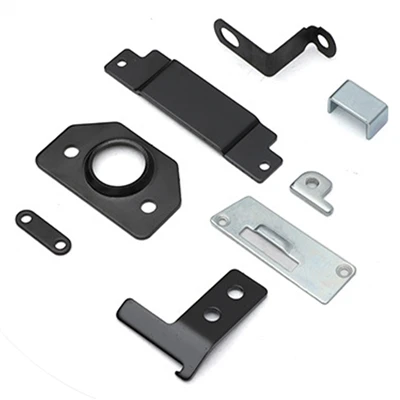
At the end of the day, solar stamping parts aren’t just a commodity – they’re the backbone of your solar system’s performance and longevity. You don’t want to skimp on something that holds your panels up, right? If you’re working on a residential, commercial, or utility-scale solar project, and you want a no-BS quote for your stamping parts, hit us up. We can walk you through every cost, no hidden fees, and make sure you get the right parts for your budget.
Solar Stamping Parts REFERENCES
- International Energy Agency (IEA) Solar PV Report 2023
- Metal Stamping Industry Association (MSIA) Material Cost Benchmarks 2024
- Solar Energy Industries Association (SEIA) Mounting Component Cost Analysis 2024
Ningbo New Fanfeng Tools Co., Ltd.
With abundant experience, we are one of the most professional solar stamping parts manufacturers and suppliers in China. Please rest assured to buy bulk customized solar stamping parts at competitive price from our factory. If you have any enquiry about quotation, please feel free to email us.
Address: No.18, Zhangjia Industrial Zone, Shangtian Subdistrict, Fenghua District, Ningbo City
E-mail: 13081992660@163.com
WebSite: https://www.cnnewfanfeng.com/
